Ventless vs Direct Vent Gas Fireplaces for Luxury Homes
Last Updated: November 2, 2026
Quick Summary
The ventless vs direct vent decision hinges on where combustion byproducts go: ventless units release them into the room, while direct-vent units pipe them outside through a sealed double-wall system. For luxury homes, direct-vent wins on indoor air quality and flame realism, while ventless suits condos, basements, and walls with no exterior access.
- Ventless fireplaces use an oxygen depletion sensor that cuts the flame if oxygen drops.
- Direct-vent units pull combustion air from outdoors and exhaust all byproducts outside.
- Ventless units release nearly all their heat indoors, while direct-vent sends some heat up the flue.
- Ventless units need more frequent interior cleaning because byproducts and moisture deposit inside.
- Confirm ventless legality with your local authority having jurisdiction and your insurer before finalizing.
Table of Contents
- Ventless vs Direct Vent Gas Fireplaces: The Core Difference
- Ventless vs Direct Vent Gas Fireplaces Pros and Cons
- Ventless vs Direct Vent Gas Fireplace Cost: Upfront and Lifetime
- Direct-Vent Gas Fireplace Installation Requirements
- Ventless Gas Fireplace Safety and Indoor Air Quality
- Flame Presentation, Heat Output, and Design Integration
- Choosing Your Luxury Gas Fireplace at Zen Home Fireplaces
- Frequently Asked Questions
Ventless vs Direct Vent Gas Fireplaces: The Core Difference
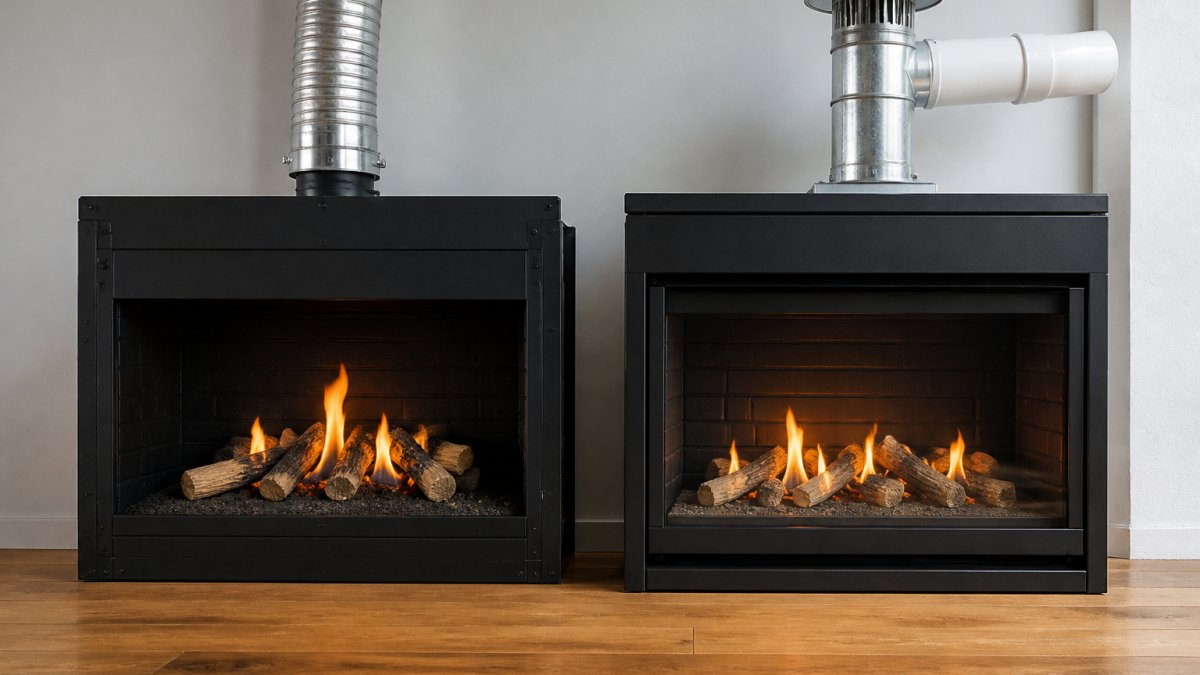
The core difference between ventless and direct vent gas fireplaces comes down to one question: where do the combustion byproducts go? A ventless fireplace releases them into the room. A direct-vent unit pipes them outside through a sealed double-wall system.
That distinction matters more in a luxury home than a builder-grade one, because the fireplace is usually a focal point people actually use, not a decorative afterthought.
How Ventless (Vent-Free) Fireplaces Work
Ventless fireplaces burn gas and release heat and byproducts into the room without a chimney or flue. An oxygen depletion sensor, often paired with a carbon monoxide shutoff, monitors the air and cuts the flame if oxygen drops. Because no heat escapes up a flue, nearly all of it stays in the space. That makes ventless units popular where running a vent is impractical, such as a condo, a basement, or a wall with no exterior access.
How Direct-Vent Fireplaces Work
Direct-vent fireplaces use a sealed firebox and a double-wall vent pipe that pulls combustion air from outdoors and pushes exhaust back out. The glass front stays sealed, so room air never mixes with the fire. This design allows placement flexibility: the unit can terminate through an exterior wall or up through the roof, and it can sit in tighter, better-insulated spaces.
Ventless vs Direct Vent Gas Fireplaces Pros and Cons
The pros and cons of ventless vs direct vent gas fireplaces come down to a trade between installation ease and air quality. Ventless wins on placement freedom and upfront simplicity. Direct-vent wins on indoor air quality, realism, and long-term peace of mind. Here is the honest breakdown.
| Factor | Ventless (Vent-Free) | Direct-Vent |
|---|---|---|
| Venting required | None | Exterior wall or roof vent |
| Indoor air impact | Releases byproducts indoors | Sealed; exhausts outdoors |
| Placement flexibility | High | Moderate to high |
| Flame realism | Good | Excellent |
| Installation complexity | Lower | Higher |
| Best for | Condos, retrofits, no-vent walls | Luxury built-ins, new builds |
Ventless pros: no venting cost, flexible placement, near-total heat retention, easier retrofit into existing rooms. Ventless cons: adds moisture and trace combustion byproducts to indoor air, needs ventilation, and some jurisdictions restrict or limit its use. Direct-vent pros: sealed combustion protects indoor air quality, more realistic flame, strong heat output, fewer moisture concerns. Direct-vent cons: higher upfront cost, requires exterior wall or roof access, professional installation is essential.
Ventless vs Direct Vent Gas Fireplace Cost: Upfront and Lifetime
On cost, ventless vs direct vent gas fireplaces split along the same line: ventless saves on the front end, direct-vent earns it back over time. But for a luxury home, the upfront sticker price is the least useful number in the decision. What matters is the lifetime cost of ownership, purchase, installation, fuel, maintenance, and any retrofit or remediation, spread across the decades you will actually use the fireplace.
Upfront cost components
A ventless unit typically carries a lower equipment price because it has no sealed firebox, no double-wall vent pipe, and no exterior termination kit. A direct-vent unit adds the vent pipe, termination cap, and often more involved framing and finish coordination. In a luxury build, the labor and finish work around the fireplace, the feature wall, stone or plaster surround, hearth, and media, usually dwarfs the equipment difference, so the venting premium is often a small fraction of the total installed cost.
Fuel and operating cost
Both types burn natural gas or propane, so fuel cost per BTU is similar. The difference is how much of that heat reaches the room. A ventless unit releases nearly all its heat indoors, while a direct-vent unit sends some heat up the flue, though sealed-combustion designs recover more than a traditional wood-burning fireplace. In a well-insulated luxury home, the ventless unit's higher heat retention can lower fuel use for the same comfort level, but that advantage is offset if you must run mechanical ventilation or a dehumidifier to manage the moisture ventless units add to the air.
Maintenance and cleaning
Ventless units need more frequent interior cleaning because byproducts and moisture deposit on the firebox, glass, and media. Direct-vent units stay cleaner inside because combustion air and exhaust are isolated, but the vent termination and exterior cap need periodic inspection. Budget for annual service either way; the ventless unit's service interval is typically shorter.
Retrofit and remediation cost
The biggest lifetime wildcard is retrofit. Adding a direct-vent fireplace to a room without exterior-wall or roof access can require a vent run, framing changes, and finish repair that push the installed cost well above a ventless unit. Conversely, if a ventless unit causes moisture buildup in a tight envelope, condensation on cold glass, musty air, or finish damage, remediation can include added ventilation, dehumidification, or even replacement, which erases the upfront savings.
A simple lifetime framework
Price the decision in four buckets: equipment and venting, installation labor and finish work, annual fuel and service, and a contingency for retrofit or remediation. For most luxury living rooms and new builds, direct-vent's higher upfront cost is offset by lower air-quality risk and fewer moisture concerns over time. For condos, basements, and walls with no exterior access, ventless remains the practical choice, provided you budget for ventilation and monitoring from day one.
Direct-Vent Gas Fireplace Installation Requirements
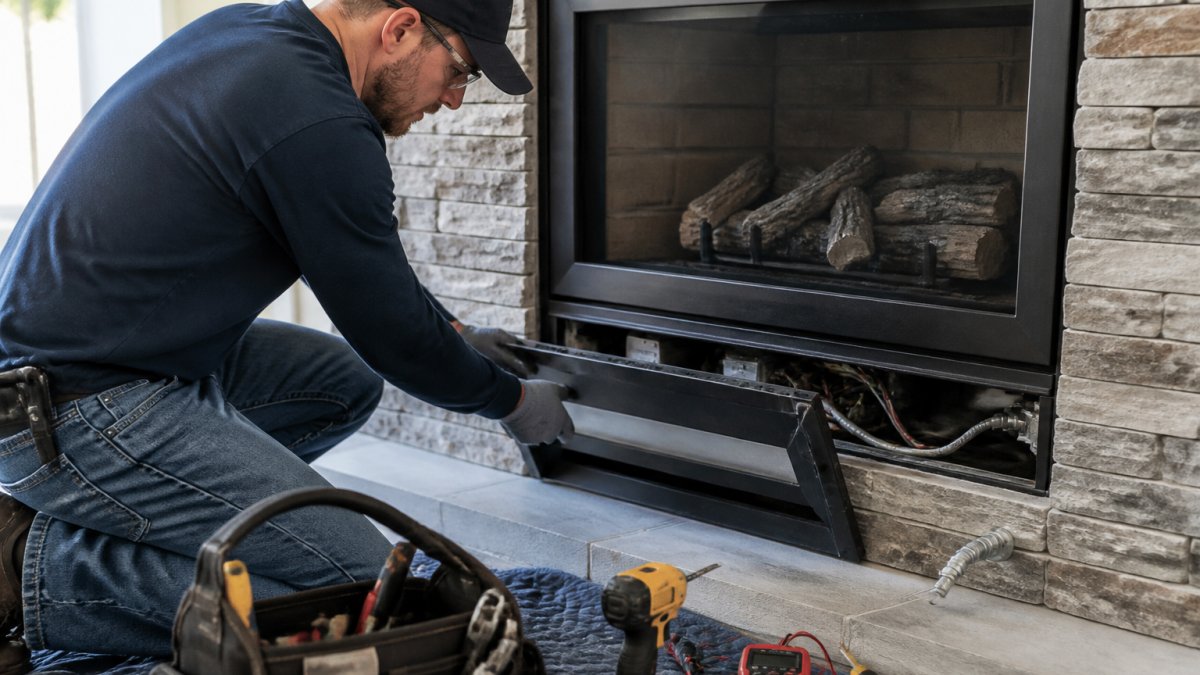
Direct-vent gas fireplace installation requirements center on venting, clearances, and code compliance, but in a luxury home the installation plan is really a design and approval problem. These units need a properly sized double-wall vent that terminates outdoors through an exterior wall or roof, with clearances to combustibles set by the manufacturer and local building codes. Gas connections must be made by a qualified professional, and framing must follow the unit's specifications.
Core requirements to plan around
- Vent termination: must meet clearance rules for windows, doors, air intakes, and property lines; the manufacturer's manual and local code govern the exact distances.
- Framing and clearances: follow the manufacturer's manual and local code exactly, including clearance to combustibles and required air spaces.
- Permits: many jurisdictions require a permit for gas fireplace installation; check with your local building department before framing.
Luxury installation scenarios
New construction. The easiest path: vent runs, framing, and gas lines are coordinated with the architect and builder before drywall.
Renovation. The vent run often drives the layout.
Empire Boulevard 72" Linear Direct-Vent Gas Fireplace →
High-rise residences. Vent termination rules, building envelope restrictions, and HOA or building-management approval often govern whether a direct-vent unit is feasible at all.
Multiple fireplaces. Each direct-vent unit needs its own vent termination and clearance plan.
Permitting, insurance, and jurisdiction approval
Ventless legality and installation rules vary by location, and insurers may treat ventless and direct-vent units differently. Before finalizing either choice, confirm requirements with your local authority having jurisdiction and your insurer, and keep the manufacturer's installation manual on site for the inspector. Watch out: assuming a unit approved in one jurisdiction is approved in another is a common and costly mistake in luxury projects that cross state or municipal lines.
Design integration and controls
Installation is also where design integration happens. The fireplace anchors the layout, so width, media, surround, and TV placement should be set before framing. If you plan to mount a TV above the hearth, our guide on how to choose the right fireplace width for a TV helps you get the proportions right before you commit. A qualified installer should confirm every component for your specific room and scenario.
Ventless Gas Fireplace Safety and Indoor Air Quality
Ventless gas fireplace safety and indoor air quality is the single biggest reason luxury homeowners hesitate, and rightly so.
Before choosing ventless, review local codes and the manufacturer's installation requirements so you understand the ventilation needs and any restrictions that apply to your project. For homes where indoor air quality is a priority, direct-vent's sealed combustion removes the concern entirely.
Flame Presentation, Heat Output, and Design Integration
Flame presentation and heat output are where direct-vent pulls ahead for luxury spaces. A sealed firebox with a glass front contributes to a clean flame presentation.
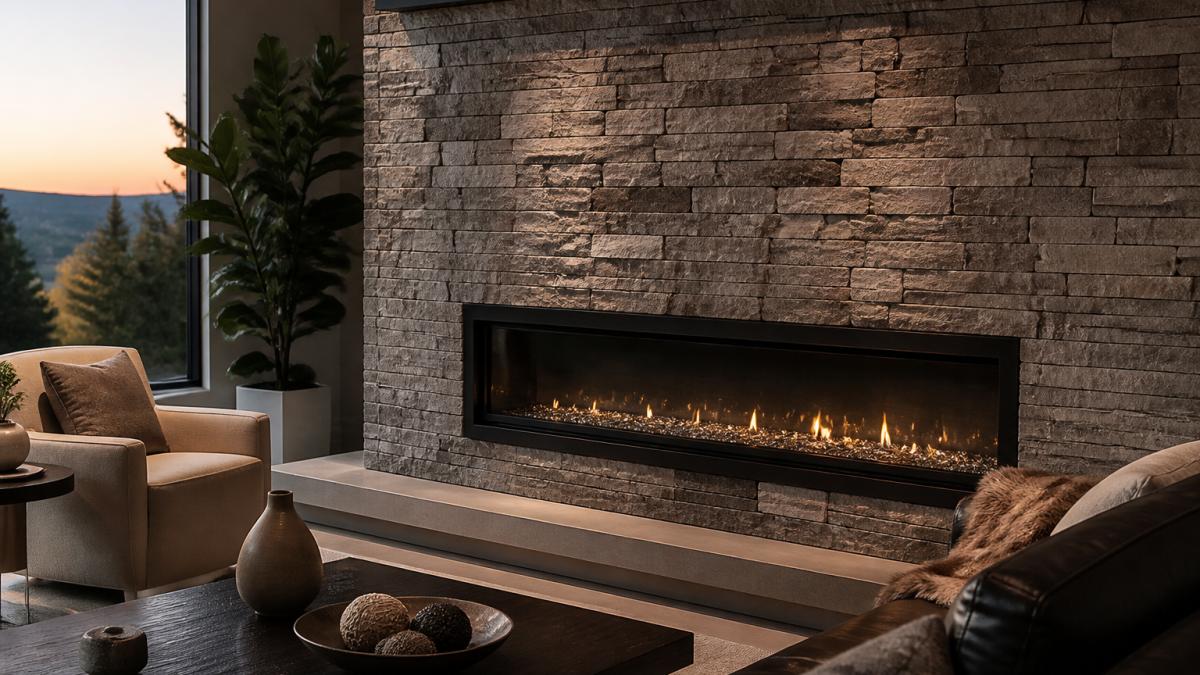
Design integration is the angle most guides skip. In a luxury room, the fireplace anchors the layout, so width, media, and surround matter as much as heat.
Choosing Your Luxury Gas Fireplace at Zen Home Fireplaces
Choosing between ventless and direct vent comes down to your room, your air-quality priorities, and your design goals. Direct-vent models offer sealed combustion and a clean-face design, and suit many luxury living rooms and new builds. Our curated direct-vent collection makes the decision concrete:
- The Empire Boulevard 72" Linear Direct-Vent Gas Fireplace ($10,969.00) anchors a large contemporary space with a 72-inch ceramic glass viewing area and a multi-function thermostat remote.
- The Empire Boulevard 36" Linear Direct Vent Gas Fireplace ($5,049.00) brings the same linear look to a smaller luxury room, with up to 28,000 BTU.
- The Empire Tahoe Clean-Face Premium 32" Direct Vent Gas Fireplace ($2,857.00) suits a den or bedroom with a traditional clean-face hearth and up to 24,000 BTU.
For rooms where venting is impossible, ventless remains a valid option, provided you address ventilation and safety first. Explore our full collection and let the room guide the choice.


Frequently Asked Questions
Is a direct vent or ventless gas fireplace better for a luxury home?
For many luxury installations, direct vent is a strong option. It draws combustion air from outside and sends exhaust outdoors, so indoor air quality and moisture stay controlled while the sealed glass front keeps the flame presentation clean. Ventless models cost less to install and need no exterior wall or roof penetration, which helps in condos and retrofits. The trade-off is higher indoor moisture and stricter room-size and clearance rules, so check local codes before committing.
What are the downsides of a ventless gas fireplace?
Ventless units release combustion byproducts, including water vapor and carbon monoxide, into the room. That raises humidity, which can encourage mold in tightly built homes, and it means an oxygen depletion sensor and strict clearance requirements are non-negotiable. Some jurisdictions restrict or ban them outright. Output is also capped, so a ventless unit works as supplemental heat, not a whole-home solution.
How much does a ventless vs direct vent gas fireplace cost?
Ventless units usually cost less upfront because there is no venting system, exterior wall penetration, or roof work. Direct vent adds venting components, framing, and finish work, which pushes total installed cost higher. At Zen Home Fireplaces, direct-vent models range from $2,639 for the Madison Clean Face Deluxe 36" to $13,408 for the Napoleon Tall Linear Vector 50", before venting and installation. Budget for professional install and annual servicing either way.
Which type of gas fireplace provides a more realistic flame?
Direct-vent linear models are one option for a clean flame presentation. Sealed combustion and a glass front let manufacturers tune tall, dramatic flame patterns over crushed glass or Luminous Logs, as on the Empire Boulevard 72" and the Napoleon Vector 50". Ventless units can look convincing, but the open or semi-open design and lower output often read flatter in a large luxury room. Media, liner, and log choices matter as much as the vent type.
Can a ventless gas fireplace be used as a primary heat source?
No. A luxury living room with high ceilings and large glass areas will need the home's HVAC system for real heating. Direct-vent models add more radiant and convective heat, but they are still zone heaters and ambiance features, not replacements for a furnace.
The right fireplace should feel built for your home, not squeezed into it. Zen Home Fireplaces curates modern designs from trusted brands, pairs them with our Zen Hearth Essentials accessories, and focuses on clean lines and warm materials so every hearth feels intentional. Get started with Zen Home Fireplaces and transform your space into a warm, inviting sanctuary.