Venting an Outdoor Gas Fireplace: Safe Routing Guide
Last Updated: November 3, 2026
Quick Summary
Safe outdoor gas fireplace venting means routing exhaust gases away from people, windows, and combustible surfaces, or choosing a vent-free unit rated for outdoor use. The manufacturer's installation manual is the controlling document, and your local building department has the final say through permits and inspections.
- Outdoor gas fireplaces come in two venting families: direct-vent and vent-free, and the two are not interchangeable.
- The manual sets vent pipe diameter, maximum run, elbow count, and clearances for your specific model.
- Direct-vent fireplaces use a sealed double-wall pipe that brings combustion air in and sends exhaust out.
- Read the venting diagram by plotting your horizontal run and vertical rise inside the shaded zone.
- Install carbon monoxide detectors near the outdoor living area and inside the home, and test them monthly.
Table of Contents
- Outdoor Gas Fireplace Venting Requirements at a Glance
- Direct Vent vs Vent-Free: Which Outdoor Setup You Have
- Direct Vent Gas Fireplace Venting Requirements
- Reading a Gas Fireplace Venting Diagram
- Safe Termination Placement and Clearances
- Vent Pipes, Flue Liners, and Termination Caps
- Vent Inspection, Troubleshooting, and When to Call a Professional
- Choosing Your Outdoor Fire Feature with Venting in Mind
- Frequently Asked Questions
Outdoor Gas Fireplace Venting Requirements at a Glance
Outdoor gas fireplace venting safely means routing exhaust gases away from people, windows, and combustible surfaces, or choosing a vent-free unit rated for outdoor use. The answer always starts with one document: the manufacturer's installation manual.
Two facts shape everything else. First, outdoor gas fireplaces come in two venting families: direct-vent and vent-free. Second, the rules for each come from the manufacturer first and your local building department second.
Direct-vent means the fireplace pulls combustion air from outside and pushes exhaust back outside through a sealed pipe. Vent-free means the unit burns without a chimney and is rated for a specific space. The two are not interchangeable.
What the Manufacturer's Installation Manual Governs
The manual is the controlling document for your specific model. It sets the vent pipe diameter, the maximum horizontal and vertical run, the number of elbows allowed, and the exact clearances to walls, soffits, and gas meters. No generic guide can override it.
A common mistake is buying a vent kit before reading the manual. Model-specific requirements vary widely, and a kit that fits one fireplace may be wrong for another. Check the manual's venting chart before you spend a dollar on pipe.
Local Building Codes and Permit Basics
Your local building department has the final say. Most jurisdictions require a permit for a new gas appliance installation, and an inspection follows. The inspector checks the work against the manual and the adopted code, not against what a retailer told you.
Before installation, call your building department and ask three questions: Does this need a permit? Which code edition applies? What inspections are required? Write the answers down. They protect you at resale and at claim time.
Here are the core venting facts the article establishes before you touch a vent kit.
| Item | Value | Note |
|---|---|---|
| Venting families | Direct-vent and vent-free | Not interchangeable |
| Controlling document | Manufacturer's installation manual | Overrides generic guides |
| Final authority | Local building department | Permit and inspection follow |
| Direct-vent design | Sealed double-wall pipe | Combustion air in, exhaust out |
| Vent-free design | No chimney | Rated for a specific space |
| Manual sets | Pipe diameter, run, elbows, clearances | Model-specific |
| Common mistake | Buying a vent kit before reading manual | Kits vary by model |
| Permit questions | Permit, code edition, inspections | Ask before installation |
Direct Vent vs Vent-Free: Which Outdoor Setup You Have
Identify your setup by looking for a vent pipe and reading the listing label.
The distinction that matters most, and that most guides skip, is between an outdoor-rated appliance and an indoor direct-vent fireplace vented through an exterior wall.
- Outdoor-rated direct-vent fireplace. Listed for outdoor installation, often with a stainless or weather-rated firebox and a termination designed for wind and rain exposure. The manual will state the permitted outdoor configurations, including whether the unit may be installed in a covered patio, a screened enclosure, or an open pergola.
- Indoor direct-vent fireplace vented through an exterior wall. Listed for indoor installation. Routing the vent through an exterior wall does not convert it into an outdoor fireplace. Installing an indoor-listed unit outdoors, or in a three-season room, can void the listing and fail inspection even if the vent termination itself is correct.
- Vent-free outdoor unit. Listed for outdoor use with no chimney. The manual sets the required open-air volume and clearance to overhead construction. A vent-free unit is not a substitute for a vented indoor fireplace, and it should never be enclosed or run in a sealed room.
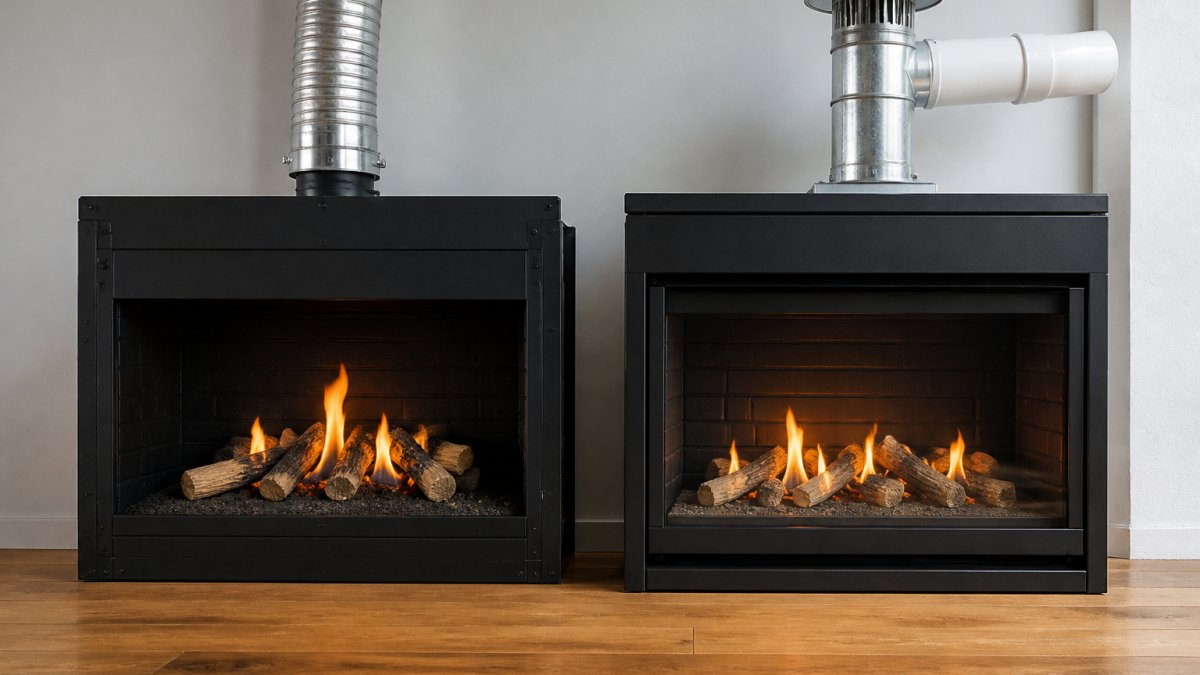
Direct-vent fireplaces use a sealed double-wall pipe: one channel brings combustion air in, the other sends exhaust gases out.
To confirm which you have, read the listing label on the firebox or in the manual. Look for the words "outdoor," "indoor," or "outdoor/indoor" and the testing agency mark.
If you are comparing the two approaches for a luxury property, our guide to ventless vs direct vent gas fireplaces for luxury homes breaks down the trade-offs in more detail.
Direct Vent Gas Fireplace Venting Requirements
Direct vent gas fireplace venting requirements come down to four numbers in the manual: pipe diameter, maximum run length, maximum elbow count, and termination clearance. Stay inside all four and the system drafts correctly. Exceed any one and exhaust can spill or the burner can soot.
The vent pipe must slope correctly, usually slightly downward toward the termination on horizontal runs so condensation drains out rather than back into the firebox. Joints get sealed per the manufacturer's instructions. The termination cap is model-specific and must not be swapped for a generic part.
Horizontal Wall Termination vs Vertical Roof Termination
Horizontal wall termination exits through a side wall. It is shorter, cheaper, and easier to service, but it puts the cap closer to patios, plants, and neighboring structures, so clearances get tight. Wind hitting a side wall can also affect draft on exposed sites.
Vertical roof termination runs up and out through the roof. It costs more and needs flashing done right, but it lifts exhaust well above seating areas and handles wind better. For a covered patio with a wall behind the seating, horizontal is common; for an open structure, vertical often wins.
How a Direct-Vent System Routes Exhaust Outdoors
The path is simple once you see it. Combustion air enters the outer channel of the double-wall pipe. The burner fires inside the sealed firebox. Exhaust gases travel up the inner flue, through any elbows, and out the termination cap. The cap keeps rain and debris out and directs exhaust away from the structure.
Because the firebox is sealed, indoor air is never used for combustion. That is the whole point of direct-vent design, and it is why these units suit tight, well-insulated homes and covered outdoor rooms alike.
Montigo Divine Contemporary See- Through 38" Gas Fireplace →
Reading a Gas Fireplace Venting Diagram
A gas fireplace venting diagram is a chart in the manual that plots allowed vent runs. One axis shows horizontal distance, the other shows vertical rise. The shaded area is the approved zone; anything outside it is not permitted.
Read it in three steps:
- Measure your planned horizontal run from firebox to termination.
- Measure your planned vertical rise.
- Plot the point and confirm it lands inside the shaded zone.
Then count your elbows against the manual's limit. A common mistake is ignoring elbow deductions, which shrink the allowed run. If your point falls outside the zone, shorten the run or add rise before you cut any holes.
Safe Termination Placement and Clearances
Safe placement keeps exhaust away from anything that opens, anything that burns, and anyone who sits nearby. The manual lists minimum distances to windows, doors, corners, soffits, gas meters, and grade.
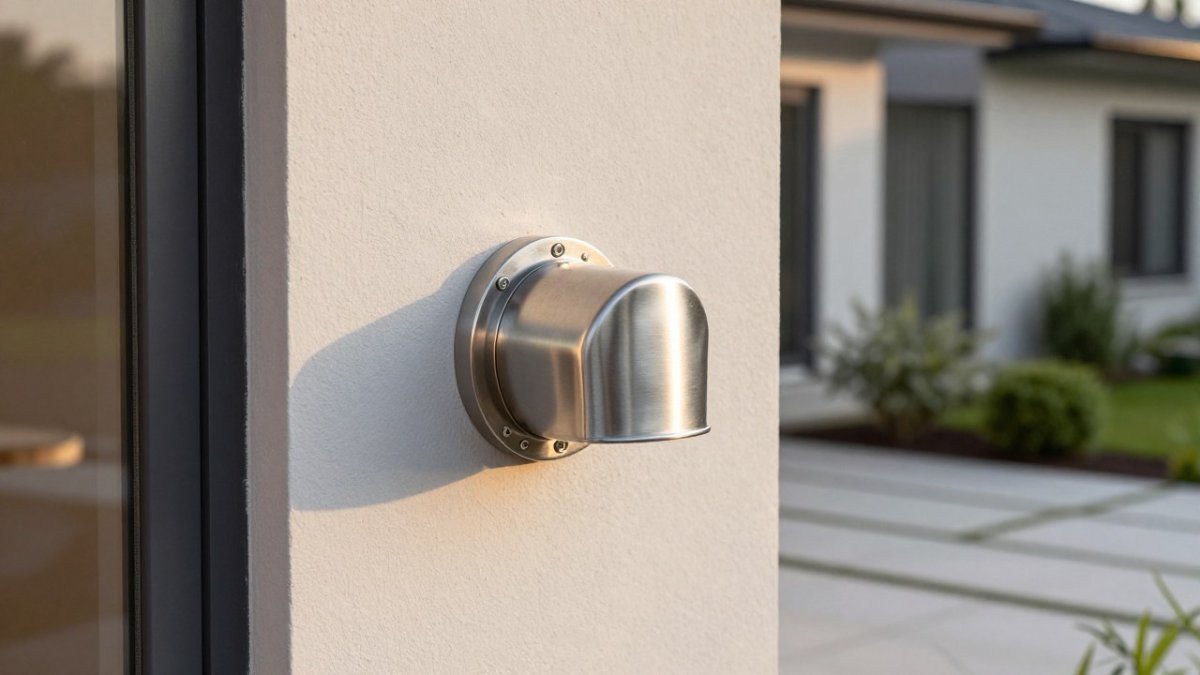
Wind and weather deserve their own check. A cap tucked under a soffit or facing the prevailing wind can pull exhaust back toward the patio.
Install carbon monoxide detectors near the outdoor living area and inside the home. Test them monthly during the season you use the fireplace.
Vent Pipes, Flue Liners, and Termination Caps
Use only the vent pipe the manufacturer specifies. Direct-vent pipe is matched to the appliance, and mixing brands can void the listing and fail inspection.
The termination cap is not a cosmetic part. It blocks rain, keeps birds and debris out, and shapes how exhaust leaves the building. Replace a damaged cap with the exact model listed for your fireplace. Never screen or modify a cap to "improve" flow.
On vent-free units there is no flue liner or vent pipe at all. That is a feature, not a shortcut: the unit is engineered to burn cleanly in an open-air setting, and it should never be enclosed or run in a sealed room.
Vent Inspection, Troubleshooting, and When to Call a Professional
Inspect the vent before each season. Look for rust, loose joints, insect nests, snow blockages, and soot at the cap. Inside, check that the burner flames are steady and blue, not lazy and yellow. A blocked or damaged vent can send exhaust into the living space.
Watch out: if you smell gas, see sooting around the firebox, or notice the flame lifting or sputtering, shut the unit off at the gas supply and stop using it. Those are not DIY fixes. Gas work and vent repair belong to a licensed professional.
For common direct-vent faults and their fixes, our guide to direct vent gas fireplace troubleshooting issues walks through the usual suspects in order.
Choosing Your Outdoor Fire Feature with Venting in Mind
Pick the fireplace and the venting plan together, not one after the other. A model that needs a long horizontal run may not suit a wall with limited clearance, and a vent-free unit may fit where a vented one cannot. Decide the wall or structure first, then match the appliance to it.
For buyers who want vent-free simplicity, the Montigo Divine Contemporary Single Sided Outdoor Gas Fireplace 38" is built from 304 stainless steel with a 34,000 BTU output and needs no chimney or venting system. The Montigo Divine Traditional See-Through Outdoor Gas Fireplace 38" offers the same ventless outdoor installation with a traditional log set and wrought-iron grate. If you are narrowing the field for a covered space, our guide to the best outdoor gas fireplace for a covered patio pairs well with this venting discussion.


Best for: buyers who want a sealed, vented installation with predictable clearances. Skip if: your wall or roofline cannot meet the manual's termination distances.
Frequently Asked Questions
Does an outdoor gas fireplace need to be vented?
It depends on the model. Some outdoor units, such as the Montigo Divine see-through fireplaces, are listed for ventless outdoor installation. Direct-vent models must route exhaust outdoors through a wall or roof termination. Check the manufacturer's installation manual and the appliance's rating plate before assuming either way, and follow local building codes for your property.
What is the difference between direct-vent and vent-free gas fireplaces?
A direct-vent fireplace pulls combustion air from outside and sends exhaust gases back out through a sealed pipe, so it needs a wall or roof termination. A vent-free unit burns inside the firebox without a flue, which is why vent-free models are common for outdoor installations. Direct-vent setups route exhaust outside through a sealed pipe, while vent-free units burn without a flue.
How can I tell if my gas fireplace is venting properly?
Look for a steady, clean flame with no soot streaks on the glass or termination cap, no lingering gas smell, and no exhaust spilling back into a covered area. Check that the termination cap is free of nests, leaves, or snow and that nearby plants or furniture have not crept into the clearance zone. A carbon monoxide detector in any adjacent enclosed space adds a layer of protection. If you notice soot, odors, or a lazy flame, stop using the fireplace and have a qualified professional inspect it.
Can I install or reroute the vent myself?
Vent routing is not a DIY task. Cutting through siding, setting clearances to combustible materials, and connecting gas supply all fall under manufacturer specifications and local codes, and mistakes can create carbon monoxide risks. A qualified professional should handle the installation, including termination placement and any permit inspection. Your role is to choose the right model, keep the clearance zone clear, and schedule routine inspections.
Venting an outdoor gas fireplace rewards patience: read the manual, plot the diagram, respect the clearances, and let a licensed professional handle the gas work. At Zen Home Fireplaces, we stock curated modern designs from trusted brands, including outdoor-rated gas fireplaces built for permanent installation, plus our Zen Hearth Essentials accessories line to finish the space. Explore the collection and find a fire feature that fits your patio, your structure, and your venting plan.