Article: Custom Fireplace Surround Design Ideas for Every Style
Custom Fireplace Surround Design Ideas for Every Style
Quick Summary
A custom fireplace surround can be designed in sleek linear, simple understated, or warm wood styles, with stone, brass and mantel accents for personalization. The right surround depends on the room's style, the chosen unit and the clearances required for safe installation. Plan measurements and clearances before ordering any materials.
- Linear surrounds with large-format tile suit contemporary homes and keep focus on the flame.
- Red oak takes stain evenly, while white oak is harder and more dimensionally stable.
- Painted poplar is the most economical wood option for painted surrounds.
- Confirm the clearance figure in the installation manual before fixing any trim or mantel.
- Record the opening width, height, unit depth and ceiling distance before ordering materials.
Table of Contents
- Modern Fireplace Surround Ideas That Anchor a Room
- Simple Fireplace Surround Ideas for Clean, Understated Spaces
- Wood Fireplace Surround Ideas and How to Choose the Right Species
- Stone, Brass and Mantel Accents for a Custom Look
- Custom Fireplace Surround DIY: Measurements, Clearances and Safety
- Planning Your Custom Surround and Booking Your Installation
- Frequently Asked Questions
Modern Fireplace Surround Ideas That Anchor a Room
A custom fireplace surround is often the first thing a visitor notices when they walk into a living room. The surround sets the tone for the whole space, whether that means sleek lines or warm, traditional detail. The right design also determines how well the fireplace fits the room, which is why it pays to plan the surround before choosing the unit.
Sleek Linear Surrounds for Contemporary Living Rooms
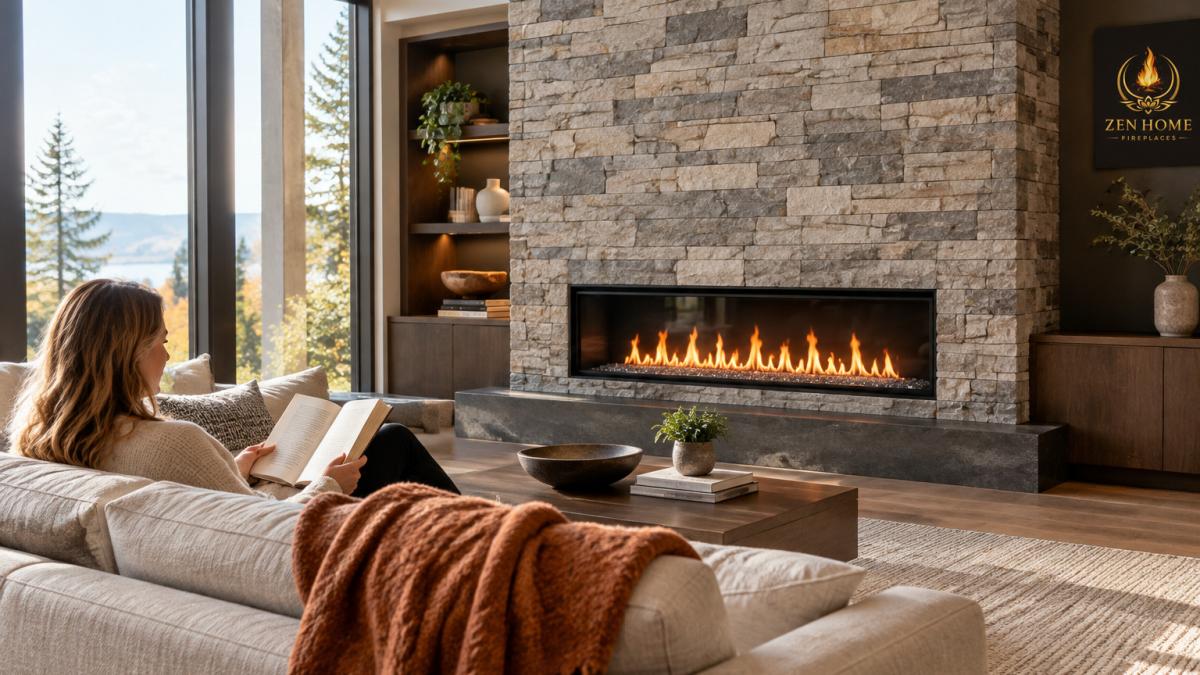
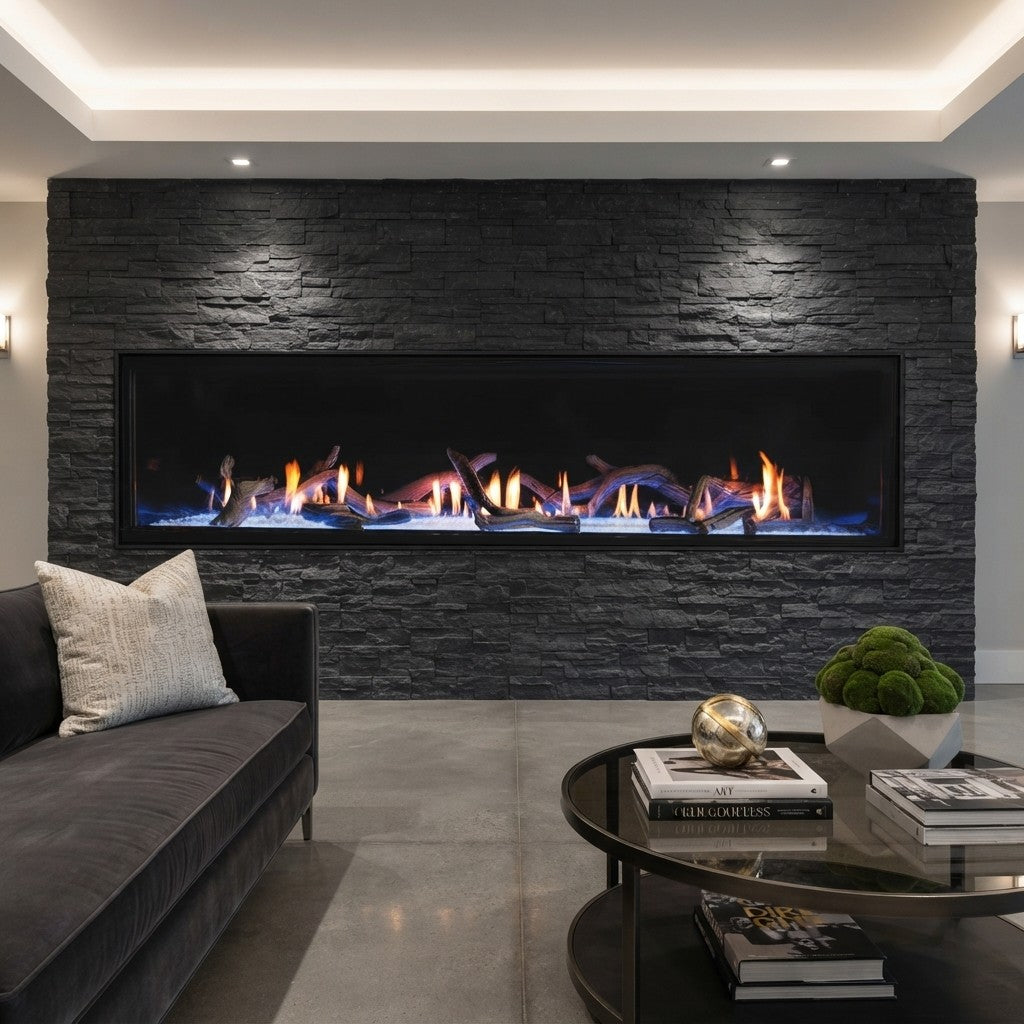
Linear surrounds are the most popular choice for contemporary homes. A long, low horizontal opening with minimal trim keeps the focus on the flame. Many homeowners pair this style with a wall of large-format tile or painted board that runs to the ceiling, so the fireplace reads as part of the architecture rather than an add-on.
Pairing Modern Surrounds With Linear Electric and Gas Units
Linear units fit naturally into modern surrounds because their slim, wide profile matches the clean lines of the wall. The Dimplex Ignite Ultra 50" Linear Electric Fireplace - ULT50 starts at $4,649.99 and suits a modern surround where a flat wall needs a focal point. For a linear gas option, the Empire Boulevard 72" Linear Direct-Vent Gas Fireplace starts at $10,969.00 and offers an expansive 72-inch viewing area for larger rooms. Check the manufacturer's clearance and framing requirements before building the surround around either unit.
Simple Fireplace Surround Ideas for Clean, Understated Spaces
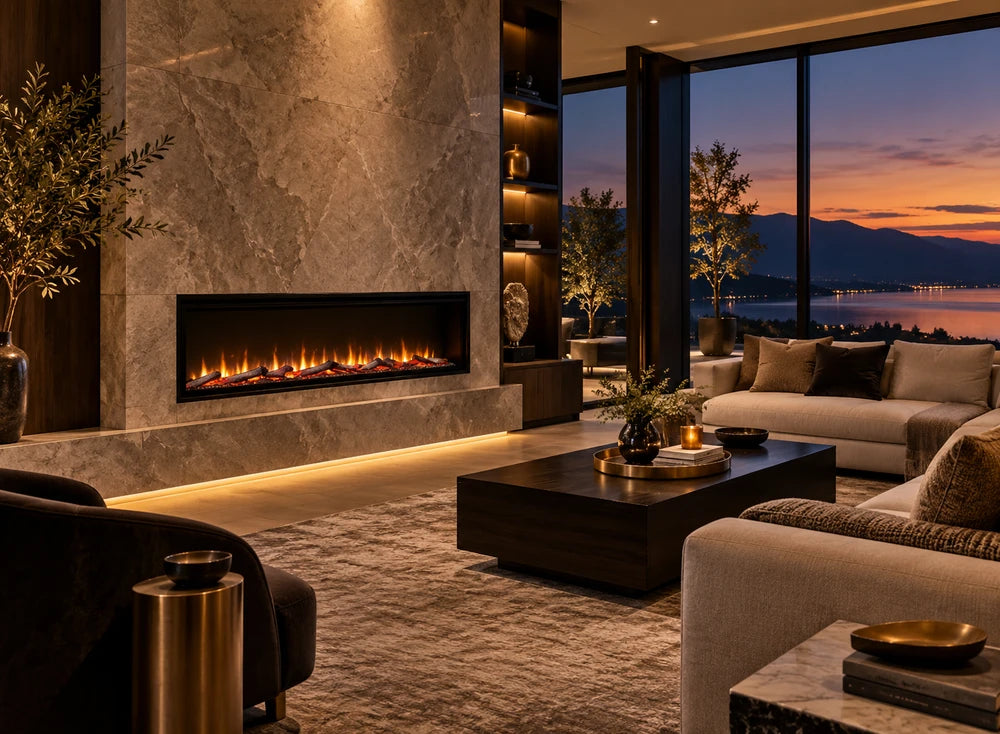
Not every room needs a bold statement. A simple surround in a neutral finish can make a fireplace feel quiet and integrated, especially in smaller rooms or homes with a calm, minimal palette. The goal is to let proportion and material do the work instead of decoration.
Plain drywall or painted board with a slim wood or metal cap is a common approach. For a finishing touch, the Pilgrim Metal Mantel Shelf- Brass at $479.00 adds a clean architectural line above the hearth without crowding the wall.
Wood Fireplace Surround Ideas and How to Choose the Right Species
Wood surrounds bring warmth and texture, and they suit traditional, transitional and rustic interiors. The species you choose affects how the surround looks, how it ages near heat, and how much maintenance it needs. Oak, walnut, maple and painted poplar are among the common choices for wood surrounds.
Species-by-Species Trade-offs
- Oak (red or white): Dense, open-grained and widely available. Red oak takes stain evenly and hides minor dings; white oak is harder and more dimensionally stable, which matters for a surround that spans a wide opening. Expect to pay more for white oak than red.
- Walnut: Dark, tight-grained and visually warm. It shows dust and fingerprints more readily than lighter woods, so it needs more frequent dusting. Walnut is typically the most expensive of the common species.
- Maple: Fine, closed grain that takes paint and clear finish cleanly. It is harder than poplar and resists dents, but it can yellow under a clear finish over time.
- Painted poplar: The most economical option for a painted surround. Poplar is soft and dents easily, so it suits a surround that will be painted rather than stained and that sits away from daily traffic.
How Heat Affects Wood Surrounds
Wood closest to the firebox needs the most care. Keep combustible materials at the clearances specified by the fireplace manufacturer and local code, and use a finish rated for the warmth it will see. A common pattern is for the finish nearest the opening to dry out, crack or yellow before the rest of the surround, so plan for a finish that tolerates heat and a design that keeps wood a generous distance from the unit. Painted or sealed surfaces are easier to clean than oiled ones, and a surround with a generous gap from the unit will age better and need less upkeep than one built tight against the firebox.
Matching Wood to the Rest of the Room
A wood surround reads as part of the architecture when its tone and grain relate to the floor, trim and nearby furniture. Dark stains anchor a room and suit traditional and rustic interiors; lighter woods and painted finishes keep a small room feeling open. If the surround will sit against a stone or tile wall, choose a species whose grain contrasts with the wall texture rather than competing with it.
Watch out: a wood mantel or surround installed too close to the firebox can overheat, crack the finish, or char the wood. Confirm the clearance figure in the installation manual before you fix any trim.
The species you choose affects how a wood surround looks, ages near heat, and needs maintenance.
| Species | Best for | Key difference |
|---|---|---|
| Red oak | Even stain, hiding minor dings | Open-grained and widely available |
| White oak | Wide openings needing stability | Harder and more dimensionally stable; costs more than red oak |
| Walnut | Warm, dark traditional looks | Shows dust and fingerprints; typically the most expensive |
| Maple | Clean paint or clear finish | Fine, closed grain; resists dents but can yellow |
| Painted poplar | Economical painted surrounds | Soft and dents easily; suits low-traffic areas |
Stone, Brass and Mantel Accents for a Custom Look
Stone and metal accents let you personalize a surround without a full rebuild, but each material carries different weight, cost and care needs. Choosing by heat exposure and maintenance, rather than by look alone, is the difference between an accent that ages well and one that fails near the opening.
Stone and Tile Options
- Natural stone (marble, granite, travertine, slate): Each slab is unique, but natural stone is heavy. Confirm the stone is rated for the heat near the opening; some stones stain or etch from heat and moisture.
- Cast stone: A molded product that mimics natural stone at a lower weight and cost. It is a common choice for mantels and surround legs because it can be produced in consistent profiles.
- Ceramic and porcelain tile: Available in large formats that suit modern linear surrounds. Tile weight is manageable for most wall assemblies, but grout lines need sealing near a hearth.
- Manufactured stone veneer: Lighter than full-bed natural stone and designed for wall application. It suits rustic and traditional looks and is often the most practical way to clad a full wall.
Brass and Metal Accents
Brass accents bring warmth against dark stone or black steel, and they pair well with brick and neutral tones. Brass finishes vary in how they age over time. Metal trim near the opening should be rated for the temperature it will see.
Mantel Shelves: Depth, Weight and Heat
A mantel shelf ties these elements together. Choose a depth that suits the room's scale, a deep shelf suits a large stone surround, while a shallow shelf keeps a small room from feeling crowded. Confirm the weight capacity and the fastening method before you hang decor, and check the manufacturer's minimum distance from the top of the firebox to the mantel.
Watch out: a mantel or surround installed too close to the firebox can overheat and damage the finish or the wall behind it. Confirm the clearance figure in the installation manual before you fix any trim.
Custom Fireplace Surround DIY: Measurements, Clearances and Safety
Start with accurate measurements. Record the width and height of the opening, the depth of the unit, and the distance from the top of the firebox to the ceiling. Check the manufacturer's installation manual for required clearances to combustible materials, framing dimensions and electrical or venting requirements. Many units also specify minimum distances for mantels, so measure before you order any mantel piece.
Safety rules are not optional. Confirm that wiring, venting and gas connections meet local codes and have them inspected where required. A licensed professional should handle electrical and gas work.
Watch out: a mantel or surround installed too close to the firebox can overheat and damage the finish or the wall behind it. Confirm the clearance figure in the installation manual before you fix any trim.
Planning Your Custom Surround and Booking Your Installation
Once you have chosen a style and confirmed the measurements, put the plan on paper. List the materials, the unit model, the clearances and the finish, then decide which steps you will do yourself. A professional can review the plan for code compliance and handle the connections that require a licensed installer.
For a full walkthrough of safe installation steps, read how to install a gas fireplace safely. If you are ready to hire help, why professional fireplace installation is worth it explains what to expect.
Last Updated: November 14, 2026
Frequently Asked Questions
What materials are best for a custom fireplace surround?
Stone, tile, brick and wood are the most common choices. Stone and tile handle high heat well and need little upkeep, while wood suits mantels and trim set well away from the firebox. Before choosing, check the heat rating of the material against your fireplace type, and confirm clearances in the installation manual. Metal accents such as the Pilgrim Metal Mantel Shelf in brass-plated stainless steel are non-combustible and pair well with stone or brick surrounds.
How do I choose a fireplace surround that fits my living room?
Start with the scale of the wall and the firebox. A 50-inch linear unit such as the Dimplex Ignite XL 50 suits a wide, low surround, while a 72-inch Empire Boulevard calls for a broader feature wall. Measure the opening, the wall height and the furniture layout, then pick a style that matches the room's finishes. A surround should frame the fire without crowding seating or nearby walls.
Can I build a custom fireplace surround myself?
A decorative surround can often be built or finished by a capable DIYer, provided it does not touch the firebox, venting or framing that carries structural or heat loads. Confirm the manufacturer's clearance-to-combustibles requirements and any local code rules before cutting or mounting anything. Gas units should be installed by a licensed installer.
How do I make a fireplace surround look more modern?
Choose clean-lined materials such as large-format stone or porcelain, keep trim minimal and use a flush or recessed mantel. Linear fireplaces such as the Dimplex Ignite Ultra 50 create a sharp horizontal line that a simple surround can echo. Adding a slim metal mantel shelf in a warm finish brings contrast without clutter.