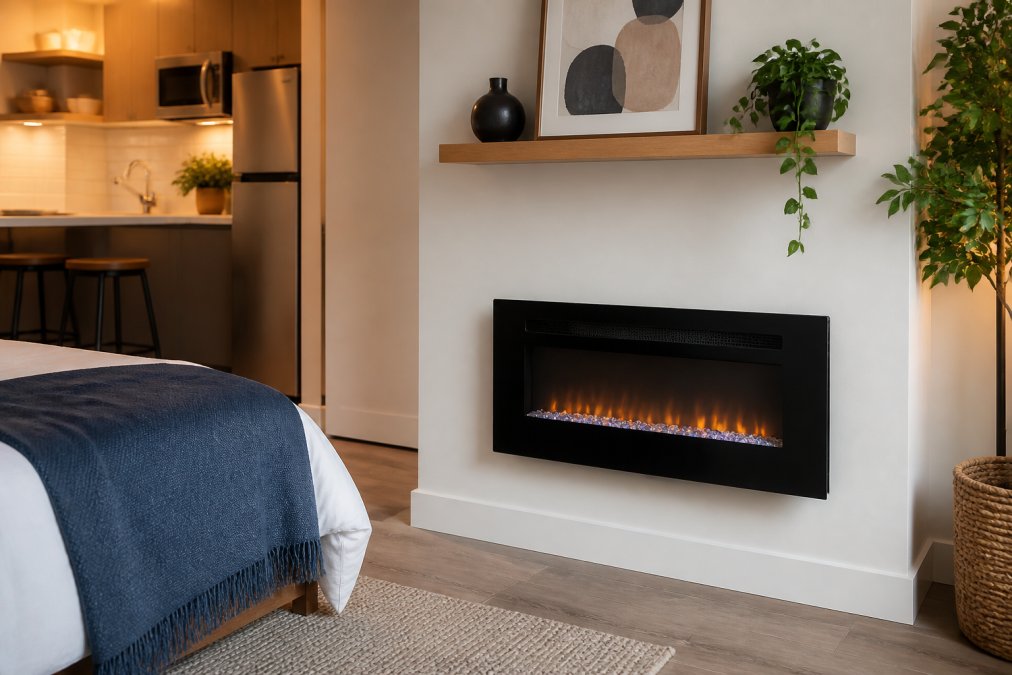
Article: How to Install a Gas Fireplace Safely
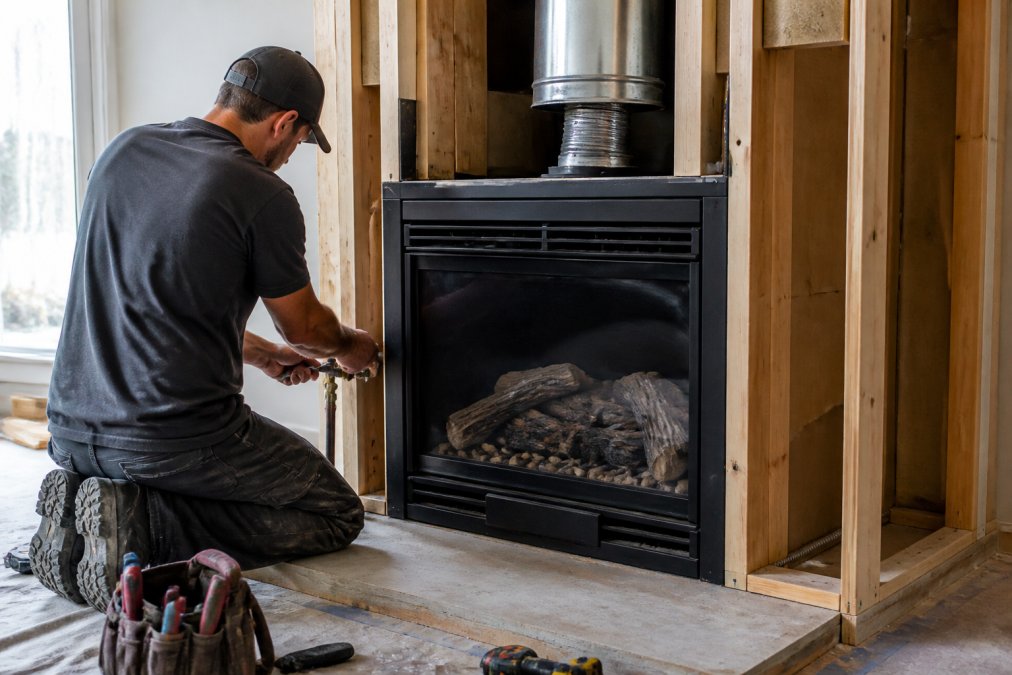
How to Install a Gas Fireplace Safely
Table of Contents
- What You'll Need Before You Install a Gas Fireplace
- Gas Fireplace Venting Requirements Explained
- Local Building Codes for Gas Appliances: Permits and Inspections
- Gas Line Installation Tools and Shut-Off Procedures
- Step-by-Step: How to Install a Gas Fireplace Safely
- Hiring a Certified Gas Technician: When DIY Ends
- Troubleshooting Common Installation Errors and Post-Installation Maintenance
- Conclusion
Last Updated: August 16, 2026
What You'll Need Before You Install a Gas Fireplace
Learning how to install a gas fireplace safely starts long before you pick up a wrench. Getting the right tools, materials, and unit type sorted upfront determines whether the process goes smoothly or stalls at the worst possible moment.
Tools and Materials Checklist
A thorough checklist prevents mid-installation trips to the hardware store and keeps the work safe.
Tools required:
- Pipe wrench and adjustable wrench set
- Gas pressure gauge
- Leak detection solution or electronic gas detector
- Drill with masonry bits
- Level and measuring tape
- Tin snips
- Screwdrivers, both flathead and Phillips
Materials required:
- Approved flexible gas connector or rigid black iron pipe
- Shut-off valve rated for your BTU rating
- Vent pipe kit matched to your unit type (direct vent, B-vent, or vent-free)
- High-temperature silicone sealant
- Firestop spacers for wall penetrations
- Combustion air supply components (where required)
Choosing the Right Unit: Vented, Direct Vent, or Vent-Free
Direct vent units draw combustion air from outside and exhaust through a sealed, co-axial pipe system. They are the most versatile and safest choice for enclosed living spaces.
B-vent (natural vent) units pull combustion air from inside the room and exhaust through a vertical chimney flue. They require an existing chimney or new vertical vent run, adding installation complexity.
Vent-free (unvented) units require no external venting but release combustion byproducts including water vapor and trace carbon monoxide into the room. Several states restrict or prohibit vent-free installations, so verify local regulations before purchasing.
The right choice depends on your home's construction, local building codes, and how the space is used. Mismatching unit type to venting configuration is a safety hazard.
Gas Fireplace Venting Requirements Explained
Venting is the most technically demanding part of any gas fireplace installation. According to the U.S. Consumer Product Safety Commission's guidelines on carbon monoxide safety, improper venting of gas appliances is a leading contributor to residential carbon monoxide incidents. Getting this right is not optional.
Direct Vent vs. B-Vent vs. Vent-Free: Which Applies to Your Home
Direct vent is the current standard for new installations in most jurisdictions. The sealed combustion system isolates the firebox from room air, eliminating the risk of backdrafting combustion gases into the living space. Vent runs can be horizontal, vertical, or a combination, making direct vent suitable for homes without existing chimneys.
B-vent systems rely on natural buoyancy of warm exhaust gases to draw combustion products up a vertical flue. The flue must terminate above the roofline, following National Fire Protection Association clearance requirements. B-vent units are less efficient than direct vent but practical when an existing masonry chimney is in place.
Vent-free units carry the most restrictions. They must be sized correctly for room volume, and the space must have adequate combustion air supply. Many manufacturers recommend against vent-free installations in bedrooms, bathrooms, or any room regularly sealed tightly. A carbon monoxide detector is mandatory.
| Unit Type | Venting Direction | Combustion Air Source | Key Restriction |
|---|---|---|---|
| Direct Vent | Horizontal or vertical | Outside air (sealed) | Clearance to combustibles |
| B-Vent | Vertical only | Indoor room air | Requires vertical chimney |
| Vent-Free | None required | Indoor room air | State/local restrictions apply |
Local Building Codes for Gas Appliances: Permits and Inspections
Installing a gas fireplace without a permit is a code violation in virtually every jurisdiction. An unpermitted installation can void your homeowner's insurance and complicate a future home sale. The International Fuel Gas Code adopted by most states requires a permit for any new gas appliance installation.
The permit process typically works as follows:
- Submit an installation plan to your local building department, including the fireplace model, BTU rating, venting layout, and gas line routing
- Receive plan approval before beginning work
- Complete the rough-in inspection (gas line and vent framing) before closing walls
- Schedule a final inspection after the unit is fully installed and operational
- Receive a signed-off certificate of occupancy or inspection record
Local codes also govern clearance to combustibles, specifying the minimum distance between the firebox, vent components, and any wood framing, drywall, or other combustible materials. These clearances are the difference between a safe installation and a house fire.
Gas Line Installation Tools and Shut-Off Procedures
Connecting a flexible gas connector to an existing capped stub-out is a task many experienced homeowners can manage. Running new black iron pipe from the main supply line legally requires a licensed plumber or gas fitter in most jurisdictions.
Essential tools include a pipe cutter, pipe threader, pipe dope or yellow PTFE tape rated for gas service, a torque wrench, and a calibrated gas pressure gauge. An electronic gas detector is worth the investment for checking joints in tight spaces.
How to Shut Off the Gas Supply Safely
Shutting off the gas supply before any installation work is the single most important safety step.
- Locate the main gas shut-off valve, typically where the gas line enters the home near the meter
- Turn the valve a quarter-turn so the handle is perpendicular to the pipe
- Verify the gas is off by attempting to light a gas burner elsewhere in the home
- Attach a lockout tag to the valve so no one restores gas supply while work is in progress
- After completing gas line connections, restore gas supply slowly and test every new joint with leak detection solution
Never use an open flame to check for gas leaks. Always use approved leak detection solution or an electronic detector.
Step-by-Step: How to Install a Gas Fireplace Safely
To install a gas fireplace safely, work through preparation, framing, venting, gas connection, and final testing in sequence. Skipping steps or reversing the order creates rework at best and safety hazards at worst.
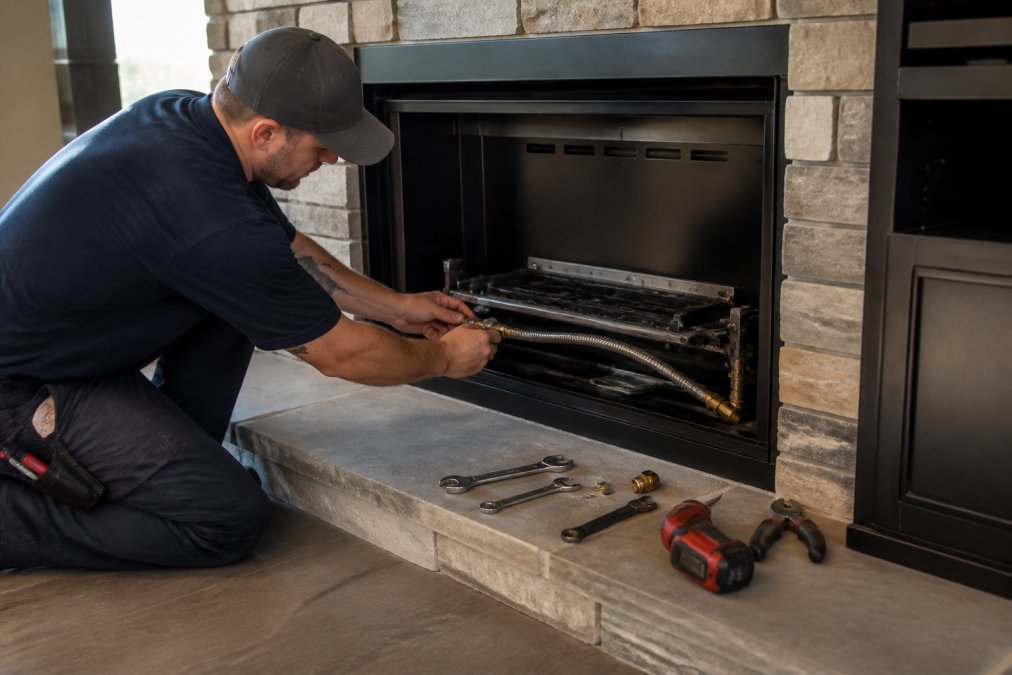
Firebox and Hearth Preparation
The firebox is the structural heart of the installation. The opening must be framed to the manufacturer's specified rough opening dimensions, with all clearance to combustibles maintained throughout.
For a zero-clearance fireplace insert, a non-combustible hearth extension is required in front of the unit. The hearth extension must extend a minimum distance in front of the firebox opening as specified by the appliance listing and local codes. Ceramic tile, natural stone, and brick are all acceptable hearth materials.
Check that the floor beneath the unit can support the weight. Older homes with softwood subfloors may need reinforcement.
Connecting the Gas Supply Line and Testing for Leaks
With the firebox in place and the gas supply shut off, connect the flexible gas connector between the unit's inlet and the supply stub-out. Use only connectors listed for gas service and never reuse an old connector.
After making all connections, restore gas supply slowly and apply leak detection solution to every joint, including the shut-off valve, connector fittings, and the unit's gas valve inlet. Bubbling indicates a leak. Tighten the fitting and retest. If bubbling persists, disassemble and remake the joint.
A gas pressure test with a calibrated gauge confirms the line pressure matches the unit's specified inlet pressure. Most residential gas fireplaces are designed for natural gas at standard residential line pressure. If using propane, the unit requires conversion jets and a pressure regulator set to the correct specification.
Installing the Safety Screen, Glass, and Ignition System
The safety screen is a mandatory component on all gas fireplaces. It prevents accidental contact with the hot glass front, which can reach temperatures that cause serious burns within seconds of operation. Install the screen according to the manufacturer's instructions and confirm it is secured before the first test fire.
For units with a ceramic glass front panel, inspect the glass for cracks before installation. A cracked glass panel must be replaced before the unit is operated.
The ignition system should be tested before the firebox surround and mantel are installed. Confirm the pilot lights cleanly, the thermocouple generates sufficient millivoltage to hold the main valve open, and the main burner ignites without delay.
Hiring a Certified Gas Technician: When DIY Ends
Some parts of a gas fireplace installation are within reach of a skilled, code-literate homeowner. Others are not, and recognizing the boundary is what separates a safe installation from a dangerous one.
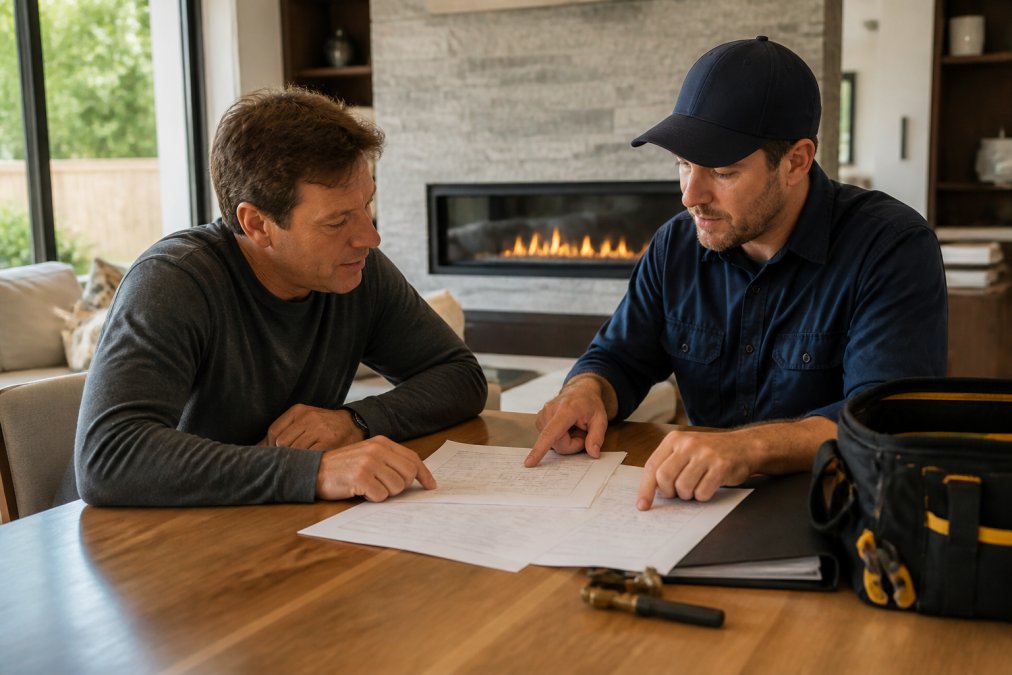
A certified gas technician, often holding a certification from the National Fireplace Institute's certified professional program, is trained specifically in gas appliance installation, combustion analysis, and code compliance. Gas system errors are not always visible, and the consequences of getting them wrong are severe.
Hire a certified technician when:
- Running new gas supply lines from the main service line or meter
- Converting a unit from natural gas to propane or vice versa
- Installing a direct vent system that requires wall or roof penetrations
- Your municipality requires a licensed contractor to pull the installation permit
- The installation involves modifying an existing flue or chimney crown
At Zen Home Fireplaces, the units in our curated collection are matched to detailed installation documentation so that homeowners and their contractors can work together efficiently. The gas connection and final commissioning should always involve a qualified professional.
Troubleshooting Common Installation Errors and Post-Installation Maintenance
The installation is complete and the inspector has signed off. That is not the end of the story.
Common Mistakes and How to Fix Them
Pilot light that won't stay lit: The most common cause is a thermocouple not positioned correctly in the pilot flame. The thermocouple tip must be fully enveloped in the pilot flame to generate adequate voltage. Reposition it so the flame contacts the tip directly. If the problem persists, the thermocouple may need replacement.
Weak or uneven main burner flame: Check the gas pressure at the unit's inlet. Low pressure typically points to an undersized supply line or a partially closed shut-off valve. Uneven flame across ceramic logs usually means the logs are not positioned correctly per the manufacturer's diagram.
Condensation inside the firebox on a direct vent unit: This is normal during the first several hours of operation. If it persists beyond the break-in period, check that the vent termination cap is correctly installed and that the moisture barrier around the vent pipe penetration is intact.
Carbon monoxide detector alarm: Treat this as an emergency. Shut off the unit, ventilate the space, and do not re-operate the fireplace until a certified technician has inspected the combustion system and venting.
Annual Maintenance Schedule
A gas fireplace requires annual service to operate safely and efficiently. Internal components degrade over time regardless of visible symptoms.
| Maintenance Task | Frequency | Who Performs It |
|---|---|---|
| Inspect and clean burner and logs | Annually | Certified technician |
| Test thermocouple and ignition system | Annually | Certified technician |
| Inspect vent and chimney crown | Annually | Certified technician |
| Check all gas connections for leaks | Annually | Certified technician |
| Clean glass panel and safety screen | Every 1-2 months (during use) | Homeowner |
| Test carbon monoxide detector | Monthly | Homeowner |
| Inspect firebox interior for debris | Before each season | Homeowner |
Annual professional servicing is not optional if you want your warranty to remain valid. Most manufacturers require documented professional maintenance as a condition of warranty coverage. A properly serviced unit operates at its designed BTU rating, which means better heat output and lower gas consumption.
Installing a gas fireplace is one of the most rewarding home upgrades a homeowner can undertake, but it carries real technical and safety obligations that demand careful attention. From securing the installation permit and matching your venting system to local building codes, to testing every gas connection and commissioning the ignition system correctly, each step matters. Zen Home Fireplaces offers a curated selection of premium gas fireplace units paired with complete installation documentation and accessories from the Zen Hearth Essentials line, designed to give you and your installer everything needed to complete the project with confidence. Explore the Zen Home Fireplaces collection to find the unit that fits your space, your style, and your installation requirements.
Frequently Asked Questions
Can I install a gas fireplace myself?
Some preparatory work, framing, hearth prep, and choosing the unit, can be done by a skilled homeowner. However, connecting a gas supply line and completing the final hookup legally requires a licensed gas technician in most states. Attempting the gas connection without proper certification violates local building codes for gas appliances and voids most manufacturer warranties. Always pull a permit and have the finished installation inspected before first use.
Do I need a permit to install a gas fireplace?
Yes, in virtually every jurisdiction. Gas appliance installations fall under the International Fuel Gas Code (IFGC) as adopted locally, and most municipalities require both a mechanical permit and a final inspection by a code official. Skipping the permit creates liability issues when you sell the home and may invalidate your homeowner's insurance if a gas-related incident occurs. Contact your local building department before any work begins.
Do gas fireplaces have to be vented outside?
It depends on the type. Direct vent and B-vent models must exhaust combustion gases outside through a dedicated flue or sealed coaxial pipe, these are the safest options for enclosed living spaces. Vent-free models burn without an external flue but require strict room-size minimums and carbon monoxide detector placement per ANSI Z21.11.2 standards. Many states and some municipalities ban vent-free installations in bedrooms and bathrooms entirely.
What are the safety risks of improper gas fireplace installation?
The most serious risks are carbon monoxide poisoning from inadequate ventilation, gas leaks from improperly sealed supply line fittings, and fire from insufficient clearance to combustibles around the firebox. A faulty thermocouple or pilot light assembly can also cause uncontrolled ignition. These hazards are why gas pressure testing, leak detection with an approved solution, and a professional inspection are required steps, not optional ones, before operating any newly installed unit.
This article was written using GrandRanker