Electric Fireplace Maintenance and Cleaning: A Step-by-Step Guide
Quick Summary
Electric fireplace maintenance means unplugging the unit, letting it cool, and dusting the glass, firebox, logs, and vents with a soft cloth or brush. Clean the glass with mild glass cleaner sprayed onto a cloth, never directly onto the unit. Keep water away from the plug, cord, and electrical parts, and let every surface dry fully before plugging it back in.
- Unplug the cord and let the unit cool completely before cleaning.
- Never spray liquid directly onto the fireplace or near the plug and cord.
- Spray mild glass cleaner onto the cloth, not the glass, and buff dry.
- Clean vents weekly and keep clearance in front of the unit for airflow.
- Check the owner's manual for your model before cleaning.
Table of Contents
- Why Electric Fireplace Maintenance Matters
- Safety First: Unplug and Let the Unit Cool
- How to Clean Inside an Electric Fireplace
- How to Clean Electric Fireplace Insert Units
- How to Clean Electric Fireplace TV Stand Models
- Electric Fireplace Maintenance Checklist by Frequency
- Troubleshooting After Cleaning and When to Call a Technician
- Keep Your Dimplex Fireplace Looking New With Regular Care
- Frequently Asked Questions
Electric Fireplace Maintenance and Cleaning: A Step-by-Step Guide
Last Updated: November 11, 2026
Why Electric Fireplace Maintenance Matters
A clean electric fireplace looks better, runs quieter, and keeps the flame effect sharp.
Dust is the main enemy. It builds up on the glass, the logs, the ember bed, and the vents.
Most electric fireplaces are simple to care for. You do not need special tools or harsh chemicals.
Before you start, check the owner's manual for your model.
Safety First: Unplug and Let the Unit Cool
Always turn the fireplace off and unplug it before you clean. Electrical parts and metal surfaces can cause shocks or burns if you skip this step.
Wait until the unit is fully cool. Heaters and heating elements can stay warm for a while after use. Touching them too soon can cause burns.
Keep these safety rules in mind:
- Unplug the cord from the wall outlet before any cleaning.
- Let the unit cool completely before you touch the glass or interior.
- Never spray liquid directly onto the fireplace.
Watch out: plugging the unit back in while surfaces are still damp can damage electrical parts. Give it time to dry.
How to Clean Inside an Electric Fireplace
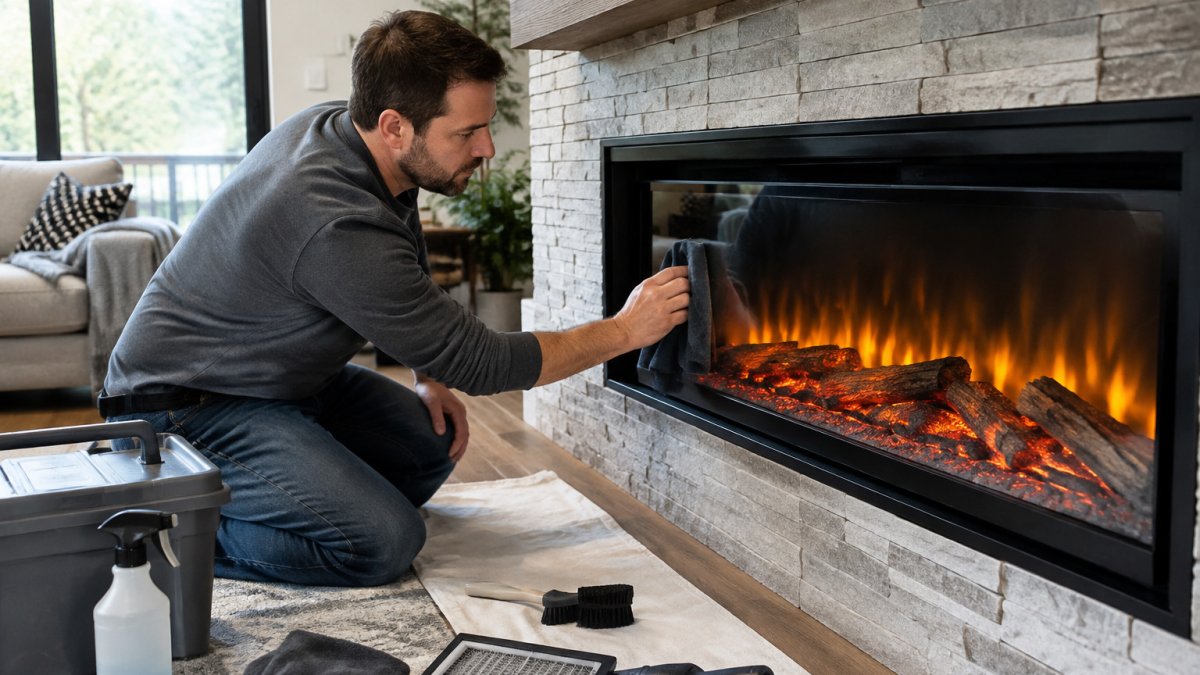
Cleaning the inside takes the most care. Work slowly and keep the electrical parts dry. Use a soft brush or cloth and avoid pressing hard on delicate surfaces.
Dusting the Firebox, Logs and Ember Bed
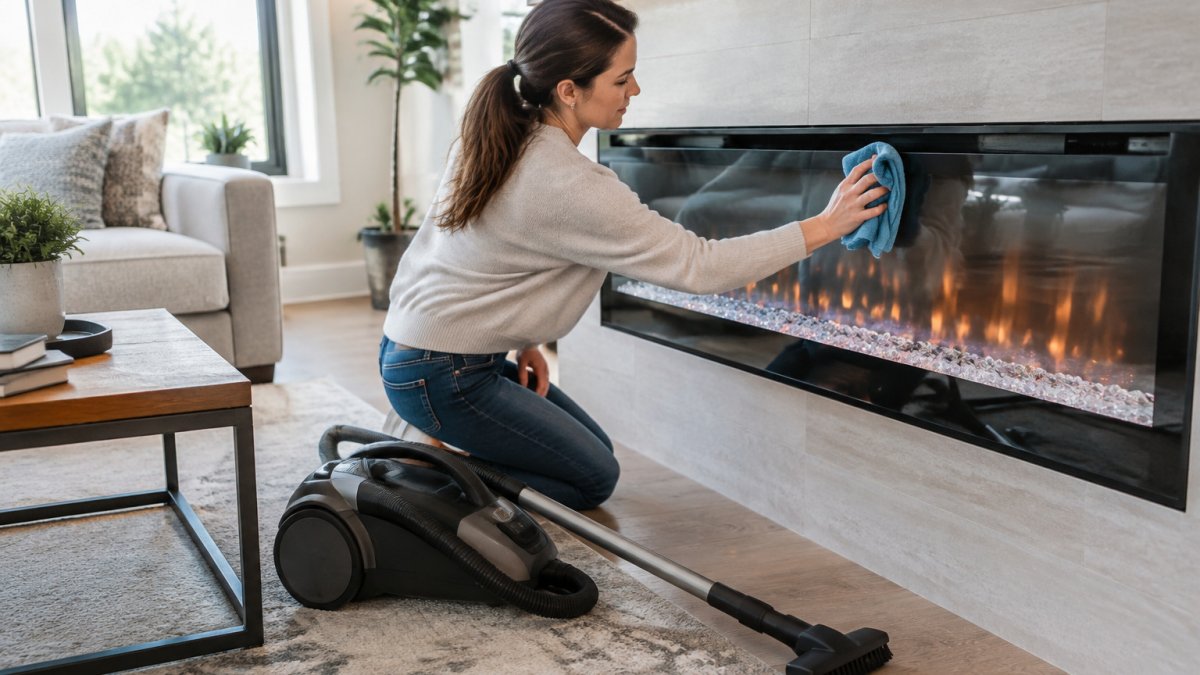
Start by removing loose dust. A vacuum with a soft brush attachment works well for this job.
- Unplug the unit and let it cool.
- Remove any removable logs or decorative media, following the manual.
- Vacuum the firebox floor and walls with the soft brush attachment.
- Gently vacuum the ember bed and the logs.
- Wipe any remaining dust with a dry microfiber cloth.
Handle decorative media with care. Logs and ember pieces can chip or crack. Place them on a soft towel while you clean, and return them exactly as they were.
Cleaning the Glass Viewing Panel
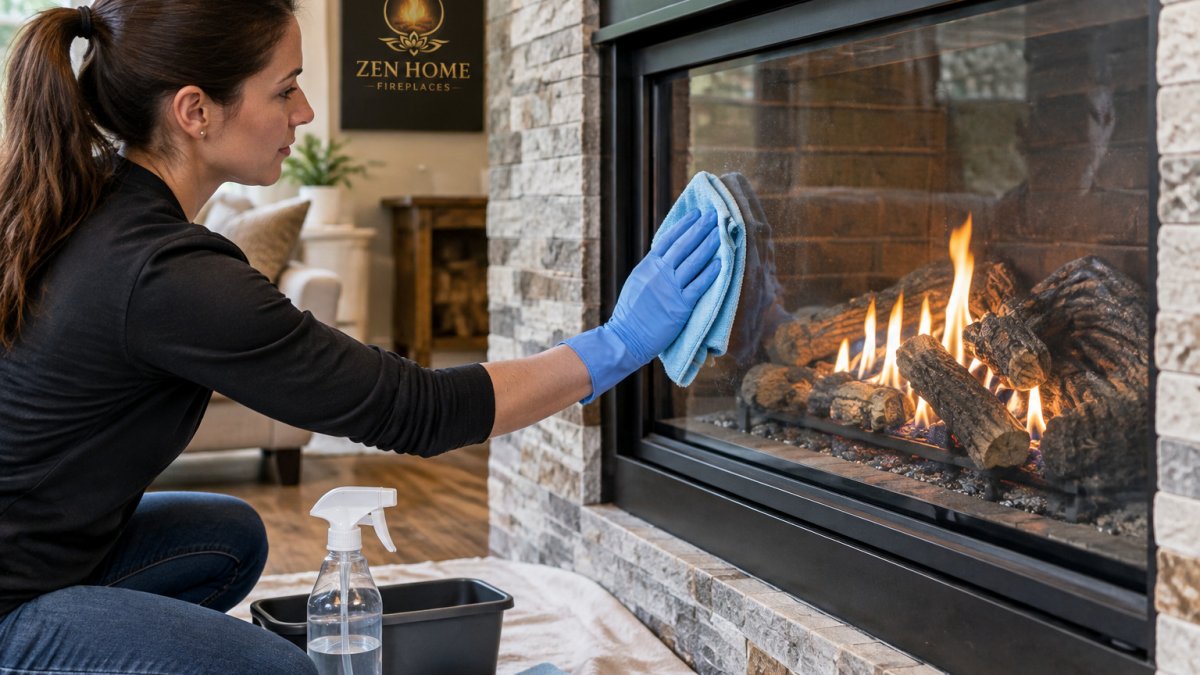
The glass collects fingerprints and dust that can dull the flame. Clean it with a soft cloth and a mild glass cleaner.
- Spray a small amount of mild glass cleaner onto the cloth, not the glass.
- Wipe the glass in one direction, from top to bottom.
- Use a second, dry microfiber cloth to buff the glass clean.
- Check the glass in good light for streaks.
Avoid abrasive cleaners, scouring pads, and paper towels. These can leave scratches or lint on the glass.
How to Clean Electric Fireplace Insert Units
An electric fireplace insert sits inside a wall opening, a mantel package, or a built-in frame, so it collects dust in places a freestanding unit does not: the surround gap, the trim, the front and side vents, and the recessed firebox. Cleaning an insert safely also means knowing which parts you can touch and which parts you should not open.
Before You Touch the Insert
- Turn the unit off at the controls, then unplug it from the wall outlet.
- Let it cool completely. Inserts often run for hours, and the heater housing stays warm long after the flame effect is off.
- Find the owner's manual. Most manufacturers print the model number on a label behind the front glass, on the back panel, or inside the trim frame. Search that model number on the manufacturer's website to download the current manual.
- Read the manual's cleaning and warranty sections before you remove anything.
Watch out: removing screws or panels the manual does not identify as user-serviceable can void your warranty even if you put everything back correctly.
Cleaning the Surround and Trim
Dust settles in the gap between the insert and the wall or mantel. Use a vacuum with a soft brush attachment to pull dust out of that gap, working from the top down so loosened dust does not fall onto surfaces you already cleaned. Wipe the trim and frame with a slightly damp microfiber cloth, then dry immediately with a second cloth.
Cleaning the Vents and Airflow Path
Inserts rely on unobstructed airflow. Check the front grille and any side vents for dust, pet hair, and lint. Vacuum the grille with the soft brush attachment, and use a dry microfiber cloth on the slats. Keep at least a few inches of clearance in front of the unit and do not stack decor, books, or a TV stand against the vents.
Cleaning the Firebox and Glass
If your model has removable logs, ember media, or a glass front the manual says you can remove, take those pieces out and place them on a soft towel. Vacuum the firebox floor and walls with the soft brush attachment, then wipe with a dry microfiber cloth. Clean the glass with a mild glass cleaner sprayed onto the cloth, not the glass, and buff with a dry microfiber cloth.
What Not to Do on an Insert
- Do not spray liquid directly onto the unit or into the surround gap.
- Do not use abrasive powders, scouring pads, or paper towels on the glass or trim.
- Do not use solvents, ammonia-heavy cleaners, or silicone sprays near the electrical components.
When to Stop and Call a Technician
Stop cleaning and call a qualified technician if you see a damaged cord, a cracked glass panel, scorched or discolored wiring, a burning smell, or a heater that will not respond to the controls after cleaning. These are not cleaning problems, and basic dusting will not fix them.
How to Clean Electric Fireplace TV Stand Models
TV stand fireplaces combine a media cabinet with a flame display. The cabinet surfaces collect dust, and the shelves need regular wiping.
Dust the cabinet top, shelves, and doors with a dry microfiber cloth. For sticky spots, use a slightly damp cloth, then dry the area fully.
Check the cord and plug behind the stand. Make sure the cord is not pinched or stretched.
Electric Fireplace Maintenance Checklist by Frequency
Different parts of an electric fireplace wear at different rates, so a single cleaning interval is not enough. Use this component-level schedule as a starting point, then shorten it if you run the unit daily, live with pets, or live in a dusty area. The owner's manual always overrides this schedule for your model.
Weekly
- Glass viewing panel: Dust with a dry microfiber cloth. Wipe fingerprints with a mild glass cleaner sprayed onto the cloth, not the glass.
- Exterior surfaces and trim: Dust with a dry microfiber cloth.
- Vents and grilles: Check that nothing blocks the front, side, or rear vents. Vacuum the grille with a soft brush attachment if you see dust buildup.
Monthly
- Firebox interior: Vacuum the floor and walls with a soft brush attachment.
- Logs and ember media: Remove them if the manual allows, dust them on a soft towel, and return them exactly as shown in the manual.
- Glass: Clean both sides if your model allows access to the inner pane.
Seasonally (Before and After Heavy Use)
- Full interior clean: Vacuum the firebox, ember bed, and any recessed areas where dust settles.
- Vent and airflow check: Clear dust from all vents and confirm clearance in front of the unit.
- Visible components: Check for scratches, loose parts, discoloration, or a glass panel that has shifted in its frame.
Yearly
- Full interior and exterior clean: Repeat the seasonal steps and inspect areas you do not reach monthly.
- Manual review: Re-read the owner's manual for model-specific care steps and warranty terms.
- Professional inspection: If the unit runs daily or shows any of the warning signs below, have a qualified technician inspect it.
Products and Materials to Avoid
- Abrasive powders and scouring pads: They scratch glass and trim.
- Paper towels: They leave lint and can scratch coated glass.
- Ammonia-heavy or solvent cleaners: They can damage finishes and are risky near electrical parts.
When to Stop DIY Work and Call a Technician
Stop cleaning and call a qualified technician if you notice a burning smell, sparks, a cord that is damaged or hot to the touch, persistent unusual noise, a heater that will not respond to the controls, or heat that does not match the setting.
The schedule below breaks down how often each part of the fireplace should be cleaned or checked.
| Interval | Task | Note |
|---|---|---|
| Weekly | Dust glass and exterior with dry microfiber cloth | Mild glass cleaner on cloth only |
| Weekly | Check vents and grilles for blockage | Vacuum grille if dust builds up |
| Weekly | Inspect cord and plug | Look for pinching or fraying |
| Monthly | Vacuum firebox interior | Use soft brush attachment |
| Monthly | Dust logs and ember media | Return exactly as the manual shows |
| Monthly | Wipe controls and remote | Do not spray cleaner on controls |
| Seasonally | Full interior clean and vent check | Before and after heavy use |
| Yearly | Full clean and manual review | Professional inspection if used daily |
Troubleshooting After Cleaning and When to Call a Technician
Sometimes a problem appears after cleaning. The flame may look dim, the heater may not start, or the unit may make a new noise. Start with the simple checks.
- Confirm the plug is firmly seated in a working outlet.
- Check that the unit is fully dry before turning it on.
- Make sure the vents are clear and nothing blocks the airflow.
If the problem continues, stop using the unit. Contact Zen Home Fireplaces for help with your product or to find the right support path. Contact us for expert guidance when a cleaning problem won't go away.
Keep Your Dimplex Fireplace Looking New With Regular Care
Dimplex models are known for their flame effects and clean lines. A few model-specific habits help keep them looking sharp.
For the Dimplex Ignite XL 50" Linear Electric Fireplace - XLF50, keep the front glass and the trim clean so the minimal frame stays crisp.
Models with water vapor flame effects need extra attention to moisture. Browse the Dimplex Ignite Ultra 50" Linear Electric Fireplace - ULT50 product page to compare features and care notes.

To understand how much your unit costs to run between cleanings, read How Much Electricity Does an Electric Fireplace Use. It also helps to know how to prevent overheating, so review Preventing Fireplace Overheating In Modern Homes if your unit runs hot.
Frequently Asked Questions
Does an electric fireplace need maintenance?
Yes, though far less than a wood or gas unit. An electric fireplace has no soot, creosote or chimney to clean, but dust builds up on the firebox, glass panel, vents and fan over time. Dust can reduce airflow and make the heater work harder. A quick dusting every few weeks and a deeper clean once or twice a year keeps the unit running well. Always check the owner's manual for model-specific instructions and warranty requirements before cleaning.
How often should you clean an electric fireplace?
Dust the exterior and glass every two to four weeks during regular use. Vacuum the vents and interior once every few months, and do a thorough seasonal cleaning before and after the heating season. Homes with pets or high dust levels may need more frequent cleaning. Inspect the power cord and plug at each seasonal clean for visible wear, scratches or heat discoloration.
What should you use to clean an electric fireplace?
Use a soft, dry microfiber cloth and a vacuum with a soft brush attachment for most cleaning. For stubborn marks on the glass, use a small amount of mild glass cleaner sprayed onto the cloth, never directly onto the unit. Avoid abrasive cleaners, scouring pads, ammonia-heavy products and excess moisture near electrical components. Follow the manufacturer's instructions for any product used on decorative media.
Is it okay to leave an electric fireplace plugged in all the time?
Many electric fireplaces can stay plugged in, but unplugging the unit before any cleaning or inspection is essential for safety. Leaving it connected also means the flame effect and controls can run whenever the unit is powered. Check your owner's manual for guidance on continuous operation and use a properly rated outlet. If the power cord or plug feels hot, shows discoloration or looks damaged, stop using the unit and contact a qualified technician.