


Modern Living Room Fireplace Design Trends for 2026
Table of Contents
- The Shift Toward Linear and Architectural Fireplace Design
- Modern Fireplace Surround Materials: Plaster, Stone, and Tile
- The Rise of the Hearthless and Mantel-Less Look
- Gas vs Electric Fireplace Pros and Cons for Modern Homes
- Sustainable Design and Smart Controls in 2026
- Retrofitting a Modern Fireplace into an Existing Living Room
- Safety and Building Codes for Modern Fireplace Installation
- Designing Your Living Room Around a Fireplace Focal Point
- Frequently Asked Questions
Last Updated: September 5, 2026
The Shift Toward Linear and Architectural Fireplace Design
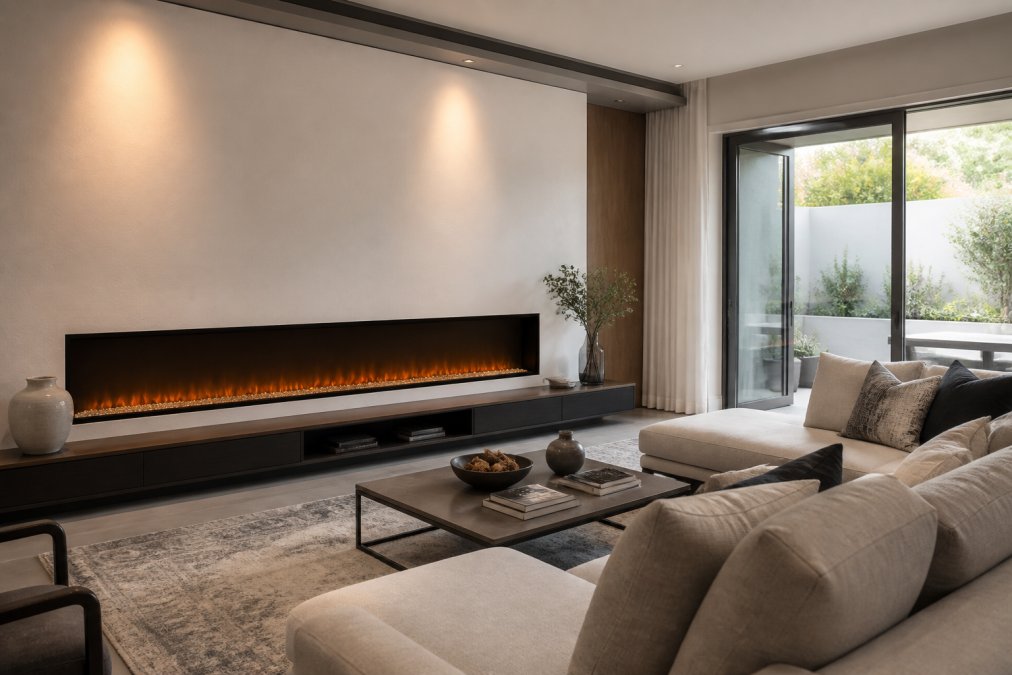
The most significant shift in modern living room fireplace design is the move away from the traditional boxy hearth toward long, linear statement pieces that anchor the room like sculpture. Stretching 60 to 100 inches across a wall, these fireplaces redefine the unit from a heat source into a central element of interior architecture, favoring clean lines and a mantel-less profile where the firebox itself becomes the art (homedepot.com).
This philosophy treats the fireplace as an architectural divider or a horizontal ribbon of light and warmth. The Dimplex Ignite XL Bold 60-Inch Linear Electric Fireplace exemplifies this trend, offering a wide viewing area and flexible installation for front-facing, corner, or bay configurations.

Modern Fireplace Surround Materials: Plaster, Stone, and Tile
Choosing the right surround material is as important as selecting the firebox itself. The modern fireplace surround materials gaining the most traction are minimalist plaster, natural stone, and large-format tile, each offering a distinct path to a sculptural design that moves away from ornate brick and heavy wood mantels.
A plaster surround offers a smooth, matte finish that creates a monolithic, gallery-like backdrop, often extending from floor to ceiling. Natural stone and marble introduce organic variation and timeless luxury, with book-matched slabs a popular choice for a dramatic focal point. Large rectified porcelain planks provide the clean lines of plaster with added durability.
The Rise of the Hearthless and Mantel-Less Look
The hearthless and mantel-less design is perhaps the defining feature of the contemporary fireplace, elevating the firebox to sit flush against the wall or float on it. This creates a clean, unbroken visual plane, ideal for minimalist interiors.
Without a mantel, the firebox can be paired with a floating media console, integrated shelving, or left as a lone sculptural element.
Gas vs Electric Fireplace Pros and Cons for Modern Homes
Deciding between gas and electric is the most critical technical choice for a modern renovation, as it determines installation flexibility, maintenance, and operating costs. Both offer the ambiance of fire without the hassle of wood, but electric models offer the greatest flexibility by requiring no venting or gas line, making them ideal for retrofits and condos.
Electric fireplaces, like the Dimplex Ignite XL Bold series, provide instant ambiance with customizable flame colors and heat settings, controllable via remote or app, and produce no emissions. Gas fireplaces offer a more traditional flame and often higher heat output, but require a gas line and proper venting, which can limit installation options. For many modern homeowners, the ease of installation and design flexibility of electric models makes them the more practical choice.
The Retrofit Advantage: Why Electric Wins for Existing Homes
Most design guides assume new construction, but the majority of homeowners are updating an existing living room. Retrofitting a gas fireplace into a room that lacks a gas line can cost several thousand dollars for a new line run, plus plumber and permit fees (angi.com). Venting requirements may also dictate placement on an exterior wall.
Electric fireplaces eliminate these constraints entirely. A standard 120-volt or 240-volt circuit is all that is required, and most units can be installed on any interior wall. The Dimplex Ignite XL Bold 60-Inch can be framed into an existing wall with a simple wood stud structure.
:::tip Retrofit Planning Before you commit to a gas line, check whether your local utility offers rebates for electric fireplace installations. Many utilities in the United States provide incentives for high-efficiency electric heating, which can offset the upfront cost difference. :::
The Cost Reality: Upfront vs. Long-Term
Gas fireplaces typically have higher upfront costs due to venting and gas line installation, but lower per-hour operating costs where natural gas is inexpensive. Electric fireplaces are cheaper to install but can be more expensive to run for heat in areas with high electricity rates. However, the electric fireplace is often used purely for ambiance with the heat off, making the operating cost negligible, often just a few cents per hour for the LED flame effect.
For those who want supplemental heat, the Dimplex Ignite XL Bold 74-Inch uses Comfort Saver heating technology to efficiently warm spaces up to 1,000 square feet, heating only to the set temperature and then cycling off (dimplex.com). When paired with a smart thermostat, it can be integrated into your home's energy management system.

The Flame Quality Trade-Off
The most honest assessment of gas vs. electric must address flame quality. Gas fireplaces produce a real flame with the natural dance and crackle of combustion, which many find more authentic. However, electric fireplaces have closed the gap significantly; the Dimplex Opti-Vent and Opti-Myst technologies use water vapor and LED lighting to create a flame effect nearly indistinguishable from the real thing.
:::warning Ventless Gas Consideration If you are considering a ventless gas fireplace for a retrofit, be aware that some states and municipalities restrict or prohibit their use due to indoor air quality concerns. Always check your local building codes before purchasing a ventless unit. :::
The Maintenance Differential
Gas fireplaces require annual inspection and cleaning of the burner, pilot assembly, and venting system, and ceramic logs can become brittle over time. Electric fireplaces require virtually no maintenance beyond occasional dusting of the glass and checking electrical connections.
The Verdict for Modern Retrofits
For the vast majority of retrofit projects, electric fireplaces are the more practical choice, offering design flexibility, lower installation costs, minimal maintenance, and smart home integration. Gas remains a strong option for new construction where a gas line can be planned from the start and the homeowner prioritizes the authenticity of a real flame.
Sustainable Design and Smart Controls in 2026
The modern fireplace is becoming an integrated component of the smart home and a statement of sustainable living. In 2026, the focus is on energy efficiency and intelligent control, with Wi-Fi connectivity and app-based management becoming standard.
Electric fireplaces are inherently more efficient in energy conversion, and many now feature eco-modes that reduce power consumption while maintaining ambiance. When paired with smart thermostats and home automation systems, these fireplaces contribute to a more energy-conscious household without sacrificing the cozy atmosphere they are designed to create.
Retrofitting a Modern Fireplace into an Existing Living Room
Retrofitting a modern fireplace is often simpler and more cost-effective than many homeowners expect, especially with electric or ventless models. Many modern electric units are designed for zero-clearance installation, fitting directly into existing walls, corners, or converted wood-burning fireboxes.
The key to a successful retrofit is choosing the right product and understanding installation requirements. The Dynasty Presto 40-inch electric firebox insert can update an existing wood or gas fireplace. For a more dramatic change, a linear unit can be mounted on a flat wall with the surround built out. In many cases, the project is as simple as framing a new wall section, running a standard electrical circuit, and installing the unit flush with the finished surface.
Safety and Building Codes for Modern Fireplace Installation
Safety is paramount when installing any fireplace, and modern electric units simplify compliance with building codes. Because they produce no real flames, no combustible gases, and require no venting, electric fireplaces avoid many clearance and ventilation requirements. However, all electrical installations must still adhere to the National Electrical Code.
When installing a built-in electric fireplace, follow the manufacturer's instructions for clearances and ensure the unit is properly secured. Gas fireplaces have more stringent requirements, involving proper venting and adherence to local codes regarding clearances from combustible materials. Always consult a licensed professional to ensure your installation meets all local requirements and safety standards.
Understanding Clearance Requirements for Modern Materials
One of the most overlooked aspects of modern fireplace design is the interaction between heat and trendy surround materials. Plaster is popular for its seamless look, but it is not inherently heat-resistant. Most manufacturers specify a maximum surface temperature for surrounding materials, and plaster applied directly over combustible framing may require a non-combustible backer board, such as cement board or mineral wool insulation.
Similarly, wood-look porcelain tiles must be rated for use near heat sources. The National Electrical Code and most local codes require combustible materials to maintain a specific clearance from the fireplace opening, often as little as 0 to 6 inches for electric fireplaces, but it varies by model.
:::warning Plaster and Heat If you are using a lime plaster or Venetian plaster finish around a fireplace, be aware that these materials can crack or discolor if the surface temperature exceeds their rating. Use a heat-resistant plaster mix or install a non-combustible board as a substrate. :::
The National Electrical Code and Your Installation
The National Electrical Code (NEC) is the baseline for all electrical installations in the United States, adopted with local amendments by most jurisdictions. For a built-in electric fireplace, the key NEC requirements include:
- Dedicated Circuit: Most built-in electric fireplaces with a heater require a dedicated 15-amp or 20-amp circuit. This prevents overloading and ensures the unit operates safely.
- GFCI Protection: If the fireplace is installed within 6 feet of a water source, such as a sink or a wet bar, the circuit must be GFCI-protected.
- Proper Wiring: All connections must be made in an accessible junction box, and the unit must be grounded according to the manufacturer's instructions.
Gas Fireplace Venting and Clearance Codes
Gas fireplaces are governed by the International Fuel Gas Code and the National Fuel Gas Code, which are adopted by most states. These codes specify:
- Venting: Direct-vent gas fireplaces must be vented to the exterior through a dedicated vent pipe. The vent termination must be a specific distance from windows, doors, and air intakes, typically 12 inches or more depending on local codes.
- Clearance to Combustibles: Gas fireplaces have strict clearance requirements from combustible materials, often 1 inch or more from the sides and top of the firebox. This is why you will see a metal or non-combustible surround around a gas insert.
- Carbon Monoxide Detection: Most local codes require a carbon monoxide detector in any room with a gas fireplace. This is a critical safety measure that is often overlooked.
The Permit Process: What You Need to Know
Many homeowners are surprised to learn that a building permit is often required for fireplace installation, even for electric units. The permit process ensures that the installation is inspected by a local code official, who will verify that the wiring, clearances, and structural support meet code requirements. The cost of a permit varies by jurisdiction but is typically between $50 and $200. Skipping the permit can lead to issues when you sell your home.
:::tip Before You Install Call your local building department and ask whether a permit is required for a built-in electric or gas fireplace. They can also provide you with the specific code sections that apply to your project. :::
A Practical Safety Checklist for Modern Fireplace Installation
Before you finalize your design, run through this checklist:
- Verify the manufacturer's clearance specifications for your specific model.
- Check the wall construction, is it a load-bearing wall? If so, you may need a structural engineer's approval for the opening.
- Confirm the electrical circuit is dedicated and properly sized.
- Use non-combustible materials for the immediate surround if the manufacturer requires it.
- Install smoke and carbon monoxide detectors in the room, and test them regularly.
- Schedule a final inspection with your local building department after installation.
By following these guidelines and consulting with a licensed professional, you can enjoy your modern fireplace with confidence, knowing that your installation meets all applicable safety standards and building codes.
Designing Your Living Room Around a Fireplace Focal Point
Once you have selected your fireplace, arrange the living room to complement this central feature. The fireplace should anchor the primary seating area, with sofas and chairs oriented toward it to encourage conversation and relaxation.
The design of the surrounding wall is just as important as the fireplace itself. Consider integrating the fireplace with a floating media console or flanking it with built-in shelving to create a cohesive composition. For a complete solution, a media console with a built-in fireplace, like the Nuvia 71-Inch Modern White Electric Fireplace, can serve as the centerpiece for an entertainment area.

Frequently Asked Questions
What is the newest trend in fireplace design for 2026?
The dominant trend for 2026 is the linear, hearthless fireplace that acts as an architectural divider or sculptural focal point. Instead of a traditional boxy firebox set into a brick wall, designers are specifying long, low electric or gas fireplaces mounted at eye level or even floor level. These units pair with minimalist plaster surrounds, natural stone slabs, or floating media consoles to create clean, uninterrupted sightlines. The focus is on the fire itself as a piece of interior architecture, not a decorative afterthought.
How do I choose between a gas and electric fireplace for a modern living room?
The decision hinges on your ventilation options, budget, and desired heat output. Gas fireplaces require a vent or gas line, which means they are usually planned during new construction or major renovations. Electric models, such as the Dimplex Ignite XL Bold series, offer flexible installation because they need no venting. They can be installed in apartments, retrofits, or rooms where running a gas line is impractical. Electric units also allow you to enjoy flames with or without heat, making them a versatile choice for year-round ambiance.
Are minimalist fireplace surrounds still in style?
Yes, minimalist surrounds remain a defining feature of modern fireplace design. The trend has moved away from ornate wood mantels and heavy stone facades toward clean-lined materials like limewash plaster, large-format porcelain tile, and thin veneer natural stone. The goal is a seamless, sculptural look where the wall and fireplace read as one surface. Matte finishes are preferred over glossy ones, and the surround is often extended to the ceiling or across an entire wall to create a dramatic yet understated backdrop for the firebox.
Can I install a modern fireplace in an existing living room?
Absolutely. Retrofitting an electric fireplace is the most straightforward path. Built-in electric inserts like the Dynasty Presto 40-inch are designed for zero-clearance installation, meaning they can fit into an existing wall cavity or an old wood-burning firebox without requiring a new chimney or gas line. For a gas conversion, you will need to verify that a gas supply can be routed to the location and that venting meets local building codes. Always consult a licensed contractor to assess your wall structure and electrical capacity before starting.
Choosing the right fireplace involves balancing aesthetic desires with practical considerations like installation, safety, and maintenance. At Zen Home Fireplaces, we curate a selection of luxury electric and gas models that meet the highest standards of design and craftsmanship, helping you transform your living room into a warm, inviting sanctuary. Explore our collection to find the perfect centerpiece for your home.
This article was written using GrandRanker


