Electric vs Gas Fireplace for Home: 2026 Guide
Table of Contents
- Electric vs Gas Fireplace: Quick Comparison Table
- Heat Output and BTU Capacity
- Fireplace Installation Costs and Setup
- Energy Efficiency of Gas vs Electric Fireplaces
- Maintenance Requirements for Gas Fireplaces and Electric Models
- Flame Realism, Aesthetics, and Smart Home Integration
- Safety, Indoor Air Quality, and Long-Term ROI
- Which Fireplace Type Should You Choose?
- Frequently Asked Questions
Last Updated: September 1, 2026
Electric vs Gas Fireplace: Quick Comparison Table
When choosing between electric and gas fireplaces, the decision hinges on three core factors: heat output, installation complexity, and ongoing operating costs. Gas fireplaces excel at whole-room heating with authentic flame realism, while electric models offer flexibility, safety, and lower maintenance for apartments and retrofits.
| Feature | Electric Fireplace | Gas Fireplace |
|---|---|---|
| Heat Output (BTU) | 4,000-5,500 | 20,000-45,000 |
| Installation | Plug-and-play or zero-clearance insert | Requires venting, gas line, professional install |
| Operating Cost (annual) | $150-$300 | $400-$800 |
| Flame Realism | LED simulation, multi-color options | Real flame, ceramic logs |
| Maintenance | Minimal (dust occasionally) | Annual inspection, chimney cleaning |
| Indoor Air Quality | No emissions | Requires direct vent to maintain safety |
| Remote Control | Standard | Available on most models |
| Best For | Apartments, renters, supplemental heat | Primary heating, new construction, outdoor use |
If you're renting or in a condo, electric is your only practical option. If you own your home and want serious heating capacity, gas wins, though installation costs and venting requirements are substantial.
At Zen Home Fireplaces, the answer depends on your space constraints and heating needs rather than aesthetic preference alone.
Heat Output and BTU Capacity
Gas fireplaces produce 20,000 to 45,000 BTU, while electric models max out around 4,000 to 5,500 BTU (nfpa.org). A gas fireplace with 30,000 BTU can meaningfully heat a 1,500 square-foot living room on a cold evening. An electric fireplace will warm the immediate area but won't raise room temperature significantly.
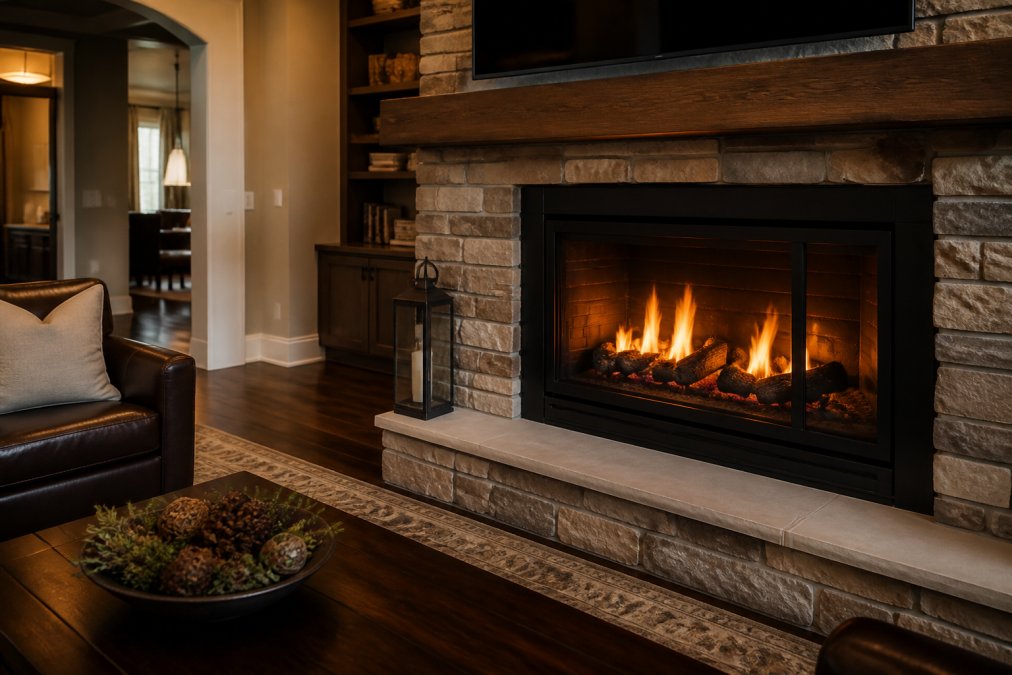
The Napoleon Elevation X 36 Direct Vent Propane Gas Fireplace delivers up to 45,000 BTU with modulating heat control. The Dynasty Presto 40-inch Built-In Electric Firebox Insert offers adjustable flame settings and a thermostat, but is designed as supplemental heat for a single room, not whole-home climate control.

If you want this fireplace to meaningfully reduce heating costs, gas is the better choice. If it's primarily for ambiance with some warmth as a bonus, electric works well.
Fireplace Installation Costs and Setup
Electric fireplaces range from $0 (plug-and-play models) to $2,000-$3,000 (professional zero-clearance installation). Gas fireplaces start at $3,000-$5,000 just for professional installation, before the unit itself.
The Dynasty Presto 40-inch Electric Firebox Insert costs $1,099.97 and can be installed into an existing fireplace opening with basic framing knowledge. The Dimplex Ignite XL Bold 60-Inch Linear Electric Fireplace runs $4,599.97 and requires professional installation but avoids the venting complexity gas demands.

Gas fireplaces require a direct vent to the exterior and a dedicated gas line from your meter. Venting alone costs $1,500-$2,500. If your home lacks existing gas infrastructure, add another $1,000-$3,000 for gas line installation. Budget $2,000-$4,000 on top of the unit cost for professional installation.
For apartments and condos, electric is the only realistic option. Most lease agreements prohibit gas appliances, and venting requires landlord approval and structural modifications renters can't make.
Energy Efficiency of Gas vs Electric Fireplaces
Gas fireplaces typically operate at 70-85% efficiency, while electric fireplaces operate at near 100% efficiency since all electrical energy becomes heat or light (energy.gov).
Operating costs depend on fuel prices and local energy rates. A gas fireplace running at 30,000 BTU for 4 hours daily costs approximately $400-$600 annually. An electric fireplace running at 5,000 BTU for the same duration costs roughly $150-$250 annually.
However, gas fireplaces heat larger spaces, so the cost-per-BTU is often lower when you factor in the heat delivered. A gas fireplace might cost $600 per year but heat 1,500 square feet. An electric fireplace might cost $200 per year but only meaningfully warm 200 square feet.
The Dynasty Presto 40-inch includes adjustable flame settings and thermostat control to avoid wasting electricity. The Napoleon Elevation X 36 includes Dynamic Heat Control Plus (DHC+), which directs heat to specific rooms rather than venting it all outside.
For supplemental heating during shoulder seasons, electric fireplaces shine. For primary heating or all-season use, gas fireplaces deliver more BTU per dollar spent.
Maintenance Requirements for Gas Fireplaces and Electric Models
Electric fireplaces demand almost no maintenance. Dust the exterior occasionally and replace remote batteries annually. The Dynasty Presto 40-inch and Dimplex Ignite XL Bold include no moving parts to wear out and no combustion byproducts to clean.
Gas fireplaces require annual professional inspection and cleaning. The chimney or vent needs inspection to ensure no blockages exist. The gas valve, ignition system, and burner require annual service. Gas fireplace maintenance typically runs $150-$300 annually. Over 10 years, that's $1,500-$3,000 in maintenance alone. Electric fireplaces might need a $50 bulb replacement, totaling perhaps $100-$200 over the same period.
Gas fireplaces also require seasonal preparation before the heating season. Electric fireplaces can be used year-round without preparation.
For renters and apartment dwellers, the zero-maintenance aspect of electric fireplaces is a major advantage. The Dynasty Presto 40-inch and similar electric inserts are truly plug-and-play.
Flame Realism, Aesthetics, and Smart Home Integration
Modern electric fireplaces have closed the realism gap significantly. The Dimplex Ignite XL Bold 60-Inch Linear Electric Fireplace features Multi-Fire XD technology with three vibrant flame colors and a customizable media bed of acrylic crystals and driftwood. You can adjust the top light independently of the flames, enjoying the visual effect without heat on a warm evening.
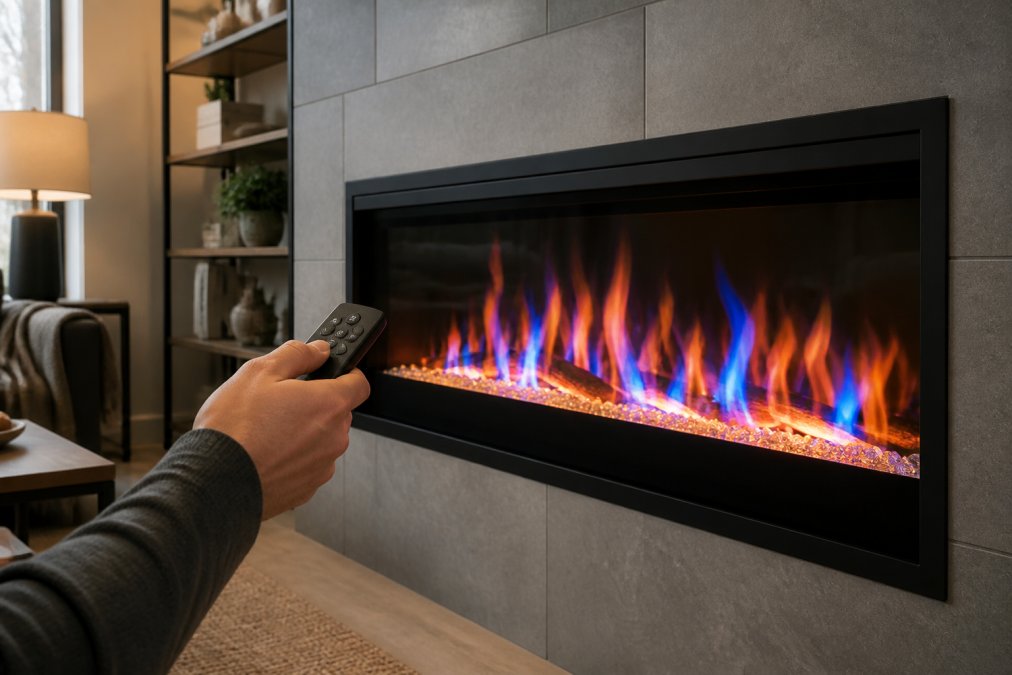
Gas fireplaces still win on pure flame authenticity. The Napoleon Elevation X 36 features a modulating "Endless Embers" electric ember bed combined with a full firebox flame for an unobstructed view of dancing fire. For buyers who prioritize visual authenticity, gas remains superior.
Smart home integration favors electric fireplaces. Many models include remote control with adjustable flame intensity, thermostat settings, and built-in timers. Some integrate with Alexa or Google Home for voice control. The Dynasty Presto 40-inch includes remote operation with thermostat settings.
Gas fireplaces are catching up with remote controls for flame intensity and heat blower adjustment, but true smart home integration remains limited due to combustion and venting complexity.
For design-conscious homeowners, the Dimplex Ignite XL Bold's linear design works well in contemporary interiors, while the Napoleon Elevation X 36's full firebox flame suits luxury living rooms where the fireplace is the focal point.

Safety, Indoor Air Quality, and Long-Term ROI
Electric fireplaces produce no combustion byproducts and require no venting, making them inherently safer. There's no risk of carbon monoxide exposure or gas leaks. The Dynasty Presto 40-inch includes overheat protection.
Gas fireplaces require proper venting to maintain indoor air quality. Direct-vent systems draw combustion air from outside and vent exhaust back outside, preventing carbon monoxide buildup (the CDC). The Napoleon Elevation X 36 and Napoleon Haliburton 50 both use direct-vent design. Always choose direct-vent gas models; vent-free models are not recommended.
Long-term ROI depends on your use case. A $6,000 gas fireplace installation that saves $400 annually in heating costs takes 15 years to pay for itself, acceptable if you plan to stay long-term.
Electric fireplaces rarely pay for themselves through heating savings alone. However, they add real estate value and improve quality of life immediately. Renters and apartment dwellers especially benefit from flexibility and zero maintenance.
Gas fireplaces in new construction have better ROI because installation costs are built into the overall project. A $6,000 gas fireplace installation might add $8,000-$12,000 to home resale value.
Which Fireplace Type Should You Choose?
The answer depends on three questions: Do you own or rent? How much heat do you need? What's your priority, ambiance, heating capacity, or ease of installation?
Choose electric if: You're in an apartment or condo, you're renting, you want zero-maintenance operation, or you need supplemental heat for a single room. The Dynasty Presto 40-inch ($1,099.97) works well for retrofitting existing fireplace openings, while the Dimplex Ignite XL Bold ($4,599.97) is ideal for contemporary homes.
Choose gas if: You own your home, you want serious heating capacity to reduce thermostat reliance, you prioritize authentic flame realism, or you're building new construction. The Napoleon Elevation X 36 ($4,999.97) delivers 45,000 BTU with stunning flame effects, while the Napoleon Haliburton 50 ($3,999.97) offers compact efficiency in smaller spaces.
For outdoor entertaining, gas is the only practical choice due to the heat output needed to warm exterior spaces.
Zen Home Fireplaces carries both electric and gas models, allowing you to compare options side-by-side. Our curated selection focuses on luxury designs that enhance your home's aesthetic while delivering reliable performance.
The decision ultimately comes down to your constraints and goals. If installation flexibility and maintenance matter most, electric wins. If heating capacity and authentic flame matter most, gas wins.
Choosing the right fireplace transforms how you use your home, but only if it matches your actual needs. Gas fireplaces deliver serious heating and authentic flame realism, but require professional installation and annual maintenance. Electric fireplaces offer flexibility, zero maintenance, and immediate ambiance, but deliver limited heating capacity. At Zen Home Fireplaces, we help homeowners make this choice by offering both technologies with premium designs and trusted brands. Explore our collection of electric and gas fireplaces to find the model that brings warmth and luxury to your space. Explore our fireplace collection
Frequently Asked Questions
Which fireplace provides more heat: gas or electric?
Gas fireplaces typically deliver more heat output, with models like the Napoleon Elevation X producing up to 45,000 BTU. Electric fireplaces provide supplemental zone heating, usually 750-1500 watts. For primary heating, gas wins. For supplemental warmth and ambiance in specific rooms, electric offers efficient, controllable heat without venting requirements or combustion concerns.
Are gas fireplaces more expensive to install than electric?
Yes, gas fireplace installation costs significantly more. Direct vent models require professional venting installation, gas line connections, and building code compliance, typically ranging from $3,000 to $5,000+. Electric fireplaces like the Dynasty Presto insert ($1,099.97) need only a standard outlet and can be installed with zero-clearance into existing walls, making them far more affordable and flexible for retrofits and rentals.
Do electric fireplaces run up the bill?
Electric fireplaces consume 750-1500 watts when heating is active. At average rates, running one 8 hours daily costs roughly $15-30 monthly. Gas fireplaces cost more to operate due to fuel expenses, but deliver significantly more heat. Electric fireplaces are more efficient for zone heating specific rooms and offer the option to enjoy flames without heat, reducing energy costs compared to gas models.
What is the healthiest type of fireplace for indoor air quality?
Electric fireplaces are the healthiest choice for indoor air quality. They produce zero emissions, no carbon monoxide, and require no venting. Direct-vent gas fireplaces expel combustion byproducts outside, maintaining safety. Vent-free gas models release some emissions indoors. The Dynasty Presto electric insert delivers ambiance and warmth without any combustion concerns, making it ideal for apartments, condos, and homes where air quality matters most.
What is the new trend for fireplaces?
Modern fireplace trends emphasize smart home integration, linear designs, and multi-fuel flexibility. LED flame technology now rivals real fire realism with customizable colors and intensity. Outdoor gas fireplaces like the Galaxy 62 extend living spaces year-round. Homeowners increasingly choose electric inserts for retrofits due to installation simplicity, zero emissions, and the ability to enjoy flames without heat. Luxury models now feature remote controls and modulating heat systems.
This article was written using GrandRanker