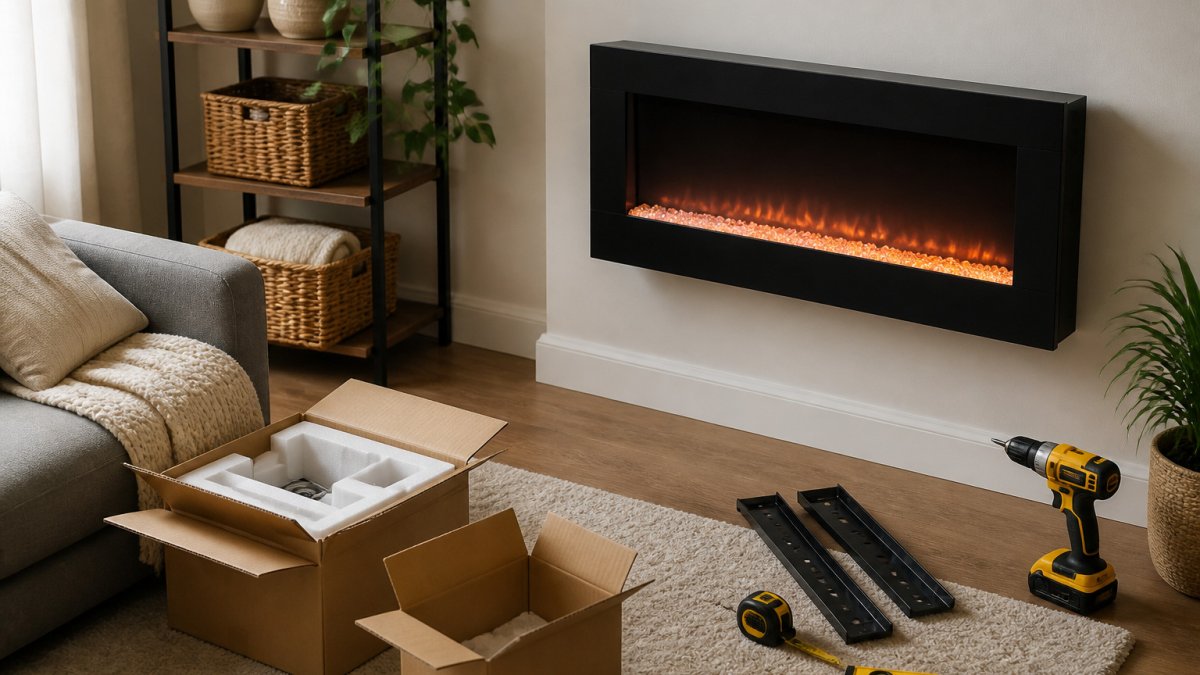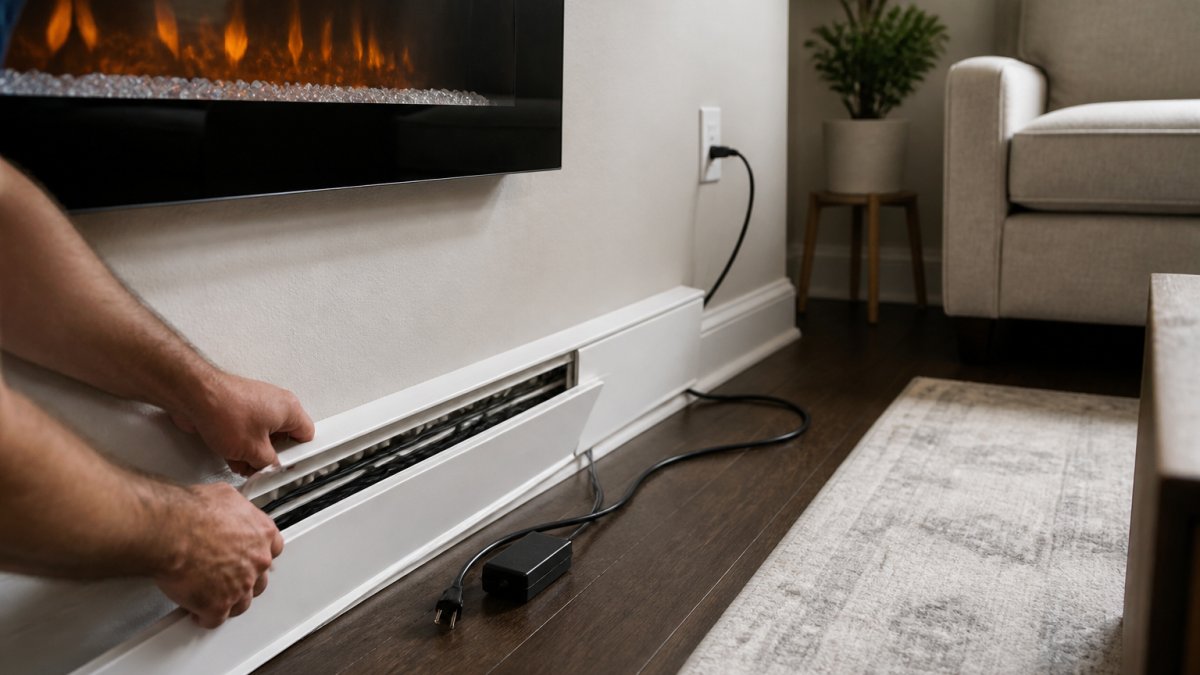
7 Ways to Hide Electric Fireplace Cords Cleanly
Last Updated: October 31, 2026
Quick Summary
To hide cords on an electric fireplace, use a paintable surface-mounted raceway that snaps shut over the cord, or have a licensed electrician install a recessed outlet behind the unit so the factory cord plugs in with nothing visible. Never run the appliance cord through the wall or use extension cords for a permanent install.
- A cord cover installation takes about 30 to 45 minutes for a single run.
- Set drywall anchors at each mark or the cover will pull out within weeks.
- Route the cord away from the vent before covering it and check the run after an hour of use.
- Never daisy-chain power strips, and avoid extension cords for permanent installs.
- For condos and rentals, an adhesive cord cover hides cords without drilling.
Table of Contents
- Why Electric Fireplace Cord Concealment Matters
- Electric Fireplace Cord Cover Ideas That Look Built-In
- Can You Run an Electric Fireplace Cord Behind the Wall?
- How to Hide Cords on a Freestanding Electric Fireplace
- Electric Fireplace Outlet Placement for a Cleaner Wall
- Measure, Mark, Cut, and Secure: Step-by-Step Cord Cover Installation
- Heat, Clearance, and Extension Cord Safety
- Choosing the Right Fireplace and Accessories for a Seamless Look
- Frequently Asked Questions
Why Electric Fireplace Cord Concealment Matters
A visible power cord can undo the clean look of a well-planned fireplace wall. When you learn how to hide cords on electric fireplaces, the whole installation reads as intentional rather than improvised. A beautiful linear unit paired with a black cord dropping down the drywall beside it is a common sight.
That single cord breaks the illusion. Built-in fireplaces are designed around clean lines, and a dangling cord pulls the eye straight to it. Concealment fixes that, and it does more than look better. If you want context on how much effort is worth it, our guide to electric vs. gas fireplace efficiency explains how these units run day to day.
Below, we'll show you seven ways to hide cords, ranked from simple to permanent, plus the safety rules that matter most.
Electric Fireplace Cord Cover Ideas That Look Built-In
Cord covers are the fastest win. A cord cover is a slim channel that mounts to the wall and holds a power cord out of sight. Paint it to match your wall for a cleaner look.
Paintable Raceways and Cable Covers
A raceway is a surface-mounted channel with a snap-on front. You run the cord inside, then click the lid shut.
Here's how to pick one:
- Measure the run from the outlet to the fireplace before you buy
- Match the width to your cord's thickness
- Choose paintable styles for the cleanest look
- Check the adhesive or screw rating for drywall
A common mistake is buying a cover that's too short. Leave a little slack at both ends so the cord doesn't pull tight.
Furniture and Mantel Decor Tricks
Not every fix needs hardware. Sometimes the room does the work for you.
- Run the cord behind a fireplace surround or mantel leg
- Tuck it behind a framed art piece or leaning mirror
- Route it through an entertainment center or cable box cluster
- Hide it behind a tall plant or floor basket
- Use a mantel garland or decor arrangement to cover the drop
This approach works best when the cord runs close to the floor. If it crosses open wall space, a cover will look better.
Can You Run an Electric Fireplace Cord Behind the Wall?
Running the cord behind the wall is possible, but only under the right conditions. You cannot simply fish a plug-in cord through drywall and call it done. That creates a fire risk and usually violates electrical code.
The key distinction most guides skip: an electric fireplace's factory cord is an appliance cord, not in-wall wiring. So the safe path is not to hide the cord inside the wall, it is to bring a compliant outlet to the fireplace.
When In-Wall Routing Is Code-Compliant
The compliant approach is a proper in-wall box or recessed outlet installed by a licensed electrician. The outlet sits flush with the wall, and the fireplace plugs into it directly. No cord shows, and the wiring behind the wall is done to code.
A qualified electrician can add a recessed outlet behind the fireplace so nothing is visible.
Work like the following typically calls for a licensed electrician and may require a permit and inspection:
- Adding a new circuit or extending an existing circuit to a new outlet location
- Relocating an outlet to sit behind the fireplace
- Installing a recessed outlet that requires cutting into the wall and making permanent connections
- Any work inside the wall beyond surface-mounted raceway
Requirements vary by state and local jurisdiction, so confirm with your local building department before work begins.
Troubleshooting Outlet Distance Without Unsafe Extensions
If your outlet is too far from the fireplace, the instinct is to grab an extension cord. Don't. For a permanent installation, the safer alternatives are:
- Relocate the outlet through qualified electrical work so it sits behind or beside the unit.
- Add a dedicated circuit if the manual calls for one and the existing circuit is shared.
- Use a surface raceway to route the factory cord neatly to the existing outlet, this keeps the cord accessible and out of the wall.
- Choose a fireplace with a longer factory cord if you are still shopping; check the spec sheet before you buy.
If none of these fit your space, consult a licensed electrician rather than improvising with extension cords or power strips.
How to Hide Cords on a Freestanding Electric Fireplace
Freestanding and wall-mounted units need a different plan than built-ins.
Start by checking where the cord leaves the unit. On a wall-mounted model, it often drops straight down. On a freestanding unit, it runs along the floor.
Here's our approach:
Dimplex Ignite Ultra 50" Linear Electric Fireplace – ULT50 →
- Route the cord toward the nearest wall rather than across open floor
- Use a floor cord cover for any span across a walkway
- Tuck the cord behind the unit where the frame allows
- Add a raceway for the vertical drop
- Secure any slack with clips so it doesn't sag
If you're shopping for a wall-mounted model, the Napoleon Allure Vertical 32" wall mount electric fireplace is worth a look.

Electric Fireplace Outlet Placement for a Cleaner Wall
Outlet placement decides how much hiding you'll need to do. Get it right during planning and the cord problem mostly solves itself.
Aim for an outlet that sits behind or beside the fireplace, not across the room. For a new build or remodel, have your electrician place a recessed outlet directly behind the unit. The fireplace plugs in, and nothing shows.
Map the outlet location before the drywall goes up. If you're retrofitting, measure the outlet distance first. A long run may call for a licensed electrician rather than a longer cord.
Measure, Mark, Cut, and Secure: Step-by-Step Cord Cover Installation
This is the part most guides rush. Do it carefully and the cover looks factory-installed. The whole job takes about 30 to 45 minutes for a single run.
What you'll need: a tape measure, pencil, level, cord cover kit, drill, and drywall anchors.
- Measure the run. Go from the outlet to where the cord enters the fireplace. Add a few inches of slack.
- Mark the attachment points. Hold the cover against the wall and mark each screw hole with your pencil and level.
- Cut the cover to length. Use a fine-tooth saw or heavy scissors for a clean edge.
- Drill and anchor. Drill pilot holes, then set drywall anchors at each mark.
- Secure the base. Screw the back channel to the wall.
- Run the cord. Press the cord into the channel, keeping it straight.
- Snap on the lid. Click the front cover into place and paint if needed.
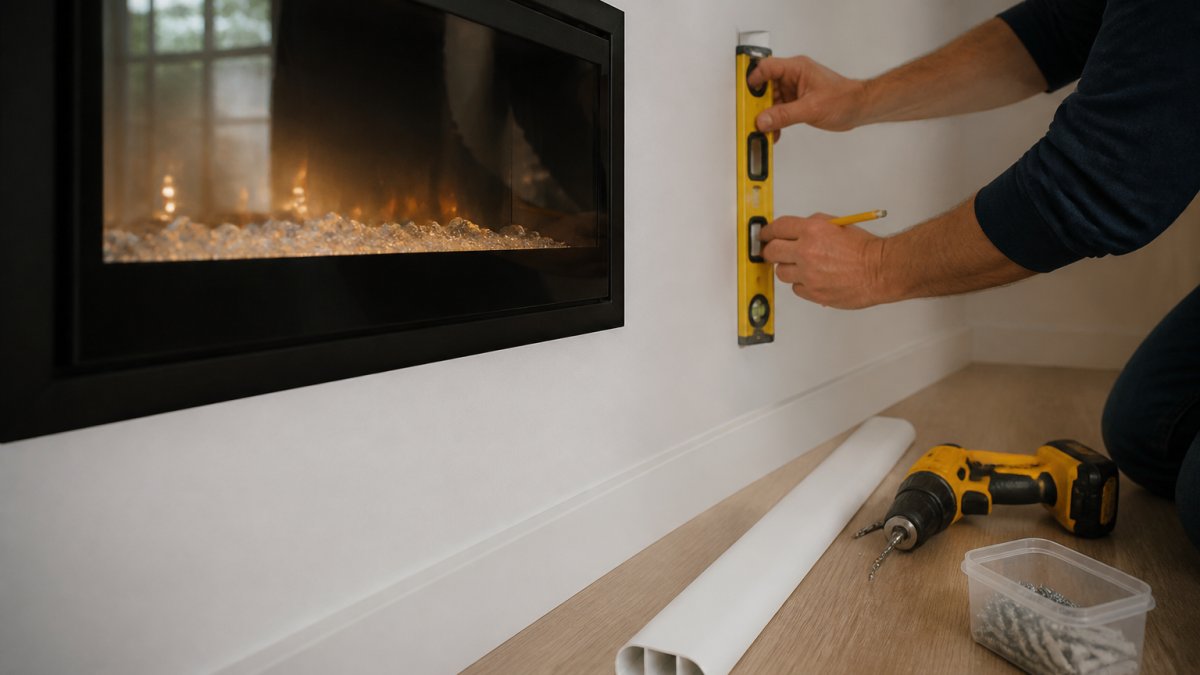
Expected result: a straight, painted channel with no cord visible. Watch out: skip the anchors and the cover will pull out of drywall within weeks.
Heat, Clearance, and Extension Cord Safety
Heat is the safety issue people overlook. Electric fireplaces push warm air, so keep cords clear of the heat source. The challenge is that cord covers, furniture, and decor used to hide the cord can also block airflow or sit too close to heated surfaces if you are not careful.
Keep Cords and Covers Clear of Heat and Vents
Electric fireplaces move heat in one of two ways: a blower that pushes warm air out a vent, or radiant heat from the front glass or element. Either way, the area around the outlet and vent needs breathing room.
- Keep cords clear of the heat outlet and any fireplace blower vent.
- Do not let a cord cover, furniture, or decor block the vent. A raceway that runs across the vent opening defeats the fireplace and can trap heat.
- Follow the manufacturer's clearance in the owner's manual. Most manuals specify minimum clearances to combustibles above, beside, and in front of the unit; treat those numbers as the floor, not the target.
- Keep decor at a safe distance. Mantel garlands, baskets, and plants used to hide a cord should sit outside the clearance zone, not draped over the vent or against the glass.
A common pattern is that the cord exits the side or back of the unit near the vent. Route the cord away from the vent before you cover it, and check the run after the fireplace has run for an hour to confirm nothing is getting warm.
Extension Cords and Power Strips: Why They Are Risky Here
Electric fireplaces are high-wattage appliances.
- Never daisy-chain power strips to reach an outlet. Each connection adds resistance and heat.
- Avoid extension cords for permanent installs.
- Use a surge protector rated for the unit's wattage only as a temporary measure, and never tuck it behind the fireplace where it cannot breathe.
- Plug directly into a dedicated outlet whenever the manual calls for it.
Check the owner's manual for the exact power requirements, and when in doubt, call an electrician.
Choosing the Right Fireplace and Accessories for a Seamless Look
The cleanest cord solution starts with the right unit. A fireplace designed for recessed or built-in installation gives you far more options for hiding the power cord.
For a linear design, consider the Dimplex Ignite XL 50" linear electric fireplace.

Here's a quick way to match your setup to a plan:
| Fireplace type | Best cord approach | Effort level |
|---|---|---|
| Built-in / recessed | Recessed outlet behind unit | High, needs electrician |
| Wall-mounted | Painted raceway down the wall | Medium |
| Freestanding | Floor cover plus furniture | Low |
| Condo / rental | Adhesive cord cover, no drilling | Low |
Match the plan to your space, and the result looks intentional. That's the difference between a fireplace that looks installed and one that looks added on.
Frequently Asked Questions
Can you run an electric fireplace cord behind a wall?
A standard plug-in cord should not be buried inside drywall. A licensed electrician can install a recessed outlet instead. Some models, like the Dimplex Ignite XL 50, support hardwired 120V or 240V connections, so check the owner's manual for wiring requirements.
How do you hide the cord on a wall-mounted electric fireplace without cutting into the wall?
Use a surface-mounted raceway or cord cover that adheres or screws to the wall and can be painted to match. Route the cord down the raceway to the nearest outlet, then tuck the remaining length behind nearby furniture or framed art. The Napoleon Allure Vertical 32-inch plugs into a standard 120V outlet.
Can an electric fireplace be plugged into an extension cord?
Check the owner's manual before using an extension cord. If an outlet is too far away, have a licensed electrician add an outlet closer to the fireplace.
Where should an electric fireplace be plugged in?
Plug it into a wall outlet positioned so the cord reaches without strain and stays away from heat vents and walkways. Avoid power strips and daisy-chained cords. For a built-in look, plan electric fireplace outlet placement during installation. Always follow the manufacturer's clearance and cord routing instructions in the owner's manual.
The hardest part isn't hiding a cord. It's choosing a fireplace that makes concealment easy in the first place. Zen Home Fireplaces curates modern electric and gas models built around clean lines, plus our Zen Hearth Essentials accessories to finish the look. Explore the collection and find a fireplace designed to sit seamlessly in your space. Explore Collection