How to Pick the Best Fuel for an Outdoor Fire Pit
Last Updated: November 1, 2026
Quick Summary
The best fire pit fuel depends on how you plan to use your space. Natural gas and propane give the cleanest, most controllable flame and suit covered patios and frequent use, while wood delivers the classic campfire experience but needs more tending and produces smoke.
- Daily use favors gas for convenience, while wood requires constant tending and leaves ash.
- Smoke and fumes build up under a roof, so gas is often the safer choice for a covered patio.
- Propane runs from a tank and can be placed almost anywhere, while natural gas connects to a fixed supply line.
- The St. Tropez Rectangle Patioflame Table produces up to 60,000 BTUs and can be converted for natural gas.
- Natural gas usually overtakes its higher installation cost within a few seasons if you use the pit weekly year-round.
Table of Contents
- Choosing Fire Pit Fuel by Use Case
- Wood, Propane and Natural Gas Compared
- Propane vs. Natural Gas Fire Pit: Which Fits Your Patio
- Best Fire Pit Fuel for Heat Output and Burn Time
- Total Cost of Ownership for Each Fuel Type
- Fire Pit Safety and Fuel Requirements
- Choosing Your Fuel and Fire Pit at Zen Home Fireplaces
- Frequently Asked Questions
Choosing the best fuel for an outdoor fire pit comes down to three things: how much heat you need, how long you want it to burn, and what your patio can accommodate. For most homeowners in the United States, natural gas and propane offer the cleanest, most controllable flame, while wood delivers the classic campfire experience. This guide is designed to help you match fuel to the way you actually use your outdoor space, so you can pick a fire pit fuel that fits your lifestyle and your budget.
Choosing Fire Pit Fuel by Use Case
The right fire pit fuel depends less on the fuel itself and more on how you plan to use the space. A weekend cookout calls for different features than a quiet evening lounge.
A common mistake is buying a wood-burning pit for a patio where you entertain often. Wood requires constant tending, produces smoke, and leaves ash behind. Gas fuels are far easier for frequent use.
Consider these questions before you decide:
- How often will you use it? Daily use favors gas for convenience.
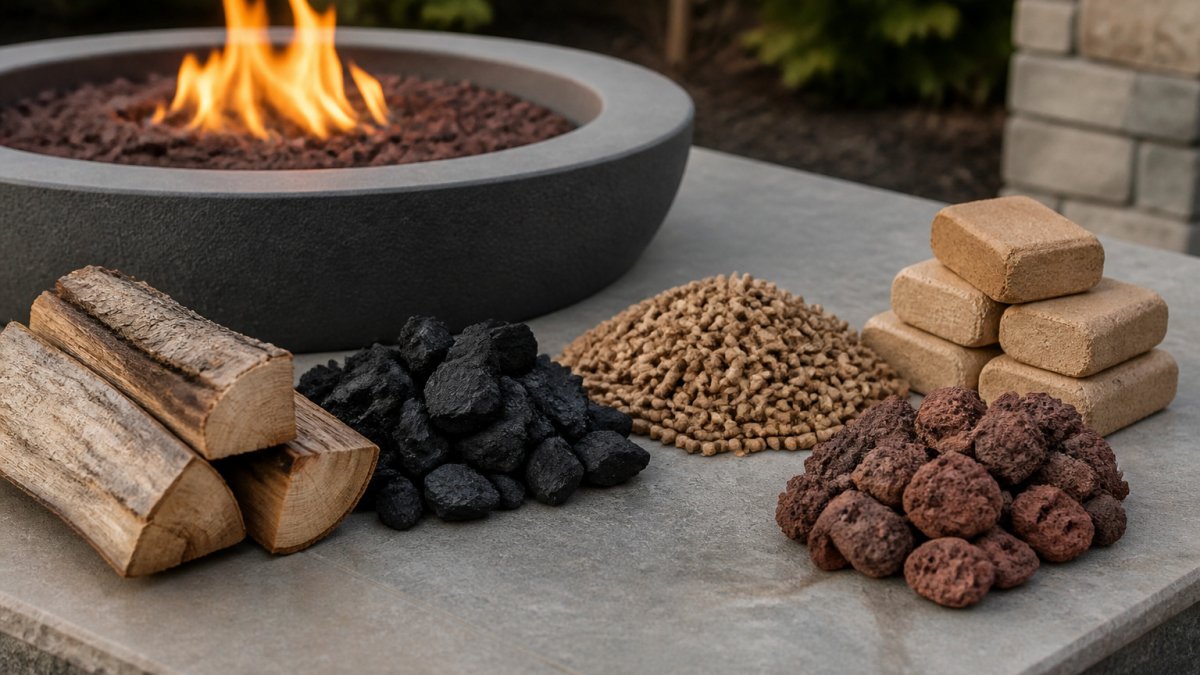
- Do you want a traditional campfire feel? Wood delivers that crackle and scent.
- Is your patio covered? Smoke and fumes build up under a roof, so gas is often the safer choice there.
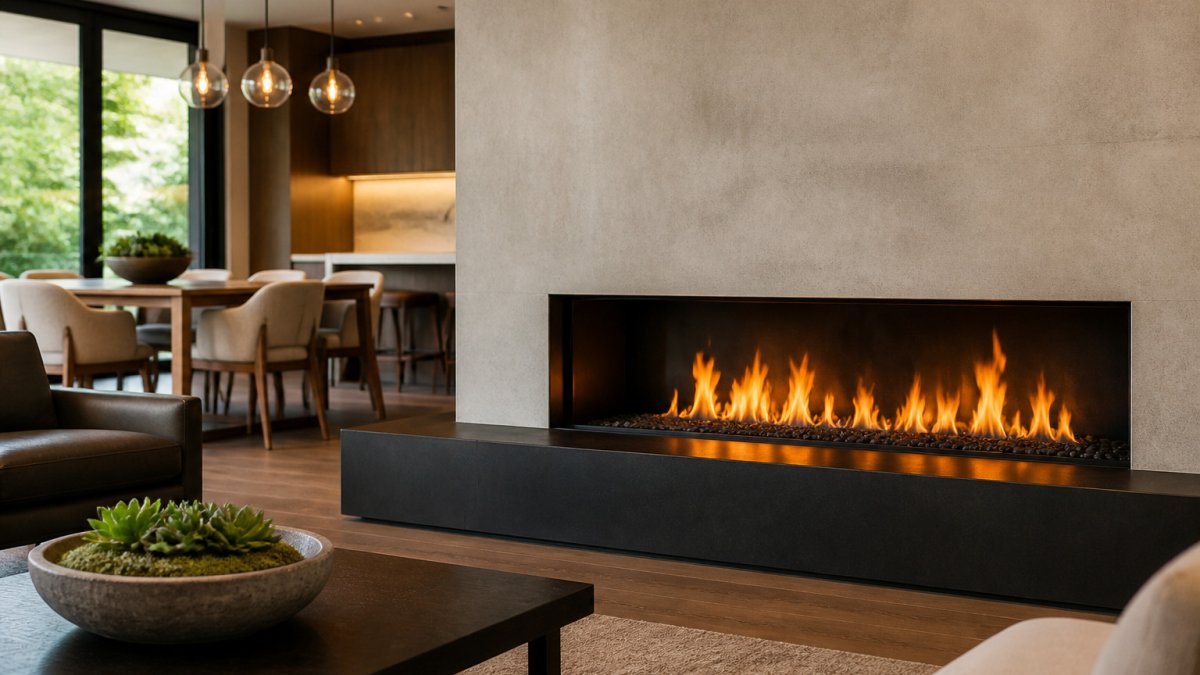
Our recommendation: for most covered patios, a gas fire table or linear fire pit gives you the most usable outdoor living space with the least maintenance.
Wood, Propane and Natural Gas Compared
Each fuel type has clear strengths and tradeoffs. Here is how they stack up for a typical backyard or patio setup.
| Fuel | Best For | Main Advantage | Main Drawback |
|---|---|---|---|
| Wood | Classic campfire experience | Authentic crackle and scent | Smoke, ash, constant tending |
| Propane | Portable, flexible placement | Tank can be stored out of sight | Needs regular tank refills |
| Natural gas | Permanent installations | No tanks to swap or refill | Requires a gas line connection |
Pros and cons at a glance:
- Wood: Pro: authentic look and sound. Con: smoke and cleanup.
- Propane: Pro: flexible and tank-based. Con: refills and tank storage.
- Natural gas: Pro: continuous supply and clean burn. Con: installation cost and a fixed line.
The Pilgrim 32-inch Vintage Iron Wood-Burning Fire Pit, which includes a mesh ember cover, is a strong choice if you want the traditional wood experience. It is freestanding and designed for use on a suitable non-combustible outdoor surface.
Propane vs. Natural Gas Fire Pit: Which Fits Your Patio
Propane and natural gas both produce a clean, adjustable flame, so the choice usually comes down to installation. Propane runs from a tank, which means you can place the fire feature almost anywhere. Natural gas connects to your home's supply line, which makes it better for a permanent setup.
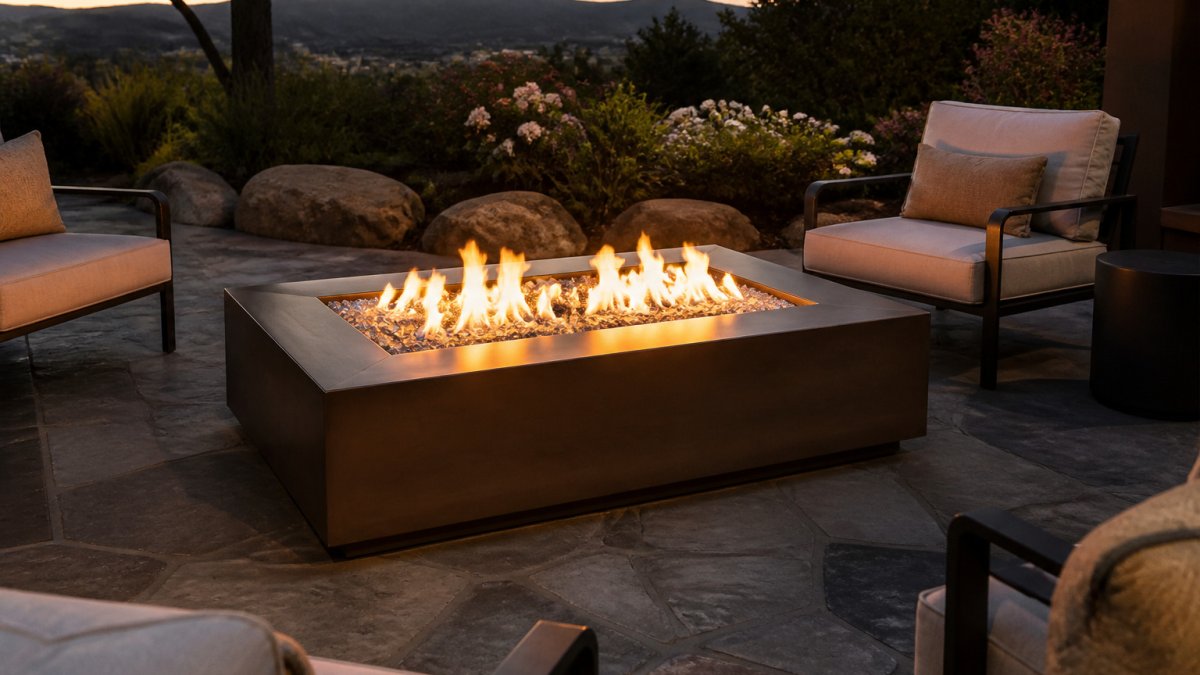
The St. Tropez Rectangle Patioflame Table produces up to 60,000 BTUs and conceals its propane tank, keeping the design clean. It can also be converted for natural gas use with the appropriate conversion components, which gives you flexibility if your home is later connected to a gas line.
For a covered patio, see our guide to the best outdoor gas fireplace for a covered patio to compare models that suit that setting.
Best Fire Pit Fuel for Heat Output and Burn Time
Heat output and burn time matter most when you want to stay warm through a cool evening. Gas fuels deliver consistent heat on demand and stop when you turn them off. Wood burns in a way that changes over time, producing more heat as the logs catch and less as they settle into embers.
Heat output is measured in BTUs. The Carol Rose 60-inch Linear Outdoor Gas Fire Pit and the Grand Blount 36-inch Natural Gas fire pit are suited to larger spaces. The Grand Blount produces 160,000 BTUs, which makes it a strong centerpiece for expansive patios.
Total Cost of Ownership for Each Fuel Type
The sticker price of a fire pit is the smallest part of what you will spend. Fuel, refills, conversion components, and maintenance usually dwarf the appliance cost over a few seasons. The table below frames the four main cost buckets so you can compare fuels on the same basis instead of on purchase price alone.
| Cost bucket | Wood | Propane | Natural gas | Ethanol / gel |
|---|---|---|---|---|
| Appliance / pit | Lowest | Mid | Mid to high | Low to mid |
| Fuel delivery | Cord or bundle | Tank refill or exchange | Monthly utility bill | Bottle or can |
| Installation / conversion | None | None (tank) or gas-line hookup | Professional gas line + permit | None |
| Maintenance | Ash removal, screen replacement | Tank storage, regulator inspection | Annual inspection | Wick/canister replacement |
| Portability cost | High (heavy, messy) | Low (tank moves) | None (fixed) | Low |
How to run the math for your own patio. Most homeowners find the clearest comparison comes from estimating cost per hour of usable flame, not cost per unit of fuel. The method is the same for every fuel:
Carol Rose 60" Linear Outdoor Gas Fire Pit →
- Estimate burn rate. A typical 20-pound propane tank holds about 4.6 gallons of propane, and a mid-size fire table running at roughly half output will usually burn through a tank in the range of 8 to 12 hours. A wood fire consumes roughly 1 to 2 cubic feet of split hardwood per hour at a moderate burn. Natural gas consumption is read directly from your meter in therms. Ethanol and gel burn at a fixed rate per canister, which the manufacturer publishes.
- Multiply by your local price. Propane is sold per gallon or per tank exchange; firewood per cord, face cord, or bundle; natural gas per therm on your utility bill; ethanol and gel per bottle or can. Prices vary widely by region and season, so use your own receipts rather than a national average.
- Add the fixed costs. A natural gas line run, permit, and shutoff valve installation is a professional job and is typically the largest single line item in the comparison. Propane has no line cost but does require a safe storage location and periodic regulator and hose inspection. Wood has no install cost but does require a non-combustible surface, a spark screen, and a place to dispose of ash.
- Divide by seasons of use. A fire pit used twice a week for six months is roughly 50 sessions. Spread the fixed costs across that number to see the true per-session cost.
Conversion is not free and not always possible. A propane fire table can often be converted to natural gas with a manufacturer-approved conversion kit and a qualified installer, but the kit, the gas line, and the labor are separate costs, and some models are not convertible at all. Wood, propane, natural gas, ethanol, and gel are not interchangeable in the same burner, each requires a fire pit designed and listed for that fuel. Budget for conversion only after confirming the manufacturer offers an approved kit for your exact model.
Maintenance is a real line item. Wood pits need ash removal after most burns and periodic screen or grate replacement. Gas pits need an annual inspection of the burner, regulator, and connections, and propane hoses and regulators should be checked for cracks each season. Ethanol and gel units need wick or canister replacement per the manufacturer's schedule.
The Pilgrim Nature Fire Ring at $379.99 and the Pilgrim Fire Pit with Mesh Ember Cover at $599.00 are entry points for a wood-burning setup, where the ongoing cost is firewood and ash disposal rather than fuel delivery or installation.
Fire Pit Safety and Fuel Requirements
Safety rules differ sharply by fuel, and the rules that matter most are the ones your manufacturer and local authority publish, not general advice.
Wood-burning fire pits. The main risks are sparks, embers, and smoke.
Propane fire pits. Propane is heavier than air, so leaks pool at ground level rather than dispersing upward.
Natural gas fire pits. Natural gas is lighter than air and disperses upward, but a leak is still a serious hazard.
Ethanol and gel fire pits. These burn cleanly but the fuel is highly flammable and the flame can be nearly invisible in daylight.
Fuel compatibility is a safety rule, not a preference. Wood, propane, natural gas, ethanol, and gel are not interchangeable in the same fire pit. Each burner is designed and listed for one fuel, and using a different fuel, or an unapproved conversion kit, can create a fire or carbon monoxide hazard and may void your warranty and homeowner's insurance coverage. If you want to switch fuels, confirm the manufacturer offers an approved conversion for your exact model and have a qualified professional perform the work.
Permits and inspections. New gas line installations, permanent structures, and some wood-burning appliances require a permit in many jurisdictions.
The Carol Rose 60-inch model is built from stainless steel and includes multicolor LED lighting.
Choosing Your Fuel and Fire Pit at Zen Home Fireplaces
Start with your use case, then pick the fuel that fits it. Wood suits those who want a traditional campfire. Propane suits flexible placement. Natural gas suits a permanent, low-maintenance setup. Zen Home Fireplaces offers a curated selection covering all three, from the Pilgrim wood-burning pits to natural gas and propane fire tables.
If you are still deciding, browse the Carol Rose 60-inch linear fire pit to see how a gas design could fit your outdoor living space.

Frequently Asked Questions
Are gas fire pits warm?
Yes. Gas fire pits produce steady, adjustable heat, and output is measured in BTUs. The Grand Blount Grand Fire Pit 36" - Natural Gas is rated at 160,000 BTUs, and the St. Tropez Rectangle Patioflame Table produces up to 60,000 BTUs. Heat output depends on the burner and the flame setting you choose, so higher settings warm a larger seating area. Pairing the fire with a windscreen helps keep the warmth where guests are sitting on breezy evenings.
Is propane or natural gas better for a fire pit?
Neither is better in every case. Propane is stored in a portable tank, so it suits patios where no gas line exists. Natural gas connects to a fixed supply line, so it never runs out mid-evening and avoids tank swaps. Many Zen Home Fireplaces models, including the Carol Rose 60" Linear Outdoor Gas Fire Pit, let you choose natural gas or propane at purchase, so the decision can follow your installation rather than the other way around.
Is it safe to burn rubbing alcohol in an outdoor fire pit?
Rubbing alcohol is not a safe fuel for a fire pit. It ignites easily, burns with a flame that is hard to see in daylight, and can spread quickly if spilled. Use fuel designed for your fire pit, such as seasoned wood in a wood-burning ring or propane or natural gas in a gas unit. Always follow the manufacturer's instructions and keep a fire extinguisher or water source nearby.
What fuel should you use in a fire pit table?
A gas fire table is the usual choice because it needs no wood, ash or cleanup. The St. Tropez Rectangle Patioflame Table uses a propane tank hidden inside the base and can be converted to natural gas with the appropriate components. Its matching burner cover turns the fire feature into extra table space when the flame is off, which is practical for entertaining on a patio.