Town & Country Fireplaces Alternative Options: 2026 Guide
Table of Contents
- Comparing Fireplace Alternatives at a Glance
- Best High-End Direct Vent Fireplaces for Luxury Homes
- Modern Fireplace Design Trends Shaping 2026 Interiors
- Realistic Electric Fireplace Inserts for Condos and Rentals
- Outdoor Fireplace Alternatives That Extend Your Patio Season
- Cost Considerations: Total Cost of Ownership Explained
- Retrofitting vs. New Construction: Which Path Fits Your Project?
- Conclusion
- Frequently Asked Questions
Last Updated: September 12, 2026
Comparing Fireplace Alternatives at a Glance
Homeowners searching for Town & Country fireplaces alternative options usually want three things: a cleaner installation, a lower total cost, and a design that still reads as luxury. This guide from Zen Home Fireplaces breaks down the realistic paths, from ventless gas and electric inserts to outdoor fire tables, so you can match a fire feature to your actual space.
The core tension is simple. Builder-grade units are cheap but look it, while premium brands can require venting, clearances, and structural work that older homes and condos cannot accommodate. Fireplace alternatives close that gap, and the right one depends less on budget than on what your walls, flue, and floor plan allow.
Below, we compare the main categories, then walk through cost, retrofit constraints, and 2026 design trends.
| Option | Fuel | Venting | Best For | Relative Cost |
|---|---|---|---|---|
| Direct vent gas | Natural gas / propane | Sealed coaxial vent | New builds, luxury remodels | Highest |
| Ventless gas | Natural gas / propane | None | Retrofits with no flue | Mid to high |
| Electric insert | Electric | None | Condos, rentals, apartments | Lowest |
| Bioethanol | Liquid fuel | None | Design-led, no-gas spaces | Mid |
| Outdoor gas fireplace / fire table | Propane / gas | None | Patios, decks, lounges | Mid to high |
Best High-End Direct Vent Fireplaces for Luxury Homes
Direct vent fireplaces deliver the most convincing flame and highest heat output of any indoor option, making them the benchmark for luxury living rooms. They pull combustion air from outside and exhaust through a sealed coaxial vent, so indoor air stays clean and the unit works in tightly built homes.

The trade-offs are real. Direct vent requires an exterior wall or roof termination, a gas line, and a framed chase, and clearance to combustibles, mantel height, and vent run length all constrain placement. In practice, it is a new-construction or gut-renovation decision far more often than a weekend swap.
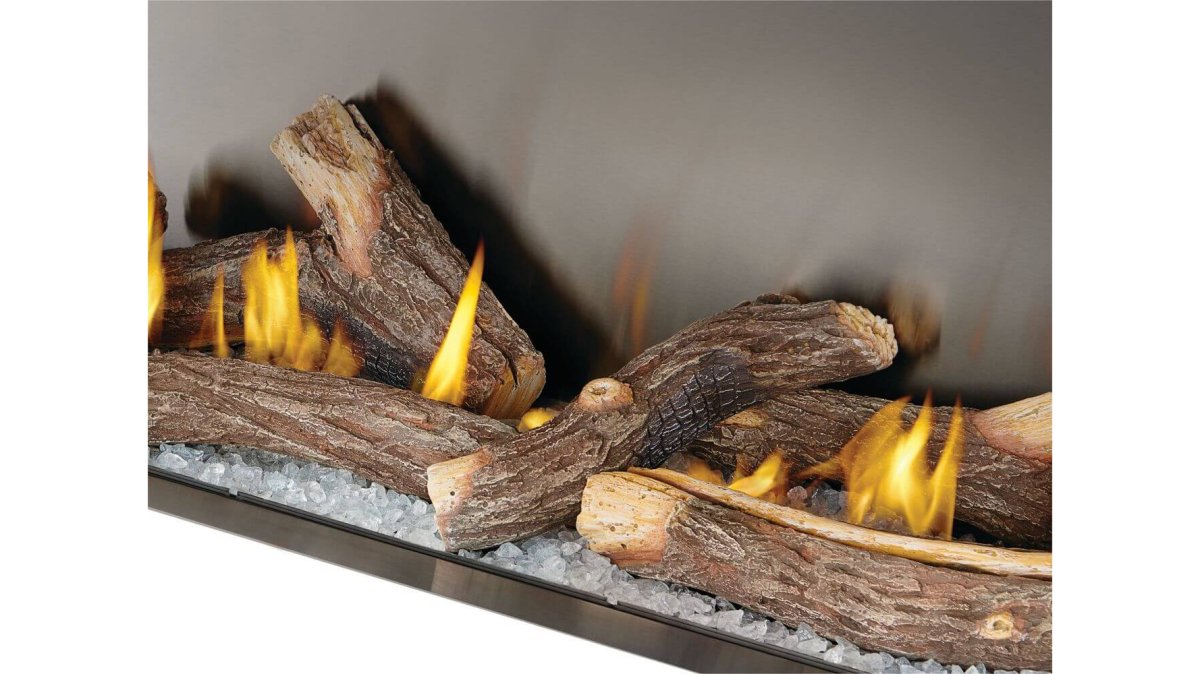
Where direct vent wins is presence. A 60-inch linear fireplace with reflective panels, a realistic log set, and a modulating Proflame-style remote becomes the architectural anchor of a room. If your project allows the venting, nothing else matches it; if not, the categories below are different tools rather than compromises.
Modern Fireplace Design Trends Shaping 2026 Interiors
Design in 2026 favors restraint: linear proportions, matte black or brushed steel surrounds, and fireboxes set flush into plaster or stone rather than framed by a traditional mantel. The fireplace is treated as part of the wall, not an object placed against it.
Three shifts drive this. Cool wall technology reduces clearance above the firebox, so a TV or artwork can sit closer without heat damage. Flame settings and lighting adjust independently, letting a fire run low and blue for ambiance or high and warm for heat. And surrounds have moved toward large-format porcelain and micro-cement, which read as seamless and hide venting and gas connections.
For a traditional interior, the same technology works under traditional styling: a cast-stone surround, a deeper firebox, and a log set instead of glass. Modern hardware no longer forces a modern room.
Realistic Electric Fireplace Inserts for Condos and Rentals
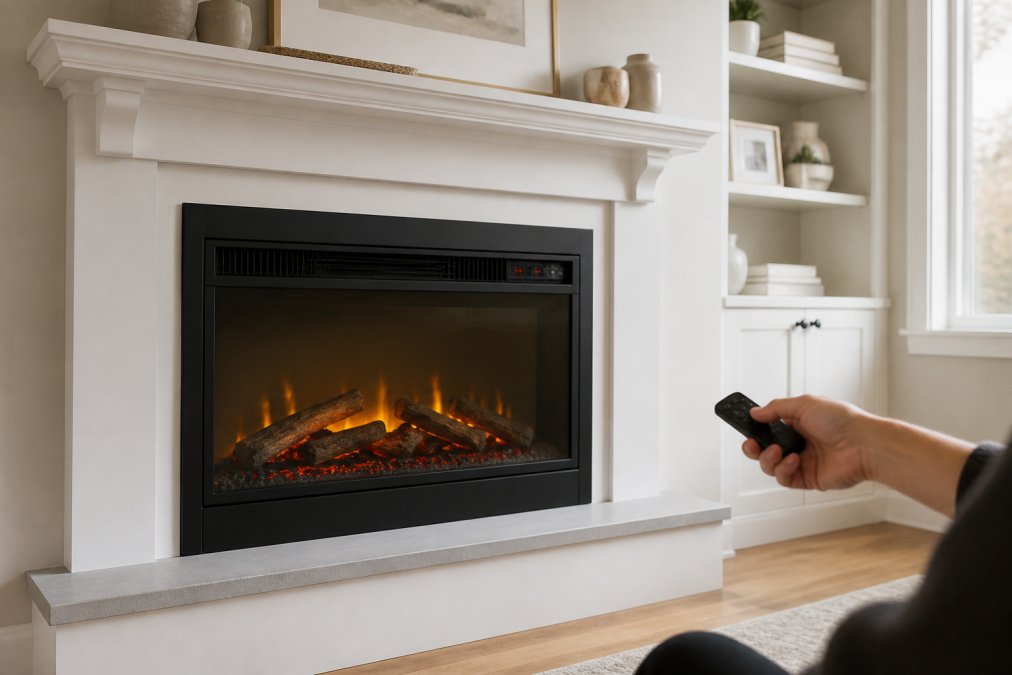
Electric inserts are the only category that works when you cannot cut a vent, run a gas line, or alter the structure. They plug into a standard outlet, need no combustion air, and produce zero local emissions, making them the default for condos, apartments, and rentals.
Modern units have closed much of the realism gap. LED and ribbon-flame systems with adjustable flame speed, color, and ember beds look convincing, and infrared or fan-forced heaters add supplemental warmth for a single room. The honest limitation: electric inserts heat a space, not a floor plan, so treat them as ambiance plus spot heat, not a furnace replacement.
For renters, the practical format is a freestanding or wall-mount unit that leaves no permanent mark. For condo owners doing a light remodel, a built-in electric insert with a finished surround delivers the custom look without structural work. Both avoid venting, gas, and clearance headaches entirely.
Outdoor Fireplace Alternatives That Extend Your Patio Season
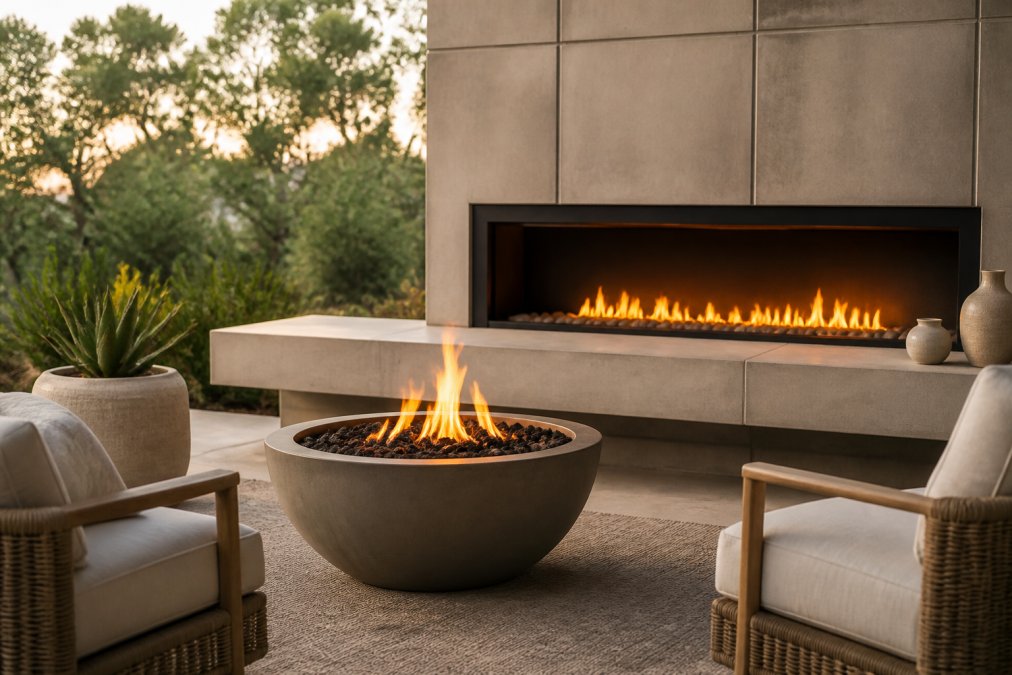
Outdoor fire features are the fastest way to make a patio usable into the colder months, and they sidestep indoor venting rules. A stainless steel gas fireplace anchors a seating area; a fire table doubles as a coffee or dining surface when the flame is off.

For a true architectural focal point, the Outdoor Gas Fireplace Galaxy 62 pairs heavy-duty stainless construction with electronic ignition and customizable burn media, so it holds up to weather and still looks intentional in a designed space. For entertaining, the Wicker Fire Table with Marble Top runs a 50,000 BTU burner with a glass windscreen and converts to a dining table with its included lid. A tabletop propane fire pit suits balconies where floor space is tight.

The mistake most buyers make is buying the fire feature and furniture separately. A fire table at the wrong height turns a lounge into an obstacle course. Measure your seating height first, then choose the table.
Cost Considerations: Total Cost of Ownership Explained
Purchase price is the smallest part of most fireplace budgets. Total cost of ownership is the honest number: the unit, venting or gas work, framing and finishing, permits and inspection, and ongoing fuel or electricity over the years you own the feature. Buyers who avoid expensive surprises compare five-year totals, not stickers.
Break the budget into four buckets and price each one before you commit:
- Unit and trim. The firebox, burner, log or glass media, remote, and any reflective or black-glass liner, the only number most retailers advertise.
- Rough-in trades. Gas line from the meter, electrical circuit, vent kit and termination, and framing for the chase. These are invisible after drywall and routinely cost more than the unit itself.
- Finish work. Surround material, hearth, mantel, tile or micro-cement labor, and paint or plaster repair. Large-format porcelain and cast stone carry material and skilled-labor premiums.
- Permits, inspection, and ongoing fuel. A gas appliance permit, a final inspection, and then years of fuel or electricity.
A common pattern by category:
- Direct vent gas. Highest rough-in cost because of the sealed coaxial vent, exterior termination, gas line, and framed chase. Finishing often exceeds the fireplace itself. Ongoing cost is natural gas or propane by the therm or gallon, and a standing pilot or continuously burning unit adds up.
- Ventless gas. Removes the vent run and termination, but still needs a gas line, a code-compliant installation, and, in many jurisdictions, adherence to the manufacturer's oxygen depletion sensor and room-volume requirements. Ongoing fuel cost is similar to direct vent.
- Electric insert. Lowest rough-in cost: a standard outlet and a finished opening. Ongoing cost is electricity per kilowatt-hour, and because the heater is supplemental, runtime is usually short and intermittent. No gas permit, no vent.
- Bioethanol. No vent and no gas line, but fuel is purchased by the bottle or case and burned continuously while lit, so per-hour fuel cost is often the highest of the indoor options.
- Outdoor gas fireplace or fire table. Unit plus a gas line or propane tank, plus a cover and burn media. Propane is consumed by the tank, and a 50,000 BTU burner can empty a standard tank quickly during regular entertaining.
A five-year view changes the ranking. A cheaper direct vent unit needing a vent run, gas line, framed chase, and finished surround often totals more than a premium ventless or electric option that drops into an existing opening. Conversely, a low-cost electric insert with high winter runtime can lose its advantage on electricity alone in a cold climate.
Build a simple five-year sheet: installed cost + permits + (annual fuel or electricity × 5) + one service visit. Compare categories on that total, not on retail price. The category that wins on sticker price is often not the category that wins over five years.
Ask each installer for a line-item quote that separates the unit, the rough-in, and the finish. Bundled quotes hide which bucket is driving the number and make it impossible to compare two bids fairly.
Permit and inspection requirements vary by state and municipality, and unpermitted gas work can void insurance coverage and complicate a future home sale. Confirm local requirements before work begins rather than after.
NFPA 54 National Fuel Gas Code overview
Retrofitting vs. New Construction: Which Path Fits Your Project?
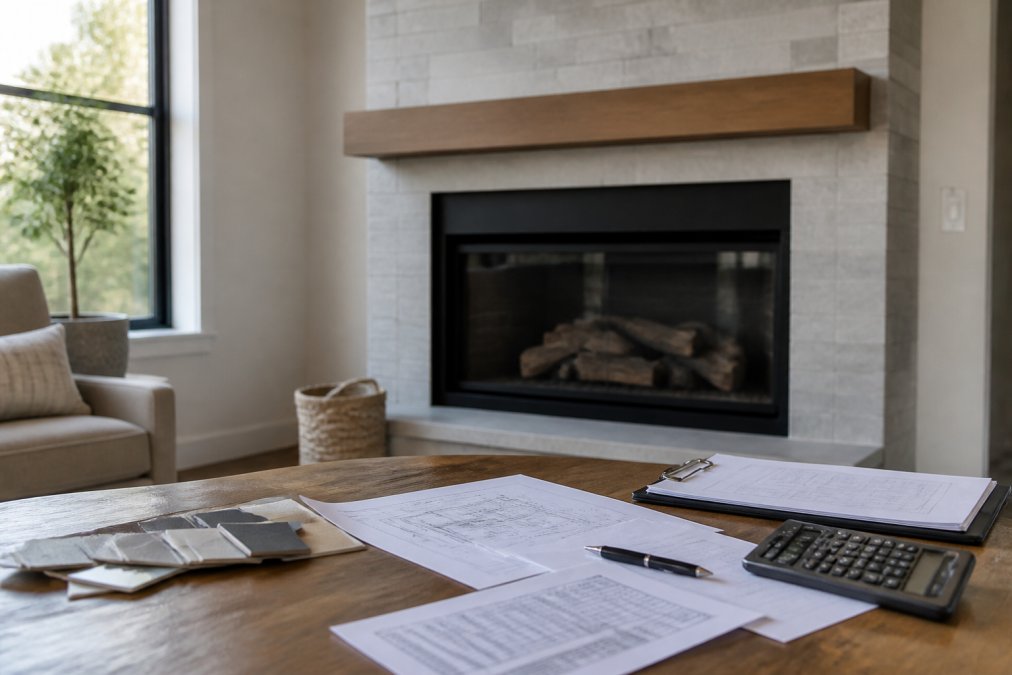
Retrofitting means working with the opening, flue, and gas line you already have. New construction means deciding the firebox, venting, and framing before the walls close. Your path determines which alternatives are available and usually decides the budget before you pick a model.
Start by answering four questions about the space:
- Is there an existing flue or chimney? If yes, is it lined, intact, and correctly sized for an insert?
- Is there a gas line at or near the wall? If not, can one be run without cutting finished ceilings or floors?
- Can an exterior wall or roof accept a vent termination? Direct vent needs a path to outside that meets the manufacturer's vent run and clearance rules.
- What is the wall assembly? Load-bearing masonry, framed drywall, and concrete condo demising walls each allow different options.
Retrofitting an existing masonry fireplace. A ventless gas insert or gas log set can often reuse the firebox if the opening is properly sized and the installation is code-compliant. Electric inserts and bioethanol units need no flue, so they work even when the chimney is unusable. Direct vent is the hardest retrofit because it needs a new vent path, though a co-linear or co-axial liner run up an existing chimney is sometimes possible when the flue is sound and correctly sized.
Retrofitting with no flue at all. This is the condo, apartment, and interior-wall case. Electric inserts are the clean answer: a standard outlet, a finished opening, and no combustion air or venting. Ventless gas works only where a gas line exists and local code and room-volume requirements are met. Bioethanol needs neither flue nor gas line but requires attention to fuel storage and ventilation.
New construction. Direct vent is the natural fit because you can plan the vent run, gas supply, and framing from the start and size the unit to the room before finishes go in. Decide the fireplace early, moving a vent termination or gas stub after drywall is an expensive correction, and the rough-in sequence (framing, gas, electrical, vent, then finish) is hard to reverse.
A practical decision order:
- Existing masonry chimney, sound flue, gas available → ventless gas insert or gas log set; direct vent only if a compliant vent path exists.
- Existing chimney, damaged or unlined flue → electric insert or bioethanol; do not install a gas insert into a compromised firebox.
- No flue, no gas, condo or rental → electric insert.
- No flue, gas available, code allows → ventless gas with proper room-volume compliance.
- New build or gut renovation → direct vent, planned from framing stage.
Never assume an existing masonry firebox can accept an insert without inspection. Damaged flue tiles, undersized openings, and missing liners are common in older homes, and an insert installed into a compromised firebox can create a carbon monoxide risk. Have the chimney inspected by a qualified professional first, and confirm that the insert is listed for the application.
Photograph the firebox opening, the flue from the roof, and the nearest gas stub before you shop. Installers can usually tell you in minutes which categories are viable, and it saves a wasted site visit.
U.S. Consumer Product Safety Commission guidance on gas fireplace safety
Conclusion
Choosing between Town & Country fireplaces alternative options comes down to your walls, not your taste. Direct vent still sets the standard for luxury interiors, but ventless gas, electric inserts, bioethanol, and outdoor fire features each solve a constraint direct vent cannot.
At Zen Home Fireplaces, we help homeowners match the fire feature to the space, with a curated selection of modern indoor and outdoor models and the Zen Hearth Essentials accessories line to finish the look. Explore the collection and find the piece that fits your room, your patio, and your budget.
U.S. EPA guidance on wood smoke and residential wood heating
NFPA 54 National Fuel Gas Code overview
U.S. Consumer Product Safety Commission guidance on gas fireplace safety
Frequently Asked Questions
What is the most realistic fake fireplace?
Modern realistic electric fireplace inserts use LED technology and resin logs to mimic authentic flames, and some models include crackling sound effects. The realism depends on the flame display quality and the log set design. Look for inserts with adjustable flame settings and ember bed glow to create depth. These units work well in condos and apartments where venting is not possible, and they provide supplemental heat without the installation costs of gas or wood-burning fireplaces.
What should I look for when choosing a premium direct vent fireplace?
Focus on BTU output for your room size, venting options that fit your wall or roof configuration, and installation clearance requirements. Check for features like Proflame remote controls, reflective panels that amplify the flame, and cool wall technology if you plan to mount a TV above the firebox. Direct vent models seal combustion from indoor air, which makes them safer and more energy efficient. Also review the EPA Phase 2 standard if you are comparing against wood-burning units.
How much does it cost to install a fireplace alternative?
Installation costs vary by fuel type and project scope. Electric inserts typically require only a standard outlet and framing, so labor is minimal. Direct vent gas fireplaces need a gas line, venting through an exterior wall or roof, and often a licensed contractor, which can add several thousand dollars. Outdoor fire tables arrive fully assembled and need no venting at all. Always budget for permits and a professional gas connection where required by local code.
Are there modern electric fireplace alternatives that offer a luxury look?
Yes. Realistic electric fireplace inserts now come in linear and portrait formats with black steel surrounds, crystal ember beds, and multi-color flame settings. These designs suit modern fireplace design trends like clean lines and minimalist surrounds. Many models include remote control and smart home integration, so you can adjust flame height and heat output from your phone. They deliver the architectural aesthetic of a high-end unit without the flue or combustion requirements.