How to Choose Outdoor Fire Table Covers That Fit and Last
Last Updated: November 6, 2026
Quick Summary
To choose fire table covers that fit and last, measure the table's top length, width and height, match the cover to its exact shape, and pick a UV-resistant, water-resistant material with built-in vents. Secure the cover with straps routed under the table base, and let the table cool before covering it.
- Measure the top edge to edge and the height from ground to the highest point, rounding up to the nearest inch.
- Choose a UV-resistant material and check denier, since heavier fabric generally lasts longer.
- Pick a cover with built-in vents so trapped moisture and condensation can escape.
- Route wind straps under the table base so the cover anchors to its heaviest part.
- Never cover a table while the fire is burning or the table is still warm.
Table of Contents
- Why Fire Table Covers Matter for Your Outdoor Investment
- How to Measure a Fire Table for a Cover
- Fire Table Cover Materials Compared
- Choosing a Cover with Vents
- Securing Your Cover with Wind Straps
- Matching Covers to Shape and Burner Style
- Booking Your Fire Table and Cover Setup Today
- Frequently Asked Questions
Why Fire Table Covers Matter for Your Outdoor Investment
A good fire table covers protect a fire table from rain, dust, and sun between uses. Homeowners often spend real money on a fire table, then leave it uncovered and wonder why the finish fades. A cover that fits well and is built from the right material keeps the table looking new for longer.
Fire tables are a significant purchase. The St. Tropez Rectangle Patioflame Table, for example, is priced at $1,889.00 at Zen Home Fireplaces. Protecting that kind of investment is simply good sense.
Here is what a cover does for your table:
- Shields the burner, ember media and controls from moisture
- Keeps dust and debris out of the burner area
- Reduces fading and wear from UV exposure
- Gives the table a finished look when the flame is off
Keep reading for a step-by-step way to pick the right cover, from measuring your table to securing the cover in windy weather.
How to Measure a Fire Table for a Cover
Measure before you shop. A cover that is even a little too small will not sit flat or stay on, and one that is too large will flap in the wind.
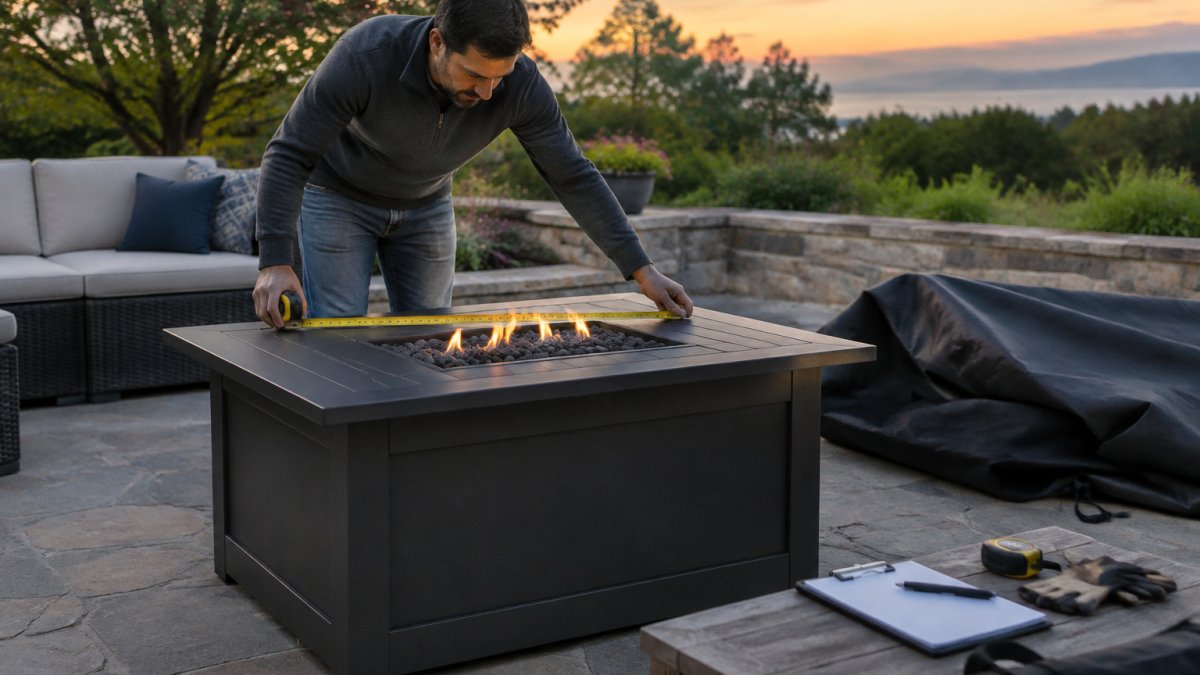
Step 1: Measure the length and width. Measure the top of the table from edge to edge, not the base. Round up to the nearest inch.
Step 2: Measure the height. Measure from the ground to the highest point of the table, including the burner lid or any raised edge.
Step 3: Check the shape. Round, square, and linear tables each need a different cover pattern. A cover for a square table will not fit a rectangle.
Step 4: Compare against the product listing. Many tables list the matching protective cover size in their specifications. Check the listing before you buy.
Measuring for a cover is quick work, and it takes two people if the table is large.
Fire Table Cover Materials Compared
Cover materials differ in how well they handle sun, rain, and wear, and the differences show up after a season or two, not on the day you buy. Here is how the common options compare on the factors that actually shorten a cover's life.
- Polyester with UV protection: Lightweight and easy to handle, and the least expensive option. The trade-off is tear strength: thin polyester can puncture on a sharp table corner and the seams are usually the first failure point. Look for a UV-resistant rating so the color holds up in sun, and check the denier (fabric weight) if the listing shows it, heavier fabric generally lasts longer.
- Vinyl-coated fabric: More water resistant than plain polyester because the coating blocks liquid water rather than just resisting it. Good for areas with frequent rain. The trade-off is breathability: a fully coated fabric traps condensation unless the cover has vents, so pair it with a vented design. Vinyl coatings can also stiffen and crack over time with repeated sun exposure.
- Heavy-duty canvas: Thick and durable, and it resists tearing better than the other two. The trade-off is weight and moisture: canvas is heavier to lift on and off, and it can hold moisture if it is not fully dry before storage, which is a mildew risk in humid climates.
- Solution-dyed acrylic: A step up in UV performance because the color is built into the fiber rather than applied as a surface treatment, so it fades more slowly. It is usually the most expensive option and is worth considering if the table sits in direct sun year-round.
A common mistake is buying the lightest cover to save money. Thin fabric tears sooner, lets more dust through, and often fails at the seams before the fabric itself wears out. For long-term protection, choose a UV-resistant, water-resistant material with a fitted design and reinforced seams.
Match the material to your climate and usage. In a hot, sunny climate, UV resistance matters more than waterproofing. In a rainy climate, water resistance and venting matter more. If the table is used frequently, a lighter cover is easier to remove and replace daily; if it is covered for long stretches, a heavier, more durable material pays off.
Watch out: A cover that is waterproof but not breathable can trap moisture against the table and cause more corrosion on the burner and controls than no cover at all. Always confirm the cover has vents or a breathable membrane before you buy.
The article compares the common cover materials on the factors that shorten a cover's life.
St. Tropez Rectangle Patioflame Table →
| Material | Best for | Key trade-off |
|---|---|---|
| Polyester with UV protection | Budget buyers | Thin fabric can puncture at corners |
| Vinyl-coated fabric | Frequent rain | Needs vents to avoid trapped condensation |
| Heavy-duty canvas | Durability and tear resistance | Heavier, and can mildew if stored damp |
| Solution-dyed acrylic | Year-round direct sun | Usually the most expensive option |
Choosing a Cover with Vents
Vents let moisture escape from under the cover. Without them, humidity can build up and lead to mildew or trapped condensation on the table.
Look for a cover with built-in vents near the top or sides. Vents also reduce the pressure that wind puts on the cover, which helps it stay in place.
Why Vents Matter After Use
Right after the fire has been burning, the table and its surroundings are warm. If you cover the table right away and seal it tight, moisture from the air can get trapped. Let the table cool completely before covering it. Vents then do their job and let the cover breathe.
Securing Your Cover with Wind Straps
A cover that blows off in a storm is useless, and wind is the most common reason a cover fails before the fabric wears out. Wind straps or cord locks keep the cover anchored, but how they are routed matters as much as whether they exist.
- Route straps under the table base, not just around the top. A strap that only cinches around the tabletop can slide up and off in a gust. A strap that passes under the base anchors the cover to the heaviest part of the table.
- Tighten the straps so the cover sits snug, but do not overtighten. Overtightening strains the seams and can pull the cover out of shape, which creates gaps at the corners.
- Check the straps after strong wind. They can loosen over time, and a loose strap flaps and wears against the table edge.
Drainage and ventilation go hand in hand with wind security. A cover that holds water is a cover that will sag, stretch, and eventually tear. Look for a cover with a taut fit and, where the design allows, a low point or drain vent so rainwater runs off rather than pooling in the middle. Pooled water adds weight, and that weight is what pulls straps loose and stresses seams.
Vents serve double duty: they let moisture escape from under the cover so humidity does not build up and lead to mildew or trapped condensation, and they reduce the pressure that wind puts on the cover, which helps it stay in place. A cover with vents near the top or sides is easier to keep secured than a sealed cover that balloons in the wind.
Watch out: Never cover a table while the fire is still burning or the table is still warm. Let the table cool completely first, then secure the cover, trapping heat under a tight cover can damage the finish and the burner components.
If your table sits in an exposed spot, check the strap routing and the cover's drainage after every major storm.
Matching Covers to Shape and Burner Style
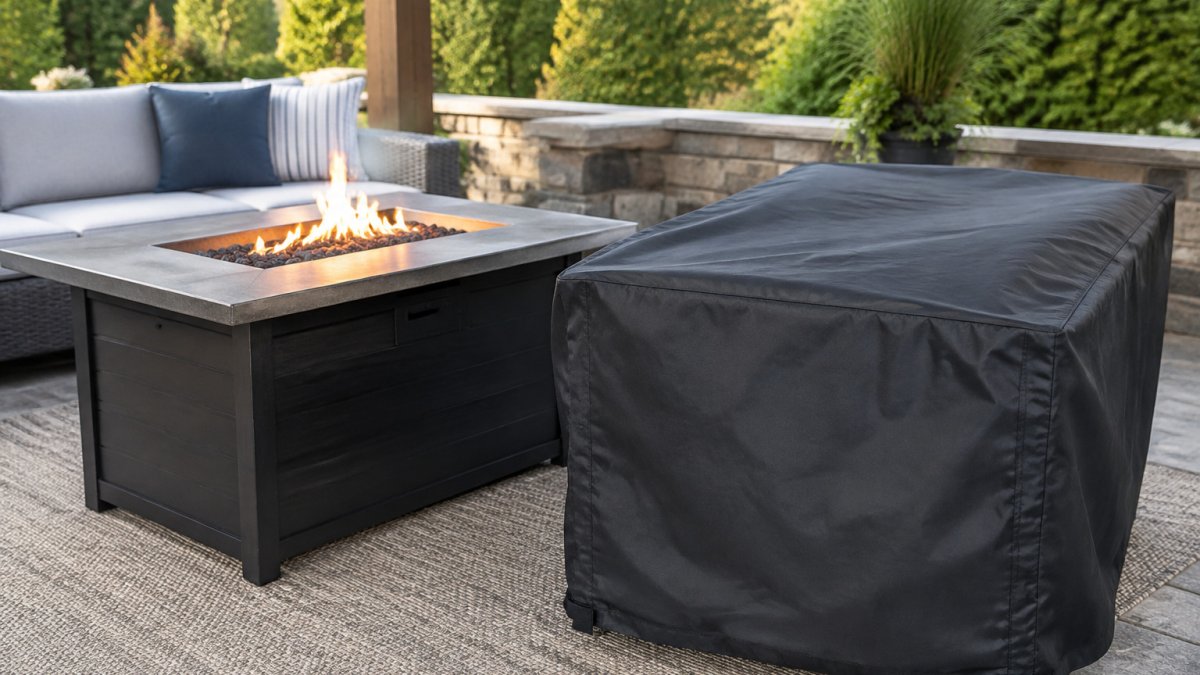
The cover has to match the table itself. The St. Tropez Rectangle Patioflame Table is a good example of a long, linear design, and its matching protective cover is sized to that rectangular top. The St. Tropez Square Patioflame Table is available in a square shape, which requires a square cover.
The Napoleon Nexus 36 Patioflame Table has a 36-inch half-sphere design and includes a UV-protected fitted cover.

Before you buy, match the cover to your table's exact shape and burner style. A cover designed for a different shape will leave gaps and fit poorly.
Booking Your Fire Table and Cover Setup Today
A well-chosen cover protects your fire table for many seasons. Measure your table, pick a UV-resistant material with vents, and secure it with wind straps, and your setup will look good year after year.
Then explore our full collection to find a fire table and cover that match your space. Explore Collection.
Frequently Asked Questions
How do I measure an outdoor fire table for a cover?
Measure the length, width and height of the table at its widest and tallest points, including any protruding burner lid, control panel or propane tank door. Add a few inches to each measurement so the cover slips on and off without forcing. Many manufacturers list cover sizes by table dimensions, so compare your numbers against the product listing before ordering. For the St. Tropez Rectangle Patioflame Table, check the listed dimensions against your measurements.
What material is best for an outdoor fire table cover?
Solid, weather-resistant fabrics with a UV-protected coating tend to hold up best outdoors, because sun exposure is the main reason covers fade and crack. Look for water-resistant or waterproof outer layers, and check whether the seams are stitched or taped. Breathable materials reduce trapped moisture. The Napoleon Nexus 36 Patioflame Table includes a UV-protected fitted cover, which is a useful reference point when comparing options.
Do fire table covers need vents?
Vents help release moisture and heat that can build up under a sealed cover, which reduces mildew risk and stress on the fabric. Covers with vents are especially useful in humid climates or after the table has been used. Vented designs still keep rain and debris out of the burner area when properly fitted. Check that vent placement does not allow wind-blown rain straight into the burner pan.
How do you keep an outdoor fire table cover from blowing away?
Use fitted covers with a tight elastic hem, then add wind straps or cord locks that run under the table base. Tighten the straps so the cover stays snug without pulling the fabric out of shape. Check straps after strong winds, since loose ones can shift over time. A compatible windscreen can also reduce wind pressure on the cover, and the Napoleon Rectangle Windscreen (GPFRE-WNDSCRN) is one option for the Hamptons Rectangle Patioflame Table.