Electric vs Gas Fireplace for Condos
Table of Contents
- Electric vs Gas Fireplace: Quick Comparison Table
- Heat Output and Energy Efficiency
- Condo Fireplace Installation Requirements
- Venting Requirements for Gas Fireplaces
- Safety, Emissions, and Air Quality
- Operating Costs and Long-Term Expenses
- Aesthetic Appeal and Flame Realism
- Which Fireplace Is Right for Your Condo
Last Updated: August 20, 2026
Electric vs Gas Fireplace: Quick Comparison Table
When evaluating fireplaces for condo living, the choice between electric and gas models shapes your comfort, costs, and installation complexity. At Zen Home Fireplaces, we help condo owners navigate this decision by breaking down the real differences. The decision isn't just about aesthetics, it's about what your building allows, what your space can handle, and what you can afford to operate long-term.
Here's the essential comparison:
| Feature | Electric Fireplace | Gas Fireplace |
|---|---|---|
| Heat Output | 4,000-5,000 BTU | 25,000-30,000 BTU |
| Venting Required | None | Yes (direct vent) |
| Installation Complexity | Minimal (plug-in or hardwired) | Moderate to complex |
| Operating Cost | $0.15-$0.25/hour | $0.50-$1.00/hour |
| Flame Realism | High (LED technology) | Highest (real combustion) |
| Condo-Friendly | Excellent | Conditional (building codes) |
| Upfront Cost | $200-$1,100+ | $3,400-$6,200+ |
| Maintenance | Minimal | Annual service required |
Electric models win on simplicity and condo compatibility. Gas models deliver superior heat and authentic flame, but demand venting infrastructure and HOA approval.

Heat Output and Energy Efficiency
Electric fireplaces deliver 4,000-5,000 BTU, making them suitable for supplemental zone heating rather than primary heat sources. They convert nearly 100% of electrical energy into heat with no combustion losses or venting waste. The Noralie TV Stand with LED Electric Fireplace delivers 4,777 BTU at 1,400W, heating up to 400 square feet.
Gas fireplaces operate at a different scale. The Napoleon Vector 38-inch see-through model generates up to 30,000 BTU, enough to meaningfully warm multiple rooms. However, gas systems lose efficiency through venting, direct vent technology pulls combustion air from outside and exhausts fumes back out, meaning some heated air leaves your condo.
For condos, the efficiency question comes down to your heating needs. If you want supplemental warmth and flame ambiance, electric is more efficient per watt. If you need serious heat output, gas delivers more BTU but at higher operating cost and with venting losses built in.
Condo Fireplace Installation Requirements
Installation requirements differ dramatically between electric and gas, and your HOA or building code may eliminate one option entirely.
Electric fireplaces require only a standard electrical outlet and a wall or TV stand placement. The three-sided glass electric fireplace from Zen Home Fireplaces needs nothing more than a power source, no venting, no gas line, no structural modifications. Installation takes hours. Hardwired models require an electrician to run a dedicated circuit, but that's straightforward work. Most condos allow this without special approval because it poses no safety or structural risk.

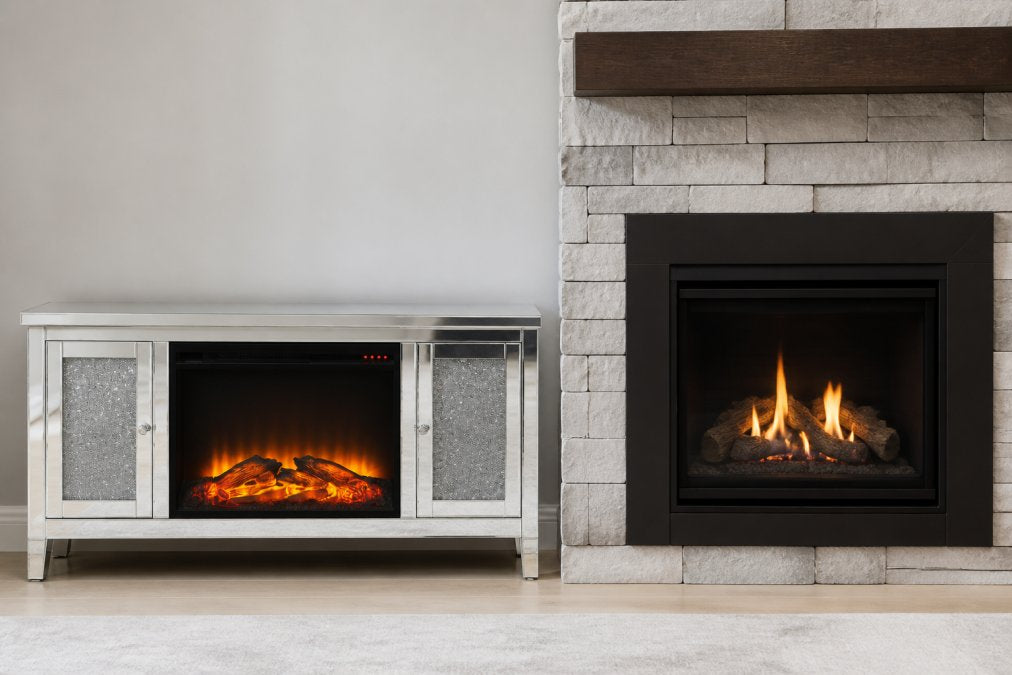
Gas fireplace installation requires a vent pipe running through your exterior wall or roof. This demands structural assessment, coordination with building management and HOA, compliance with local building codes, professional installation by a licensed technician, and possible wall or ceiling modifications. The Majestic Trilliant 30-inch insert is designed for fireplace openings or recessed installation. If your condo has an existing fireplace, this simplifies things. If you're starting from scratch, you're looking at creating a vent path through walls or ceilings, work that many condo boards restrict or prohibit.
Most condo buildings allow electric fireplaces without approval. Gas fireplaces require explicit written permission from your HOA and often trigger additional building inspections. Contact your condo board and ask directly about gas fireplace venting installations before purchasing.
Venting Requirements for Gas Fireplaces
Gas fireplaces must vent combustion byproducts outside. Understanding venting types helps you assess whether a gas model is feasible in your condo.
Direct vent systems pull combustion air from outside through one pipe and exhaust fumes back out through another (or a single concentric pipe). The Napoleon Vector 38-inch see-through model uses direct vent technology. These systems are sealed, indoor air doesn't feed combustion, so they don't deplete your condo's oxygen or create negative pressure. This is the only type acceptable in most condos.
Vent-free (or ventless) gas fireplaces produce no external venting. They exhaust combustion byproducts, including carbon monoxide and water vapor, directly into your living space. Many jurisdictions restrict or ban vent-free fireplaces in residential units, and most condo boards prohibit them entirely.
Your exterior wall or roof must accommodate a vent pipe. Corner units and upper-floor units may have easier access. Interior units or those where the exterior wall is shared with common areas face complications. Before committing to a gas model, have a professional assess your condo's venting options.
Safety, Emissions, and Air Quality
Electric fireplaces eliminate combustion entirely, removing a category of safety concerns. There's no carbon monoxide risk, no combustion byproducts, no oxygen depletion. The flame effect is LED-based, producing light and heat but no actual fire.
Gas fireplaces introduce combustion into your living space. When properly vented, direct vent systems exhaust all combustion products outside. However, improper venting, leaks, or maintenance failures create real risks. Carbon monoxide is colorless and odorless, a malfunctioning or poorly installed gas fireplace could expose you to it without warning.
Modern condos are built tight for energy efficiency, meaning less air infiltration. A direct vent gas fireplace handles this by pulling combustion air from outside, but the system must be sealed correctly. Electric fireplaces sidestep this issue entirely.
Safety sensors on gas fireplaces detect flame failure and shut down gas flow automatically, but this only works if the system is maintained properly. Electric fireplaces have no equivalent failure mode. For condos with health-conscious residents or those concerned about air quality, electric fireplaces offer peace of mind. According to EPA guidance on indoor air quality, combustion appliances in tight buildings demand proper venting and regular inspection.
Operating Costs and Long-Term Expenses
Operating an electric fireplace costs significantly less than running a gas model, though upfront purchase prices differ.
Electric fireplace operating costs depend on local electricity rates and usage. At typical rates, running an electric fireplace costs $0.15-$0.25 per hour. Running it 6 hours daily for 120 days (November through March) costs $108-$180 annually.
Gas fireplace operating costs are higher. A gas fireplace burning at moderate output costs roughly $0.50-$1.00 per hour. The same 6-hour daily usage over 120 days runs $360-$720 annually.
Beyond operating costs, maintenance matters. Electric fireplaces require minimal maintenance, occasional dusting and ensuring the outlet functions. Gas fireplaces demand annual professional inspections and cleaning, typically costing $150-$300 per service call. Over 10 years, that's $1,500-$3,000 in maintenance alone.
Upfront costs differ significantly. The three-sided glass electric fireplace from Zen Home Fireplaces costs $205.95. The Noralie TV Stand with LED Electric Fireplace is $958.95. The Almera with adjustable temperature and LED options runs $1,134.95.
Gas fireplaces demand larger upfront investment. The Majestic Trilliant 30-inch insert costs $3,399.97. The Napoleon Vector 38-inch see-through model costs $6,199.97. Installation costs for gas fireplaces typically range from $2,000-$5,000, depending on complexity and region. Electric fireplaces can be installed by the homeowner or a handyman for minimal cost.
Aesthetic Appeal and Flame Realism
Gas fireplaces have historically held the advantage, nothing matches the visual authenticity of real flames. However, modern LED flame technology has narrowed the gap significantly.
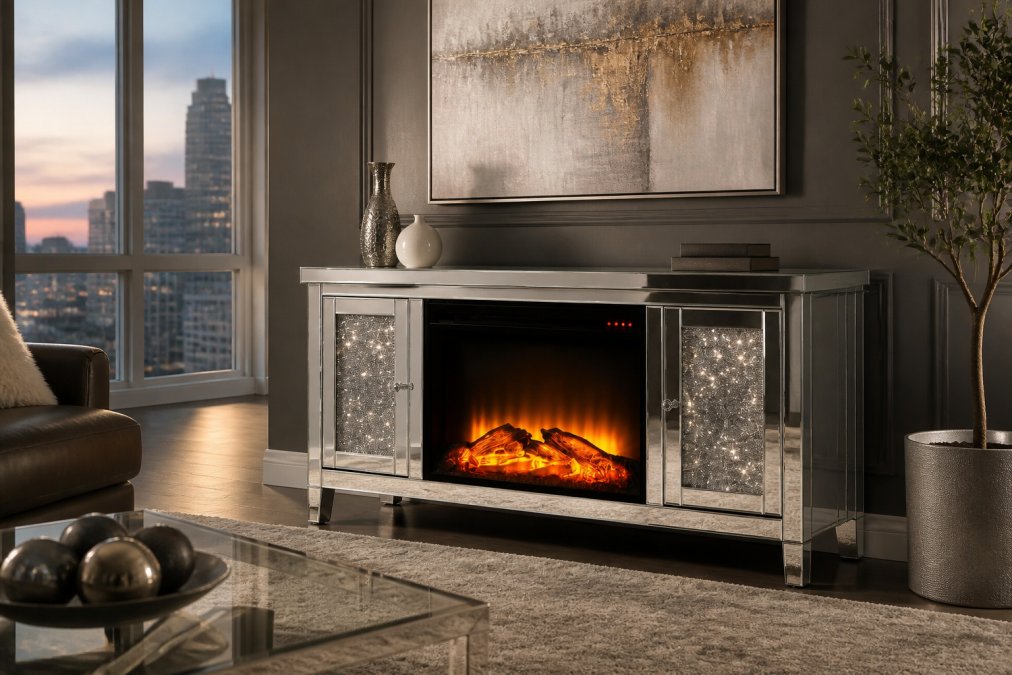
Electric fireplaces use LED flame simulation with varying levels of realism. Premium models like the Almera fireplace offer 8 different flame types with 5 adjustable speeds and 7 LED color options. The three-sided glass electric fireplace from Zen Home Fireplaces creates a three-dimensional flame effect visible from multiple angles. The visual result is convincing, particularly in lower light conditions.

Gas fireplaces produce actual flames, creating undeniable visual authenticity. The Napoleon Vector 38-inch see-through model features real combustion with customizable flame height and optional premium media kits. The flame behavior, flickering, responding to air currents, varying in intensity, is genuinely dynamic in ways LED simulation can't fully replicate.
The aesthetic trade-off is context-dependent. In a modern, minimalist condo, the clean lines and adjustable colors of an electric fireplace often complement the design better than a traditional gas hearth. The Noralie TV Stand with LED Electric Fireplace doubles as a functional entertainment center. Electric models integrate more flexibly into existing decor without dominating the space.
Which Fireplace Is Right for Your Condo
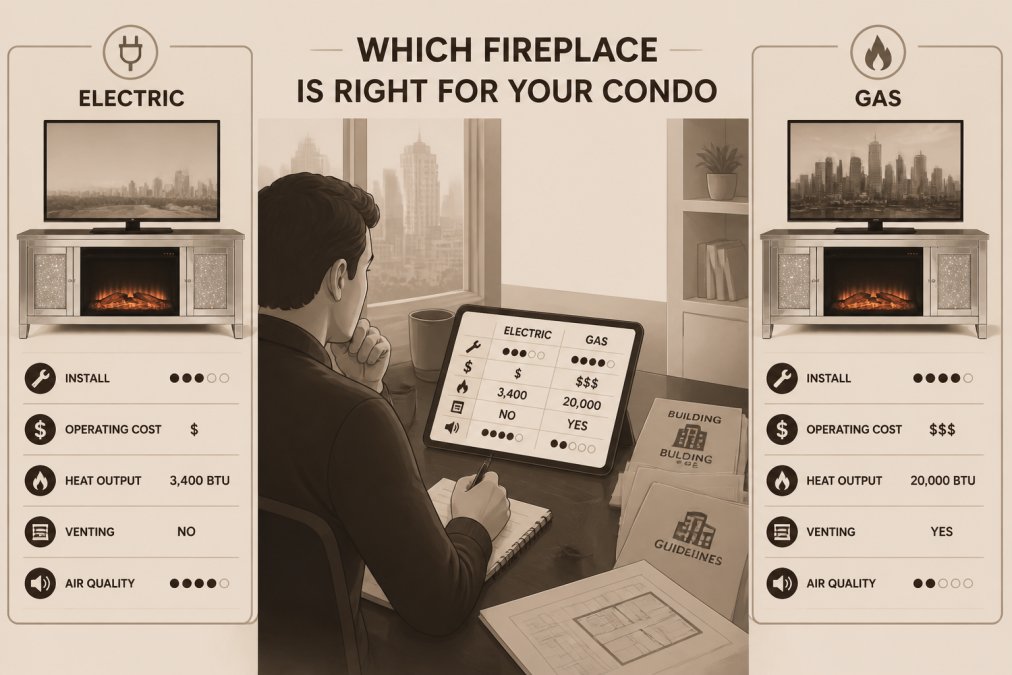
The right choice depends on three factors: your condo's physical constraints, your heating needs, and your budget.
Choose electric if:
- Your condo board restricts or prohibits gas venting
- You want minimal installation hassle
- You need supplemental warmth, not primary heating
- You prioritize low operating costs and minimal maintenance
- You want flexibility to move or remove the fireplace later
- You're concerned about indoor air quality or combustion safety
The Zen Home Fireplaces electric collection covers this spectrum. The three-sided glass electric fireplace ($205.95) suits renters or anyone testing whether they want a fireplace. The Noralie TV Stand ($958.95) combines storage and warmth. The Almera ($1,134.95) offers extensive customization for open-concept spaces.
Choose gas if:
- Your condo allows direct vent installation with HOA approval
- You need genuine zone heating capacity (25,000+ BTU)
- You prioritize authentic flame visuals and ambiance
- You're willing to invest in professional installation and annual maintenance
- You plan to stay in the condo long-term
The Majestic Trilliant 30-inch ($3,399.97) suits condos with existing fireplace openings. The Napoleon Vector 38-inch ($6,199.97) is a luxury choice for high-end condos where the fireplace becomes a design centerpiece.
Before purchasing, verify three things: (1) Check your condo's building code and HOA restrictions, contact your board directly about gas fireplace venting. (2) Assess your space's heating needs to determine whether supplemental warmth (electric) or zone heating (gas) matches your goals. (3) Calculate total cost of ownership over 10 years, factoring in purchase price, installation, operating costs, and maintenance.
For most condo owners, electric fireplaces represent the practical choice. They're accessible, installation-friendly, and condo-board-approved. They deliver genuine flame ambiance without combustion complexity. According to National Fire Protection Association safety standards for residential fireplaces, electric fireplaces eliminate several safety concerns inherent in combustion-based systems.
If your condo allows gas venting and you want serious heat output, gas fireplaces offer superior BTU delivery and authentic flame. The decision ultimately reflects your priorities: simplicity and safety favor electric; heat output and visual authenticity favor gas.
Choosing the right fireplace transforms your condo into a warm, inviting sanctuary. At Zen Home Fireplaces, we offer both electric and gas models designed for modern living. Our electric fireplaces like the Almera with adjustable temperature settings and multiple LED color options provide flexible ambiance without installation complexity. For gas options, our curated selection includes premium models with direct vent technology and advanced flame control. Explore our collection and find the fireplace that matches your condo's unique requirements and your vision for the space.
Frequently Asked Questions
Are gas fireplaces allowed in all condo buildings?
No. Most condo buildings and HOAs restrict or prohibit gas fireplaces due to venting requirements, combustion safety concerns, and building code compliance. Direct vent gas fireplaces require exterior wall penetration and venting infrastructure that many condos cannot accommodate. Always check your HOA bylaws and building codes before purchasing. Electric fireplaces face fewer restrictions since they require only a standard electrical outlet and produce no combustion byproducts.
Do electric fireplaces provide enough heat for a condo?
Electric fireplaces work well as supplemental heat for condos. Most models deliver 750-1500W of heating power, covering 300-400 square feet effectively. They excel at zone heating, warming one room without heating the entire unit, which reduces energy costs. For primary heating in larger condos or cold climates, they may need to work alongside your main HVAC system. Check the BTU output (typically 4,000-5,000 BTU) and heating area coverage before purchasing.
What is the downside of an electric fireplace?
Electric fireplaces have limited heating capacity compared to gas models and cannot operate during power outages. They require a dedicated electrical outlet and may increase your electric bill if used frequently for heating. Some models have less realistic flame effects than premium gas options, though newer LED technology has improved significantly. They also cannot provide the authentic ambiance of real combustion flames that some homeowners prefer.
How much does it cost to install a gas fireplace in a condo versus an electric fireplace?
Electric fireplaces are significantly cheaper to install. Plug-in models like the Noralie TV Stand ($958.95) require no professional installation, just a power outlet. Hardwired electric units may need an electrician ($200-500). Gas fireplace installation is substantially more expensive due to venting requirements, building permits, and structural modifications. A direct vent gas insert like the Majestic Trilliant ($3,399.97) typically requires $2,000-5,000 in professional installation, permitting, and ductwork, making total costs $5,000-8,500 or more.
Can you install a gas fireplace in a high-rise condo unit?
High-rise condos rarely allow gas fireplace installation. Direct vent systems require exterior wall access and venting penetration, which most high-rise buildings prohibit for structural and safety reasons. Building codes, fire codes, and HOA restrictions typically prevent this. Vent-free gas fireplaces are also restricted or banned in many jurisdictions due to indoor air quality and carbon monoxide concerns. Electric fireplaces are the practical solution for high-rise units, offering heating and ambiance without venting or combustion risks.
This article was written using GrandRanker