Electric Fireplace Safety Features Guide
Table of Contents
- Understanding Electric Fireplace Safety Features
- Overheat Protection and Thermal Cutoff Systems
- Cool-Touch Glass and Surface Safety Standards
- Automatic Shut-Off Features and Thermal Overload Protection
- UL Certification for Electric Fireplaces and Safety Standards
- Electric Fireplace Child Lock Features and Pet Safety
- Are Electric Fireplace Inserts Worth It for Heating and Safety
- Electrical Installation, Clearance, and Cord Safety
Last Updated: August 21, 2026
Understanding Electric Fireplace Safety Features
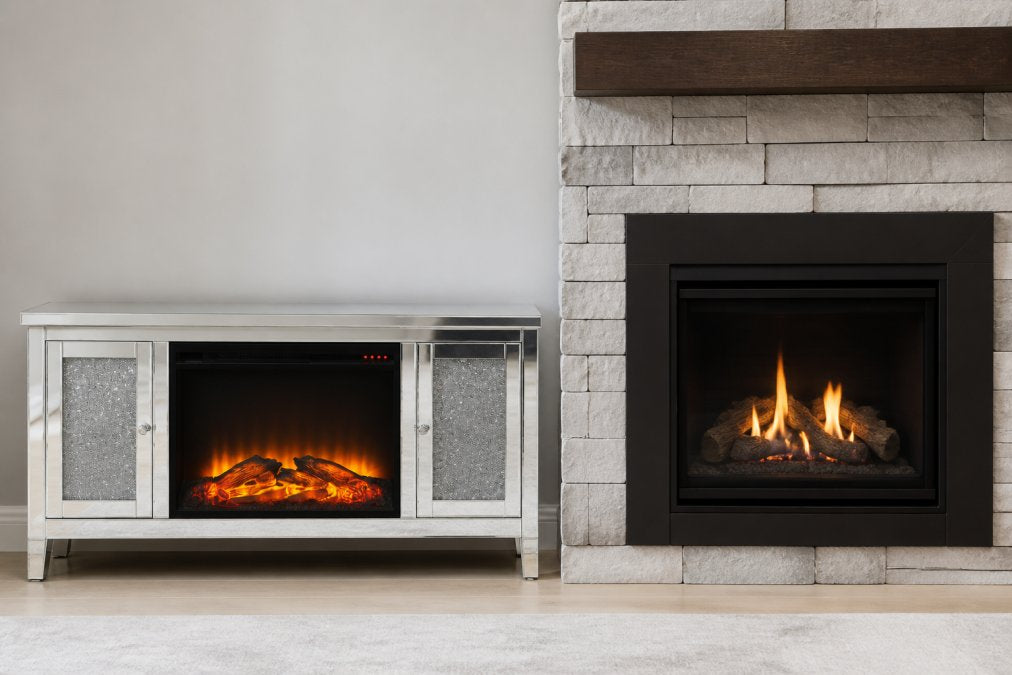
Modern electric fireplace safety features are critical when selecting a heating appliance. At Zen Home Fireplaces, we recognize that safety is the foundation of every quality fireplace design. Electric fireplaces have become increasingly popular among homeowners seeking fire ambiance without venting, chimney maintenance, or open flame hazards. Yet many buyers focus solely on aesthetics and heating capacity, overlooking the safety mechanisms that determine whether a unit operates reliably for years or becomes a liability.

Modern manufacturers employ multiple layers of protection: overheat cutoff systems, cool-touch exteriors, automatic shutdowns, and electrical certifications meeting industry standards. Each serves a distinct purpose, and together they create an environment where the fireplace operates safely in homes with children, pets, and high-traffic areas.
Overheat Protection and Thermal Cutoff Systems
The most critical safety mechanism in any electric fireplace is overheat protection. This system continuously monitors internal temperature and automatically cuts power if the heating element reaches a dangerous threshold. A thermal cutoff uses a temperature-sensitive switch that breaks the electrical circuit when preset limits are exceeded, preventing fires and component damage.
Modern electric fireplaces employ multiple temperature sensors at key points within the unit. The primary sensor monitors the heating element, while secondary sensors track ambient temperatures in the firebox and near the exterior casing. If any sensor detects excessive heat, the system triggers automatic shutdown. Thermal overload protection also monitors electrical current draw, cutting power if the heating element malfunctions and draws excessive power before dangerous heat builds up.

Many electric fireplaces reset automatically once they cool down. Others require manual reset, signaling to the homeowner that something triggered the safety system. If your fireplace repeatedly triggers thermal cutoff during normal operation, it may indicate an installation issue or electrical problem requiring professional inspection.
Cool-Touch Glass and Surface Safety Standards
The exterior of a modern electric fireplace must remain safe to touch during extended operation. Cool-touch glass technology uses special insulation layers and design principles to keep the viewing area at manageable temperatures. Most quality electric fireplaces maintain glass temperatures between 90°F and 110°F during normal heating operation (cpsc.gov).
This is achieved through tempered glass that resists heat transfer more effectively than standard glass, reflective insulation directing heat inward toward the room, and air gaps between the glass and heating chamber creating an insulating buffer zone. Testing for cool-touch safety follows established standards, with manufacturers measuring surface temperature at multiple points under maximum heating conditions. Reputable brands publish these measurements, giving buyers concrete data rather than vague assurances.
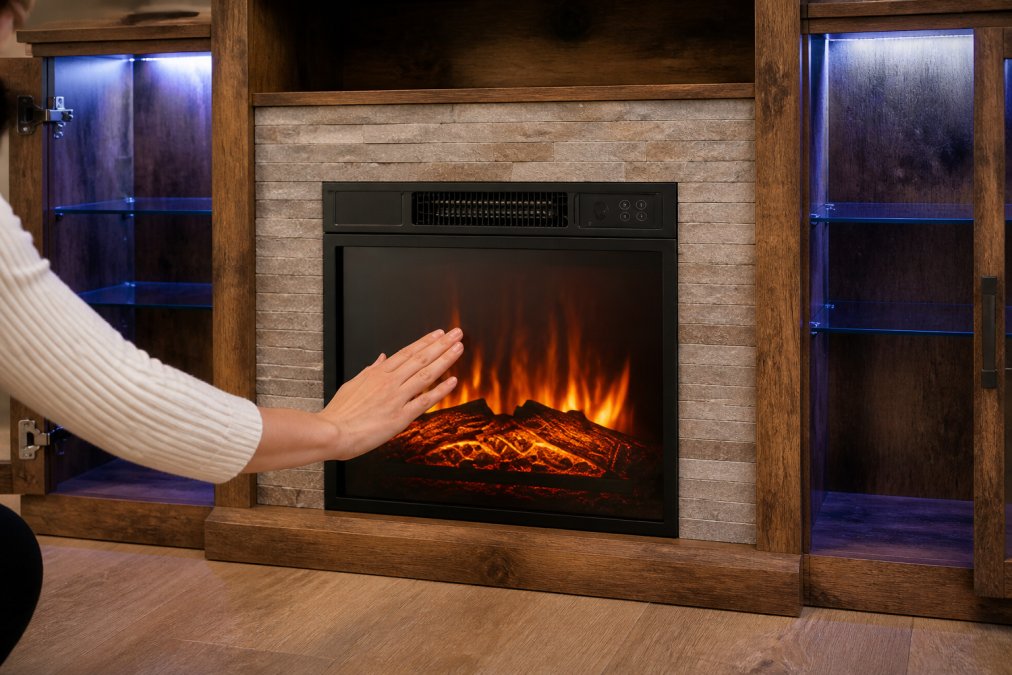
The cool-touch design becomes especially important in homes with young children or pets. A child who touches the fireplace surface should experience warmth, not a burn risk. A pet brushing against the unit should not suffer injury.
Automatic Shut-Off Features and Thermal Overload Protection
Automatic shut-off systems operate on multiple triggers, creating a comprehensive safety net. Timer functions allow users to set maximum operating duration. If you set a fireplace to run for 4 hours and forget to turn it off, the unit simply stops.
A second mechanism responds to room temperature. Many modern electric fireplaces include a thermostat that monitors ambient temperature. When the room reaches your target temperature, the heating element stops, though the flame effect typically continues. Thermal overload protection also functions as an automatic shut-off, if electrical components begin to fail, resistance increases, current draw spikes, and the system cuts power automatically.
Some units incorporate motion sensors or occupancy detection. If no movement is detected for a preset period, typically 30 minutes to 2 hours, the fireplace automatically powers down. The interaction between multiple automatic systems creates redundancy: if the thermostat fails, the timer still operates; if the timer is disabled, thermal protection remains active.
UL Certification for Electric Fireplaces and Safety Standards
UL (Underwriters Laboratories) certification represents the gold standard for electric fireplace safety in the United States. When a fireplace carries the UL mark, independent engineers have tested the unit against rigorous safety standards and verified that it meets or exceeds requirements for electrical safety, thermal protection, and material flammability.
The UL certification process is thorough and expensive. Manufacturers must submit units for testing, pay certification fees, and allow UL to conduct surprise factory audits to ensure ongoing compliance. Only serious manufacturers commit to this process, making UL certification a reliable indicator of quality and safety commitment.
CSA (Canadian Standards Association) certification provides equivalent protection for units sold in Canadian markets. Look for the certification mark directly on the fireplace or in documentation. A legitimate UL mark includes a specific certification number that you can verify on the UL Product iQ database.
Electric Fireplace Child Lock Features and Pet Safety
Child lock features prevent accidental activation or adjustment of fireplace settings. A basic child lock disables physical controls on the unit. Some units require a specific button combination or code to unlock controls, similar to child safety locks on ovens. Remote control locks add another layer, requiring a button hold or code entry before the remote responds.
Temperature lock features prevent children from adjusting the heat setting to maximum levels. You can set a maximum temperature limit that the thermostat cannot exceed, even if someone tries to adjust it.
Pet safety considerations overlap significantly with child safety. Pets may knock over portable electric fireplaces or attempt to nest against them for warmth. Wall-mounted units eliminate the tipping hazard entirely, making them safer for homes with large dogs or cats. The cool-touch glass and frame design becomes even more important with pets, a curious dog or cat touching the fireplace should encounter only warmth, not a burn risk.
Zen Home Fireplaces designs products with both children and pets in mind. The Fireplace TV Stand with 16-Color LED Lights incorporates overheat protection and cool-touch surfaces. Wall-mounted options like the Modern Flames Orion Slim 76-Inch eliminate tipping hazards entirely.

Are Electric Fireplace Inserts Worth It for Heating and Safety
Electric fireplace inserts fit into existing fireplace openings, eliminating the need for new construction. From a safety perspective, the surrounding masonry or metal fireplace frame provides additional thermal mass and insulation, enhancing overall safety characteristics.
However, inserts present unique installation safety considerations. The electrical connection must be routed carefully through the fireplace opening to a nearby outlet or dedicated circuit. Poor installation can create fire hazards if wiring is pinched, overloaded, or routed through materials that restrict airflow. Professional installation becomes critical with inserts.
The heating efficiency of electric fireplace inserts compares favorably to traditional wood-burning fireplaces, which lose 80-90% of their heat up the chimney. An electric insert delivers nearly 100% of its electrical energy as usable heat into the room. Safety-wise, electric inserts eliminate several hazards associated with traditional fireplaces: no carbon monoxide production, no creosote buildup or chimney fires, and no open flame means no risk of sparks escaping into the room.
| Safety Aspect | Electric Insert | Traditional Fireplace | Wood Stove |
|---|---|---|---|
| Carbon Monoxide Risk | None | High if venting fails | Moderate if venting fails |
| Chimney Fire Risk | None | High | High |
| Surface Burn Risk | Low (cool-touch) | High (hot metal/glass) | High (hot metal) |
| Electrical Safety | Depends on installation | N/A | N/A |
| Heating Efficiency | 95-100% | 10-20% | 60-80% |
Electrical Installation, Clearance, and Cord Safety
Proper electrical installation forms the foundation of electric fireplace safety. Most units require either a standard 120-volt outlet or a dedicated 240-volt circuit, depending on heating capacity. Before purchasing, verify that your home has appropriate electrical service available near your intended installation location.
The National Electrical Code specifies clearance requirements that vary based on fireplace type. Wall-mounted units typically require 12-18 inches of clearance from the top to any ceiling obstruction. Sides need 6-12 inches of clearance to walls or furniture. The area directly in front should remain clear of combustible materials for at least 3 feet.
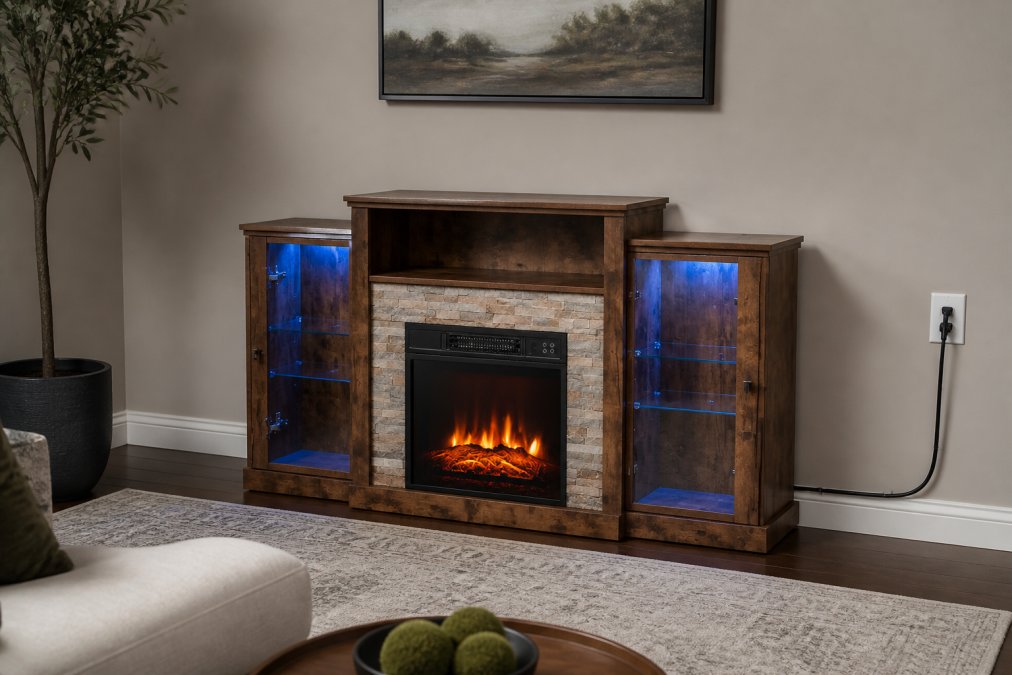
Power cords deserve special attention. Never use extension cords with electric fireplaces unless absolutely necessary, and only use heavy-duty, grounded extension cords rated for the unit's amperage. If the supplied cord doesn't reach an outlet, hire an electrician to install a dedicated outlet closer to the unit. Route the cord along the wall using cord management clips, keeping it away from foot traffic and pinch points.
For wall-mounted installations, ensure the mounting hardware is rated for the fireplace's weight and properly anchored to studs or structural supports. Before connecting an electric fireplace to an existing outlet, verify that the circuit can safely handle the additional load. Most electric fireplaces draw 12-15 amps when heating is active (nfpa.org). A dedicated circuit for your fireplace eliminates this concern and typically costs $400-800.
Grounding deserves emphasis. All electric fireplaces must use grounded outlets (three-hole outlets with the round ground hole). Never use an adapter to plug a three-prong cord into a two-prong outlet. If your installation location lacks grounded outlets, hire an electrician to install them.
Electric fireplace safety ultimately depends on three factors working together: quality engineering from the manufacturer, proper installation by qualified professionals, and responsible operation by the homeowner. Zen Home Fireplaces prioritizes all three by curating products from trusted brands that emphasize safety, offering guidance on professional installation, and providing detailed documentation on operation and maintenance. When you choose a fireplace with comprehensive safety features, proper electrical installation, and appropriate clearance, you're investing in a heating solution that delivers warmth and ambiance without unnecessary risk. Explore our collection of safety-engineered electric fireplaces and accessories, and discover how the right fireplace can transform your space while keeping your family secure.
Frequently Asked Questions
What are the most important safety features in modern electric fireplaces?
Modern electric fireplaces include multiple safety layers: overheat protection that automatically shuts off the heating element if temperatures exceed safe limits, cool-touch glass that remains safe to touch even during operation, automatic shut-off timers to prevent extended unattended use, and thermal cutoff switches that respond to dangerous temperature spikes. Models with UL certification meet rigorous safety standards and undergo testing for electrical hazards, fire safety, and emissions. Together, these features significantly reduce risks of fire, burns, and electrical damage compared to older fireplace designs.
Are electric fireplaces safe to leave on overnight?
Most modern electric fireplaces with automatic shut-off features and overheat protection can safely operate overnight, though manufacturer guidelines vary. Look for models with built-in timers that turn off automatically after 1-8 hours, and verify that your unit has thermal overload protection. Before leaving any fireplace unattended overnight, confirm that the area around it is clear of flammable materials, maintain at least 3 feet of clearance on all sides, and ensure the unit is plugged into a properly grounded outlet. Always consult your specific model's manual for safety recommendations.
What does UL certification for electric fireplaces actually mean?
UL (Underwriters Laboratories) certification means your electric fireplace has passed independent testing for electrical safety, fire hazard prevention, and temperature control. UL-certified models are tested for proper grounding, insulation integrity, overheat protection reliability, and cool-touch surface standards. CSA (Canadian Standards Association) certification provides similar assurance. When shopping, always verify that your electric fireplace carries UL or CSA certification, this certification indicates the manufacturer met strict safety protocols and reduces recall risk significantly.
How do electric fireplace child lock features protect young children?
Child lock features prevent accidental activation or temperature adjustment by children. These include physical button locks that disable the remote or control panel, parental controls that restrict temperature settings to safe ranges, and delay-start functions that prevent immediate operation. Combined with cool-touch glass surfaces and automatic shut-off timers, child locks create multiple layers of protection. For homes with young children or frequent visitors, prioritize models offering both physical and electronic child safety features to minimize burn and electrical hazards.
Are electric fireplace inserts worth it for heating and safety?
Electric fireplace inserts offer cost-effective supplemental heating for 200-400 square feet with excellent safety profiles. They're worth considering if you want zone heating in specific rooms, avoiding the expense and complexity of traditional fireplace installation, or adding ambiance without venting concerns. Safety-wise, inserts are superior to wood-burning alternatives because they eliminate carbon monoxide emissions, require no chimney clearance, and include built-in overheat protection. However, they shouldn't replace your primary heating system. Evaluate your heating needs and budget, inserts excel for supplemental warmth in well-insulated spaces.
What electrical safety precautions should I take when installing an electric fireplace?
Install your electric fireplace on a dedicated 15-amp or 20-amp circuit to prevent overload, never use extension cords (plug directly into a grounded outlet), and maintain at least 3 feet of clearance from all sides. Verify your home's electrical circuit capacity before installation, most modern units draw 750-1500 watts. Ensure the outlet is properly grounded and not shared with high-draw appliances like air conditioners. If your home lacks adequate circuits, hire a licensed electrician to install a new dedicated outlet. Check your fireplace manual for specific electrical requirements before connecting.
What warning signs indicate an electric fireplace has an electrical problem?
Stop using your fireplace immediately if you notice a burning smell from the outlet or cord, visible scorch marks on the power cord or plug, sparks when plugging in, frequent tripped circuit breakers, unusual humming or buzzing sounds, or the heating element not responding to temperature settings. These indicate potential electrical hazards like circuit overload, damaged insulation, or faulty heating elements. Unplug the unit, contact the manufacturer or a qualified electrician, and do not attempt repairs yourself. Many issues require professional diagnosis to prevent fire or shock hazards.
This article was written using GrandRanker