How to Maintain Luxury Outdoor Fireplaces
Table of Contents
- How to Maintain Luxury Outdoor Fireplaces: A Complete Care Guide
- Removing Ash and Debris From Your Outdoor Fireplace
- Cleaning the Burner and Igniter System
- How to Clean Fire Glass and Fire Media Properly
- Treating and Preventing Rust on Metal Components
- Seasonal Fire Pit Inspection Checklist for Winter Storage
- Outdoor Fireplace Cover Benefits and Protection Strategies
- Choosing the Right Cleaning Supplies and Tools
- Frequently Asked Questions
Last Updated: September 3, 2026
How to Maintain Luxury Outdoor Fireplaces: A Complete Care Guide
Luxury outdoor fireplaces require thoughtful maintenance to preserve both their aesthetic appeal and functional performance. At Zen Home Fireplaces, we understand that these premium features represent significant investments in your outdoor living spaces, and proper care extends their lifespan while keeping them safe and beautiful year-round.
Whether you own a gas-powered model, wood-burning fireplace, or a sophisticated fire table, the fundamentals of maintenance remain consistent: regular cleaning, rust prevention, seasonal inspection, and protective storage. This guide covers everything you need to know about maintaining luxury outdoor fireplaces, from removing ash and debris to treating rust, inspecting critical components, and selecting the right tools for the job.
Removing Ash and Debris From Your Outdoor Fireplace
The most fundamental maintenance task is removing ash and debris that accumulates after each use. Ash buildup restricts airflow, reduces flame quality, and can trap moisture that leads to corrosion. Most luxury outdoor fireplaces benefit from debris clearance within 24 hours of the last fire.
Start by allowing the fireplace to cool completely, at least 4 to 6 hours after the last flames (cpsc.gov). Once cooled, use a fireplace shovel to carefully scoop ash into a metal container. For wood-burning fireplaces, when ash accumulates to more than 2 inches, it begins to impede proper airflow and flame pattern development (nfpa.org). If your fireplace has a removable grate, lift it carefully and clear ash from beneath.
Gas-powered fireplaces require attention to burner holes, which can become clogged with dust, debris, or soot buildup. Use a soft brush or compressed air to gently clear any blockages around the burner area. Never use sharp tools that might damage the burner itself.
Cleaning the Burner and Igniter System
The burner and igniter system represents the heart of a gas-powered outdoor fireplace, and keeping it clean ensures reliable performance and proper flame development. Over time, dust, pollen, and environmental debris settle on the burner jets and igniter electrode, reducing ignition reliability and creating uneven flame patterns.
Begin by turning off the gas supply at the control valve and allowing any residual gas to dissipate for several minutes. This is a critical safety precaution before any burner work. Once the system has cleared, inspect the burner surface visually for obvious debris, dust accumulation, or soot.
Use a soft brush, ideally a natural bristle brush or soft brass brush, to gently sweep away dust from the burner surface. Pay particular attention to the burner holes, which should remain clear for proper gas flow. If you notice stubborn debris, try a gentle stream of compressed air from several inches away. Never use water or liquid cleaners on the burner itself, as moisture can damage the gas delivery mechanism.
The igniter electrode requires special care. This small ceramic or metal component is responsible for creating the spark that ignites gas. Inspect it for corrosion, cracks, or buildup. If the igniter appears corroded or damaged, it may need replacement, a task best left to a professional. If it's simply dusty, use a very soft brush or compressed air to clean it gently.
After cleaning, test the ignition system by turning the gas back on and attempting to light the fireplace. The burner should ignite promptly with a consistent flame pattern.
How to Clean Fire Glass and Fire Media Properly
Fire glass and lava rock add visual appeal to modern outdoor fireplaces, but they also accumulate ash, dust, and soot over time. Cleaning fire media properly maintains both appearance and function without damaging the material.
For fire glass specifically, remove visible ash and debris by hand or with a soft brush. For stubborn buildup, prepare a solution of warm water with a small amount of mild dish soap. Use a soft cloth to gently wipe the glass, then rinse with clean water and dry thoroughly with a lint-free cloth. Never use abrasive scrubbers, steel wool, or harsh chemical cleaners on fire glass, as these can scratch the surface and diminish its reflective beauty.
Lava rock requires a gentler approach. These porous volcanic stones absorb moisture and can develop algae or mold if exposed to dampness for extended periods. Remove visible ash by brushing or by hand. If lava rock shows signs of discoloration or algae growth, you can rinse it with a garden hose on low pressure, then allow it to dry completely before using the fireplace again.
For both fire glass and lava rock, seasonal deep cleaning is advisable. In spring, before heavy outdoor entertainment season, remove all fire media and rinse it thoroughly. Inspect the fireplace base where media sits, clearing any debris that may have accumulated beneath.
Treating and Preventing Rust on Metal Components
Rust represents one of the most common threats to outdoor fireplace longevity. Metal components are constantly exposed to moisture, temperature fluctuations, and oxygen. Preventing rust through protective measures is far more effective than treating it after it develops.
Start with a protective strategy. After each use, once the fireplace has cooled, wipe down exposed metal surfaces with a dry cloth to remove moisture and ash residue. For extended periods of non-use, apply a thin coat of high-temperature metal protectant or food-grade mineral oil to exposed metal surfaces.
If rust has already begun to form, address it promptly. Light surface rust can often be removed with a soft brush or fine steel wool, working gently to avoid gouging the underlying metal. For more stubborn rust, use a rust converter product designed for high-heat applications. After removing rust, apply a rust-preventive coating rated for the temperature range your fireplace reaches, typically 500°F or higher for gas fireplaces.
For stainless steel components, use specialized stainless steel cleaner and protectant. Avoid using chlorine-based cleaners on stainless steel, as chlorine can damage the protective layer and accelerate corrosion (astm.org).
A weatherproof cover provides the strongest defense against rust during off-season storage. When your fireplace won't be used for extended periods, particularly during winter months, a properly fitted cover prevents moisture, snow, and ice from contacting metal surfaces.
Seasonal Fire Pit Inspection Checklist for Winter Storage
Before winter arrives or before storing your outdoor fireplace for an extended period, conduct a thorough seasonal fire pit inspection. This proactive approach catches small problems before they become expensive repairs.
Create a systematic inspection routine covering these key areas:
| Component | Inspection Task | Frequency |
|---|---|---|
| Gas lines and connections | Check for leaks using soapy water; look for corrosion or damage | Before each season |
| Burner and igniter | Clean burner holes; test ignition; inspect electrode for cracks | Monthly during use |
| Metal frame and structure | Look for rust, loose fasteners, or visible damage | Monthly during use |
| Fire media | Remove debris; check for moisture damage or algae | Monthly during use |
| Grates and grill surfaces | Clean ash and debris; check for warping or damage | After each use |
| Weatherproof cover | Inspect for tears, secure fastening, proper fit | Before storage |
Start by visually inspecting the entire fireplace exterior. Look for rust spots, loose bolts, or visible cracks in metal components. Check that the fireplace sits level and stable.
For gas-powered fireplaces, turn off the gas supply and inspect all visible gas lines for cracks, corrosion, or loose connections. Using a solution of soapy water and a small brush, apply the solution to all connection points. Bubbles indicate a gas leak; if you find one, contact a professional immediately.
Test the ignition system one final time before storage. The burner should ignite promptly with an even, consistent flame. If you notice delayed ignition, weak flame, or uneven burning, address it before next season.
Ensure your fireplace is clean and dry before covering it for storage. Remove all ash and debris, wipe down metal surfaces, and allow everything to dry completely.
Outdoor Fireplace Cover Benefits and Protection Strategies
A quality weatherproof cover is one of the most effective investments you can make in protecting your outdoor fireplace during off-season storage. Covers prevent moisture, snow, ice, leaves, and debris from contacting your fireplace, dramatically reducing rust development and deterioration.
Select a cover designed specifically for outdoor fireplaces rather than generic covers. A properly fitted cover should cover the entire fireplace structure, extending down to the base or pedestal. High-quality covers use multi-layer, water-resistant fabrics that allow air circulation while blocking moisture. Look for covers with reinforced seams, secure fastening straps, and UV-resistant material. Avoid vinyl covers, which can trap condensation and accelerate rust formation.
Before covering your fireplace, ensure it's completely clean and dry. If you've just cleaned the fireplace with water, allow it to dry for 24 hours before covering. Position the cover carefully to ensure it sits evenly and covers all exposed surfaces. Secure it with the provided straps or ties, pulling them tight enough to prevent wind from displacing the cover.
Beyond covers, consider the fireplace's location and exposure. If possible, position your fireplace where it receives some protection from prevailing winds and direct rainfall. Ensure the ground beneath and around the fireplace allows water to drain away rather than pooling.
Choosing the Right Cleaning Supplies and Tools
Selecting appropriate cleaning supplies and tools is fundamental to maintaining your outdoor fireplace without causing damage. The wrong tools can scratch surfaces, damage delicate components, or prove ineffective against stubborn buildup.
Start with basic hand tools designed specifically for fireplace maintenance. A dedicated fireplace shovel with a long handle allows you to reach into the fireplace safely and scoop ash efficiently. Fireplace brushes, available in soft bristle and brass varieties, work well for gentle cleaning of burners, grates, and surfaces. Avoid stiff wire brushes or steel wool on delicate components; reserve these only for heavy rust removal on sturdy metal parts.
Protective gear is essential. Wear heat-resistant gloves rated for high temperatures when handling fireplace components, even after cooling. Safety glasses protect your eyes from ash and debris during cleaning. A dust mask prevents inhalation of ash particles.
For cleaning solutions, stick with mild, non-toxic options. Warm water with a small amount of dish soap works well for most cleaning tasks. For rust removal, consider specialized rust converters designed for high-heat applications. Avoid harsh chemical cleaners, which can damage finishes and create toxic fumes when heated.
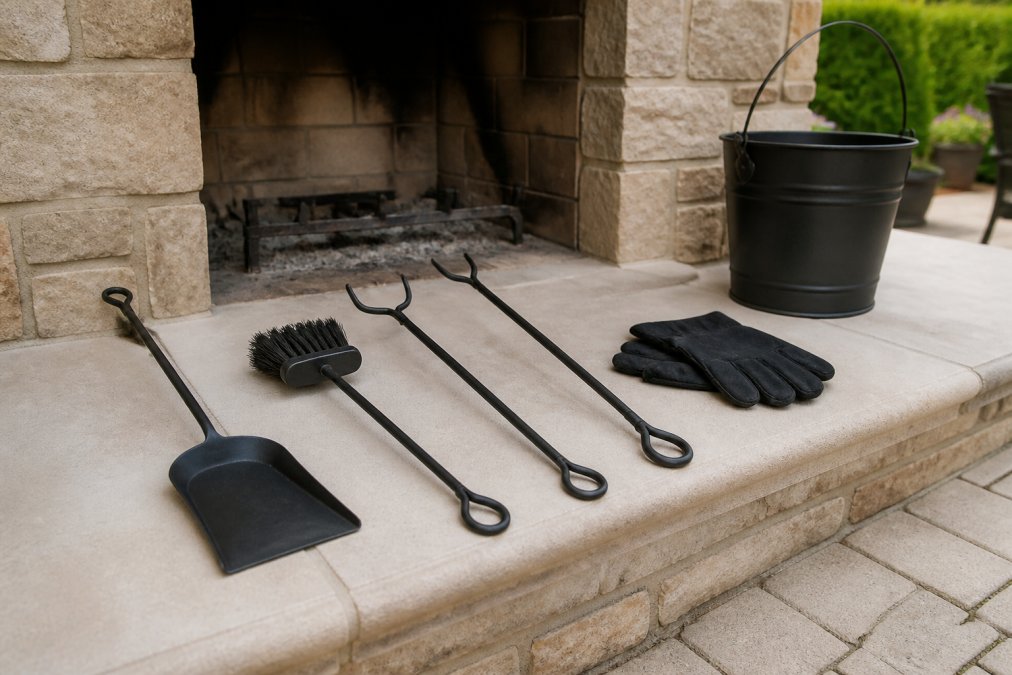
Zen Home Fireplaces offers the 5 Pieces Rustic Heavy Duty Compact Wrought Iron Fireplace Tools Set ($85.80), which includes all essential tools designed for safe, effective maintenance. The 3-Panel Folding Wrought Iron Fireplace Screen with Doors and 4 Pieces Tools Set ($180.40) combines safety screening with a complete tool collection. For wood storage, the Foldable Firewood Log Rack ($67.99) keeps firewood elevated, dry, and organized, preventing moisture damage that can affect burn quality.


Invest in quality tools rather than cheap alternatives. Premium tools last longer, perform better, and are less likely to damage your fireplace.
Maintaining a luxury outdoor fireplace requires consistent attention to detail, but the effort pays dividends in longevity, performance, and aesthetic appeal. Regular ash removal, seasonal inspections, rust prevention, and proper storage protect your investment while ensuring your outdoor fireplace remains a beautiful focal point for entertaining and relaxation.
Zen Home Fireplaces provides the premium tools and accessories you need to maintain your fireplace with confidence. Explore our curated collection of fireplace maintenance products and discover how quality tools transform routine maintenance into an easy, effective process that keeps your outdoor living space warm and inviting.
Frequently Asked Questions
How often should I perform maintenance on my luxury outdoor fireplace?
For wood-burning fireplaces, clean ash and debris after each use and perform a deep cleaning monthly during the season. Gas fireplaces require burner inspection and igniter checks every 2-3 months. Conduct a full seasonal inspection before winter storage and before the heating season begins. Regular maintenance prevents rust, ensures proper flame patterns, and extends the lifespan of your outdoor fireplace significantly.
What is the best way to clean fire glass in my outdoor fireplace?
Allow the fireplace to cool completely, then remove fire glass carefully using heat-resistant gloves. Soak the glass in warm soapy water for 15-20 minutes to loosen debris and soot buildup. Use a soft brush or cloth to gently scrub each piece, avoiding abrasive materials that scratch the surface. Rinse thoroughly with clean water and dry completely before reinstalling. Never use harsh chemicals or rubbing alcohol on fire glass, as these can damage the reflective coating and discolor the material.
How do outdoor fireplace covers protect my investment?
A weatherproof cover shields your fireplace from rain, snow, and UV damage that causes rust and structural deterioration. Covers prevent debris accumulation in burner holes and igniter systems, reducing cleaning frequency and maintenance costs. They also protect fire media and decorative elements from weather exposure. Using a cover during off-season storage can extend your fireplace's lifespan and maintain its aesthetic appearance, making it a worthwhile investment for luxury outdoor living spaces.
What tools do I need to properly maintain my outdoor fireplace?
Essential tools include a fireplace poker for moving logs, a brush for cleaning burner holes and debris, a shovel for ash removal, and protective gloves rated for heat exposure. A soft-bristle brush works best for delicate surfaces like fire glass, while a metal brush handles rust spots on structural components. The 5-Piece Rustic Heavy Duty Compact Wrought Iron Fireplace Tools Set includes all necessary implements for safe, efficient maintenance. Having the right tools prevents damage to your luxury fireplace and ensures thorough, professional-quality cleaning.
This article was written using GrandRanker